Starting an online business has become more accessible than ever, and dropshipping is one of the popular business models for entrepreneurs who want to sell products without maintaining their own inventory. Unlike traditional e-commerce, dropshipping allows a store owner to sell products online while a third-party supplier handles inventory, packaging, and shipping.
But is dropshipping really a good business opportunity? How does it work, and what does it take to build a successful dropshipping store?
In this guide, we will explain what dropshipping is, how dropshipping works, its benefits and challenges, and how you can start a dropshipping business step by step.
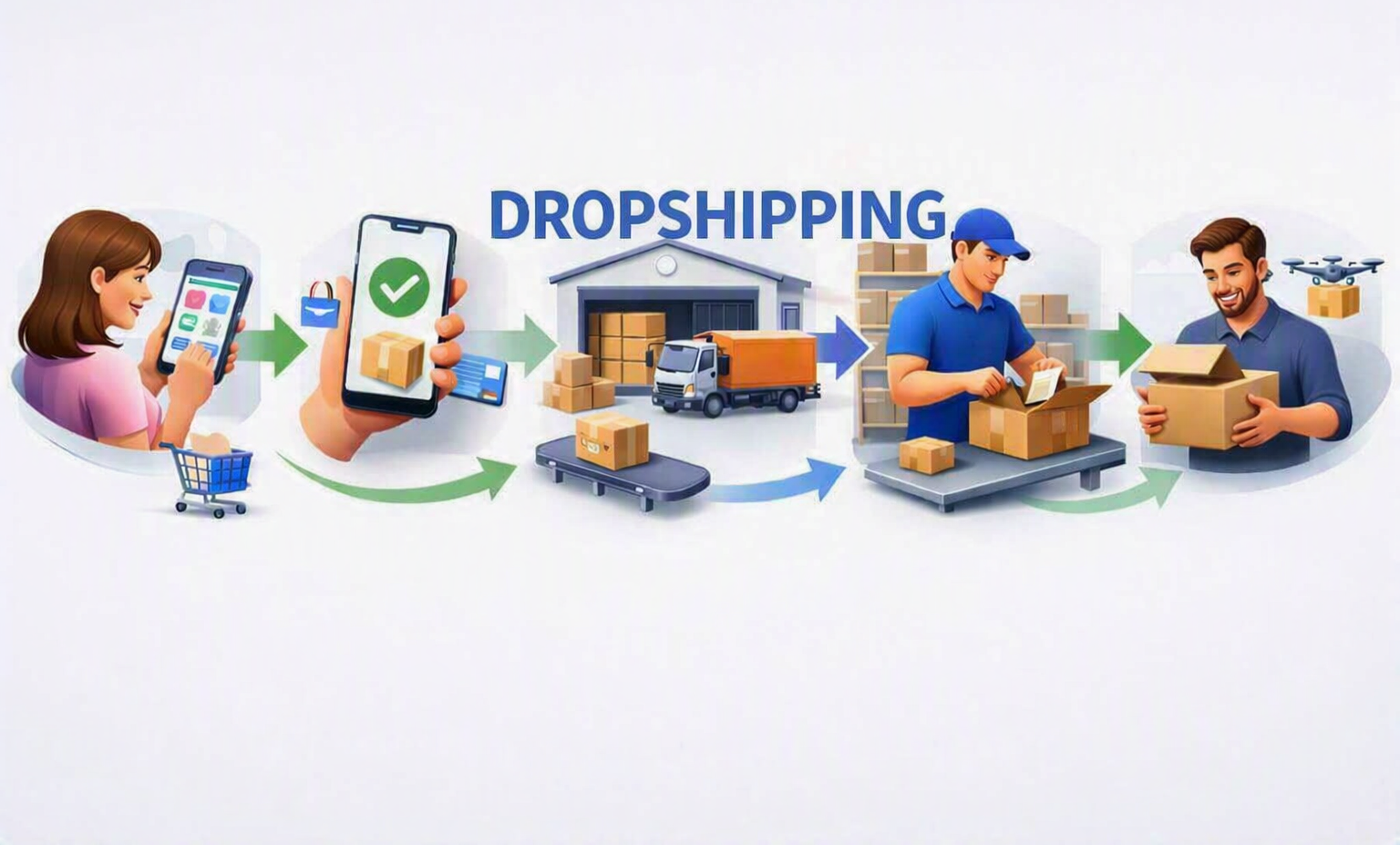
Dropshipping is an e-commerce business model where a seller sells products without keeping them in stock. When a customer places an order, the seller purchases the product from a supplier, who then ships it directly to the customer.
This means the dropshipping business owner does not need to purchase large quantities of products or maintain a warehouse.
For example, imagine you create an online store selling phone accessories. A customer purchases a phone case from your website for ₹999. You then place the order with your
supplier for ₹600. The supplier ships the product directly to the customer, while you keep the difference after considering your other business expenses.
This simple model makes dropshipping attractive to many beginners.
The dropshipping process generally involves several steps:
First, identify products that have demand among your target customers. Research trends, competitors, customer needs, and potential profit margins before selecting products.
The next step is finding a supplier who can provide quality products and dependable shipping. Supplier reliability is extremely important because your customers will judge your business based on the product and delivery experience.
Build an attractive e-commerce website where customers can browse products, learn about them, and place orders. Your website should be easy to navigate and optimized for mobile devices.
Add your selected products to your store with high-quality images, accurate descriptions, pricing, and important product information.
Marketing plays a major role in dropshipping. You can attract customers through SEO, social media marketing, content marketing, email marketing, and paid advertising.
When a customer purchases a product from your store, you receive the payment and order information.
You forward the order to your supplier. The supplier prepares and ships the product directly to the customer.

Dropshipping offers several advantages, particularly for people who are new to e-commerce.
One of the biggest advantages of dropshipping is that you don’t have to purchase a large amount of inventory before making sales. This can reduce the amount of money required to start the business.
Since products are stored by suppliers, you generally don’t need your own warehouse. This can reduce storage-related costs and responsibilities.
A dropshipping store can be managed from almost anywhere with a reliable internet connection. This gives entrepreneurs flexibility in how and where they operate their business.
You can experiment with different products without committing to large inventory purchases. Products that perform well can receive more marketing attention, while products with weak demand can be removed.
Because you don’t necessarily need to store products yourself, you can potentially offer a broader range of products in your online store.

Although dropshipping can be attractive, it is not a guaranteed way to make money. There are several challenges that beginners should understand.
Because the barrier to entry can be relatively low, many sellers may offer similar products. Standing out requires strong branding, customer service, content, and marketing.
Product costs, advertising expenses, transaction fees, shipping costs, and refunds can reduce your profit. Careful pricing and financial planning are essential.
Your supplier controls important parts of the fulfillment process. Problems with product quality, stock availability, or shipping can affect your customers’ experience.
Long or unpredictable delivery times can lead to customer complaints. Before choosing a supplier, understand their shipping methods, estimated delivery times, and return procedures.
Even though the supplier ships the product, the customer usually communicates with your store. You need to handle questions, complaints, refunds, and other customer-service issues professionally.
If you are planning to start dropshipping, follow these practical steps.
Instead of selling everything, consider focusing on a specific niche. Examples include fitness accessories, home products, pet accessories, fashion products, or technology accessories.
A focused niche can make it easier to understand your audience and create relevant marketing campaigns.
Understand who your potential customers are. Research their interests, problems, purchasing behavior, budget, and preferred platforms.
Knowing your audience helps you create better product pages and marketing campaigns.
Analyze other businesses selling similar products. Look at their product pricing, website design, content, social media presence, customer reviews, and promotional strategies.
Your goal should not be to copy competitors but to identify opportunities to provide a better customer experience.
Compare potential suppliers based on product quality, pricing, shipping times, communication, reviews, and return policies.
If possible, order product samples before selling them. This allows you to evaluate quality and packaging yourself.
Your online store should look professional and trustworthy. Include clear product images, descriptions, prices, shipping information, return policies, contact information, and secure payment options.
A strong marketing strategy can make a major difference in the success of your dropshipping business.
Use a combination of:
Don’t depend on just one marketing channel. Test different strategies and identify which channels provide the best results.
SEO for dropshipping can help your store attract people who are actively searching for products online.
Start by researching keywords related to your products. Include relevant keywords naturally in your product titles, descriptions, headings, URLs, image alt text, and blog content.
Creating useful blog articles can also help your website attract organic traffic.
For example, if you sell fitness products, you could create content about workout accessories, home workouts, fitness tips, and product comparisons.
However, avoid filling your pages with keywords unnaturally. Search engines and customers both benefit from clear, useful, original content.
Social media can be an effective way to introduce products to potential customers.
Platforms such as Instagram, Facebook, YouTube, and TikTok can help businesses showcase products through short videos, demonstrations, tutorials, customer content, and educational posts.
Instead of constantly posting direct sales messages, create content that provides value and demonstrates how your products solve customer problems.
For example, a store selling kitchen products could create short videos showing useful cooking techniques using its products.
Paid advertising can help a new store reach potential customers faster. Depending on your audience and product, you can experiment with search ads, social media advertising, display advertising, and video campaigns.
However, don’t spend a large advertising budget immediately.
Start with controlled tests, measure important metrics such as clicks, conversions, cost per purchase, and return on advertising spend, and then optimize your campaigns based on the results.
Beginners often make mistakes that can negatively affect their business.
Some common mistakes include:
Avoiding these mistakes can help you build a stronger foundation for your online store.

Dropshipping can be profitable, but profitability is not guaranteed.
Your results depend on several factors, including product selection, pricing, supplier costs, advertising expenses, website conversion rate, customer retention, and overall marketing performance.
A store generating high sales does not necessarily generate high profits. You need to track both revenue and expenses to understand the actual performance of your business.
Successful dropshipping businesses usually focus on more than simply finding a trending product. They build a recognizable brand, understand their audience, improve customer experience, and continuously optimize their marketing.
Dropshipping provides an accessible way to enter the world of e-commerce without the traditional requirement of maintaining large amounts of inventory. Its low inventory requirements, flexibility, and ability to test products make it attractive to many aspiring entrepreneurs.
However, dropshipping is not a shortcut to guaranteed income. Building a successful store requires product research, reliable suppliers, effective marketing, SEO, customer service, and consistent optimization.
If you are willing to learn, test different strategies, understand your customers, and build a trustworthy online brand, dropshipping can become a valuable e-commerce business model.