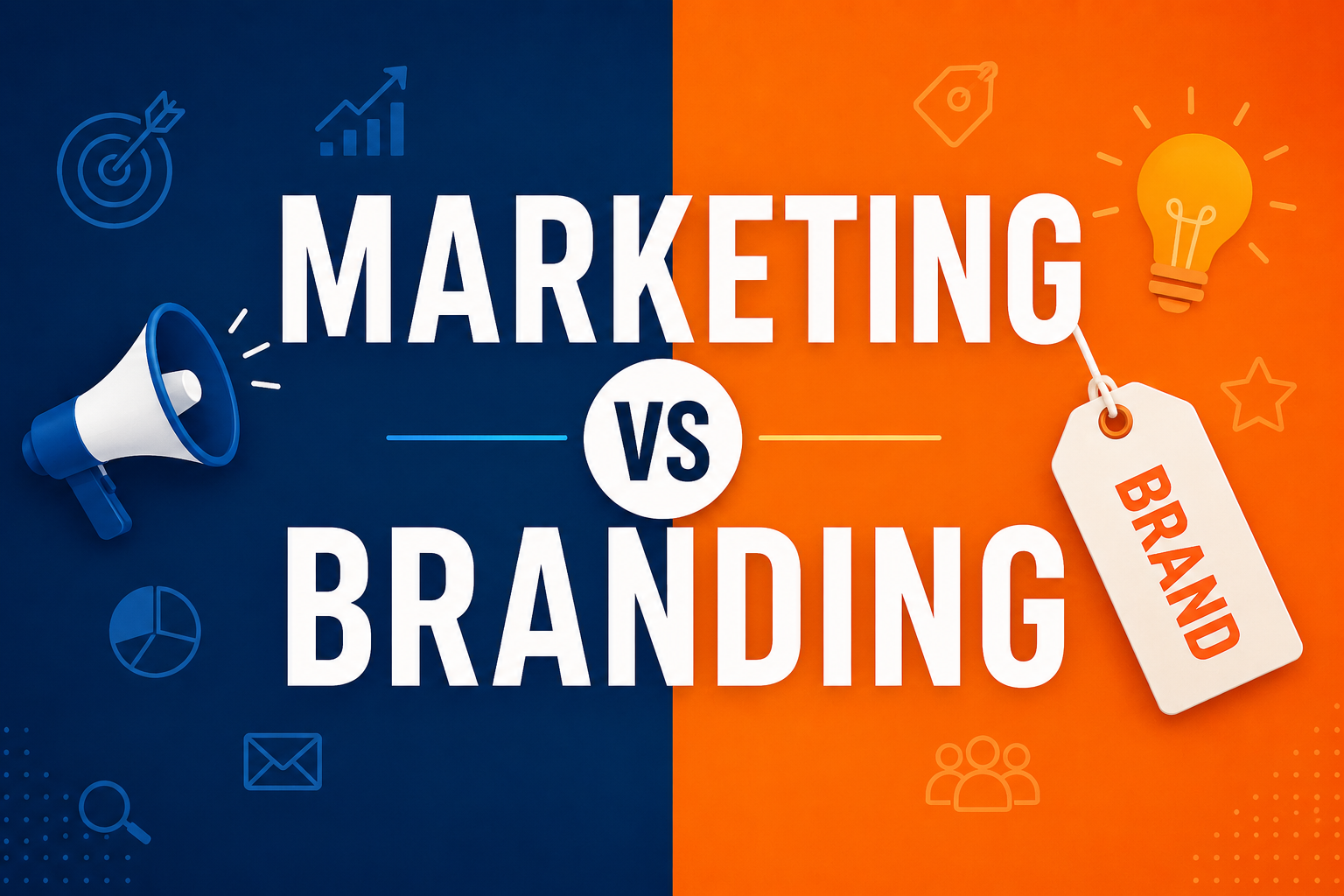
In today’s competitive business world, many people use the terms marketing and branding interchangeably. Although they work together to help businesses grow, they are not the same. Understanding marketing vs branding is essential for entrepreneurs, business owners, marketers, and students who want to build successful businesses and strong customer relationships.
Marketing focuses on promoting products or services to generate leads and increase sales. Branding, on the other hand, is about creating a unique identity and building trust that keeps customers coming back. A business may run excellent marketing campaigns, but without strong branding, it can struggle to create lasting customer loyalty.
This guide explains the major differences between marketing and branding, their goals, strategies, benefits, and why businesses need both for long-term success.
When discussing marketing vs branding, marketing represents the promotional side of a business. It includes advertising, SEO, social media marketing, content marketing, and paid campaigns that help attract potential customers and increase conversions.
The primary objective of marketing is to increase awareness, generate leads, and boost revenue. Marketing campaigns are often designed for short-term goals and can be adjusted quickly based on customer behavior and market trends.
Some common marketing strategies include:
Successful marketing helps businesses reach the right audience at the right time while maximizing return on investment (ROI).Before exploring each concept individually, it’s important to understand how marketing vs branding contributes to overall business growth.
Branding is the process of creating a unique identity that differentiates a business from its competitors. It shapes how customers perceive a company and influences their emotional connection with the brand.
A strong brand includes more than just a logo or color scheme. It represents the company’s values, mission, personality, customer experience, and reputation.
Branding helps businesses:
Unlike marketing, branding is a long-term investment. While marketing attracts customers, branding ensures they remember and return to your business.
The comparison between marketing vs branding becomes easier when you understand that marketing drives customer acquisition, while branding strengthens customer retention. Both are essential for sustainable business growth.
Marketing focuses on driving immediate sales through promotional activities. Branding focuses on building a lasting reputation that influences purchasing decisions over time.
Think of branding as the personality of your business and marketing as the communication strategy that introduces that personality to the world.
For example, a digital marketing campaign may attract visitors to your website, but a strong brand convinces them to trust your company and become loyal customers.
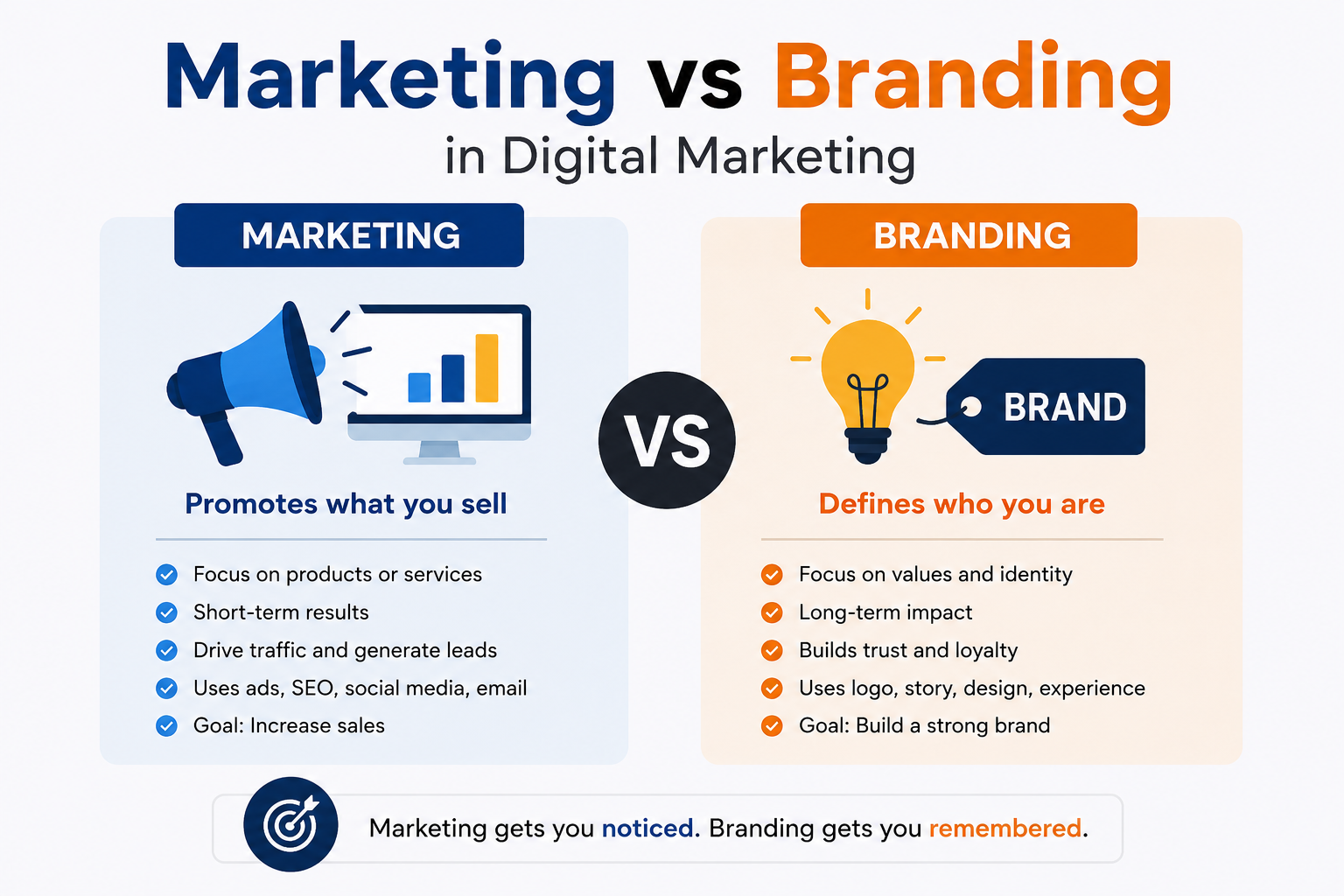
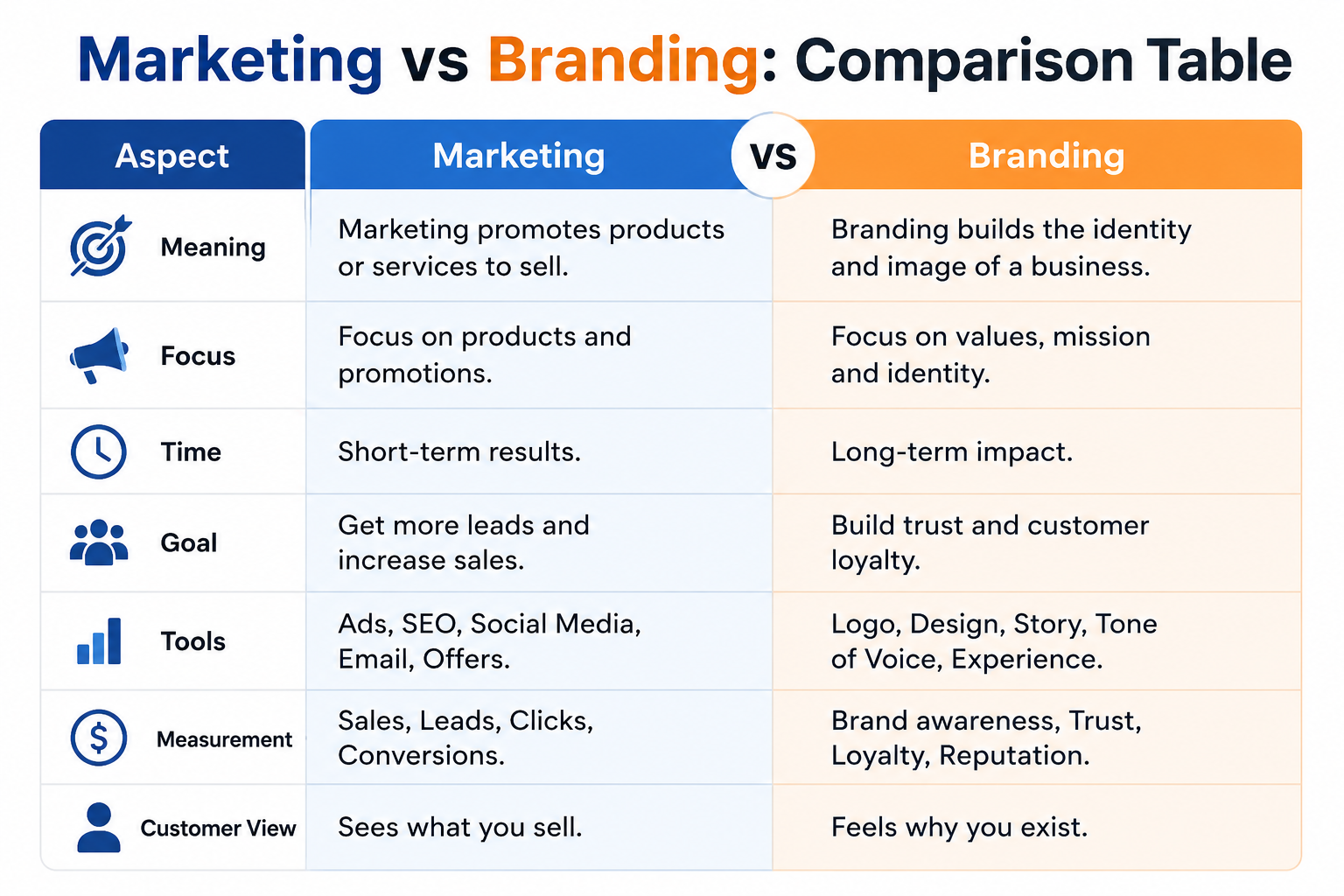
Comparing marketing vs branding helps businesses understand how promotional activities and brand identity work together.
Marketing aims to generate leads, increase sales, and grow revenue through promotional activities.
Branding aims to create trust, credibility, and long-term customer relationships by establishing a memorable business identity.
Marketing campaigns usually have short-term objectives. They may run for a few weeks or months depending on business goals.
Branding is a continuous process that develops over many years through consistent customer experiences and communication.
Marketing focuses on products, services, pricing, promotions, and customer acquisition.
Branding focuses on company values, mission, identity, customer perception, and emotional connection.
Marketing performance is measured using data such as:
Branding success is measured through:
Many businesses mistakenly believe they only need marketing to succeed. In reality, marketing and branding are most effective when they work together.
Imagine spending thousands of dollars on advertisements. Your campaigns may attract visitors, but if your business lacks credibility, customers are unlikely to make a purchase.
Similarly, a business with an excellent brand but no marketing strategy may struggle to reach new customers.
Marketing creates visibility.
Branding builds trust.
Together, they create sustainable business growth.
Digital marketing has made the relationship between marketing and branding even more important.
Businesses now interact with customers through websites, search engines, social media platforms, email campaigns, YouTube, and online advertisements. Every interaction contributes to both marketing performance and brand perception.
For example:
A successful digital strategy combines these elements to create both short-term results and long-term brand value.
Businesses today use multiple channels to reach their audience, including:
Choosing the right channels depends on your target audience, business goals, and budget.
A successful branding strategy helps businesses create a memorable identity and establish long-term relationships with customers. Here are the key steps to building a strong brand:
Start by identifying your mission, vision, values, and unique selling proposition (USP). These elements form the foundation of your brand and communicate what your business stands for.
Understanding your audience is essential for both marketing and branding. Research their demographics, interests, challenges, and purchasing behavior to create messaging that resonates with them.
Your communication style should remain consistent across your website, social media, advertisements, emails, and customer support. A consistent tone strengthens brand recognition and builds trust.
Your logo, typography, color palette, and website design should reflect your brand personality. A professional and consistent visual identity makes your business instantly recognizable.
Every customer interaction shapes your brand. Providing exceptional products, services, and support encourages positive reviews, repeat business, and word-of-mouth referrals.
Real-World Example of Marketing vs Branding
Imagine two coffee shops opening in the same neighborhood.
The first coffee shop spends heavily on social media ads and promotional offers. Customers visit because of the discounts, but many don’t return once the offers end.
The second coffee shop invests in creating a welcoming atmosphere, consistent branding, friendly service, quality products, and an engaging online presence. Customers remember the experience, recommend it to friends, and become loyal visitors.
The first business relied mainly on marketing.
The second combined effective marketing with strong branding.
This example highlights why marketing vs branding is not a competition. The most successful businesses integrate both strategies to achieve sustainable growth.
This example clearly demonstrates why marketing vs branding should be treated as complementary strategies rather than competing concepts.
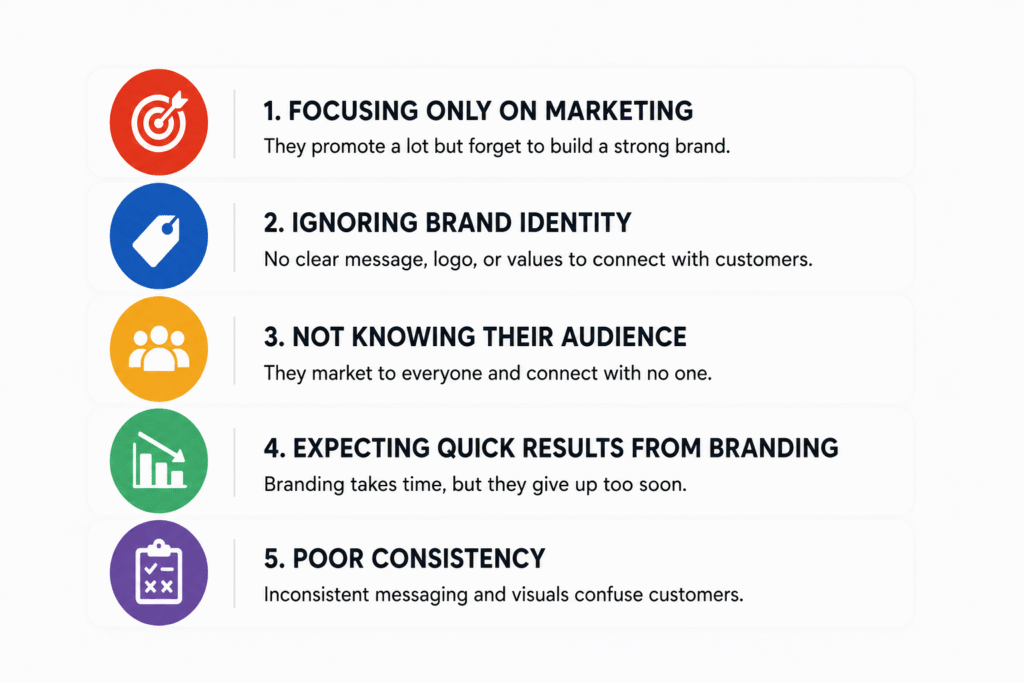
Many businesses struggle because they misunderstand the relationship between marketing and branding. Some common mistakes include:
Avoiding these mistakes helps businesses build credibility and maximize the impact of their marketing campaigns.Many businesses fail because they misunderstand marketing vs branding and focus on one while ignoring the other.
To achieve long-term success, businesses should integrate marketing and branding into a single strategy.
Some best practices include:
Businesses often ask whether marketing or branding is more important. The truth is that both are essential.
Marketing helps businesses reach new audiences, generate leads, and increase revenue.
Branding transforms first-time buyers into loyal customers by creating trust, credibility, and emotional connections.
Without marketing, potential customers may never discover your business.
Without branding, customers may forget your business after making a purchase.
The most successful companies combine strategic marketing with strong branding to create sustainable growth and long-term customer loyalty.
No. Marketing promotes products and services to generate sales, while branding builds a company’s identity, reputation, and customer trust.
Branding should come first. A strong brand identity provides the foundation for effective marketing campaigns and consistent communication.
Marketing can generate short-term sales, but long-term success requires strong branding to build customer loyalty and brand recognition.
Branding creates consistency across websites, social media, email campaigns, and online advertisements. It improves trust, recognition, and customer engagement.
Understanding marketing vs branding is essential for building a successful business. Whether you are a student, entrepreneur, or business owner, understanding marketing vs branding gives you a competitive advantage. Although they serve different purposes, they complement each other and work best when combined.
Marketing helps attract potential customers through promotional strategies, advertising, SEO, content marketing, and digital campaigns. Branding builds the trust, credibility, and emotional connection that encourages customers to stay loyal and recommend your business to others.
Whether you’re launching a startup, managing an established company, or learning digital marketing, investing in both marketing and branding will create stronger customer relationships, improve business visibility, and support long-term growth.
By developing a consistent brand identity and implementing effective marketing strategies, businesses can stand out in competitive markets and achieve lasting success. Mastering marketing vs branding allows businesses to create effective campaigns while building a strong and memorable brand.