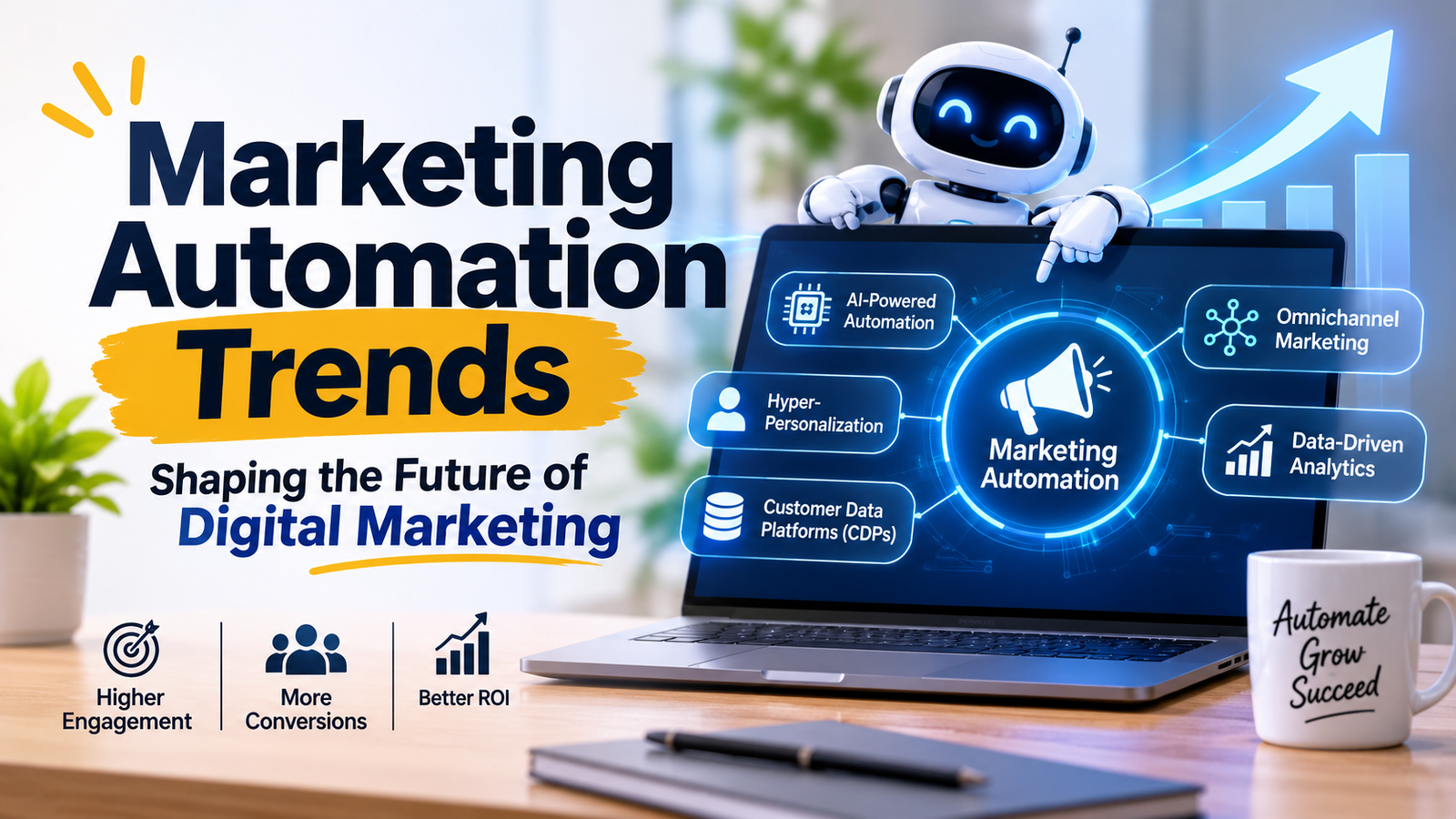
Marketing automation has transformed the way businesses connect with customers. As technology continues to evolve, brands are adopting smarter tools to improve customer engagement, increase conversions, and streamline marketing campaigns. Staying updated with the latest Marketing Automation Trends is essential for businesses that want to remain competitive in today’s digital landscape.
From artificial intelligence to advanced personalization and data-driven decision-making, marketing automation is becoming more intelligent and efficient than ever before. In this article, we’ll explore the top Marketing Automation Trends that are shaping the future of digital marketing.
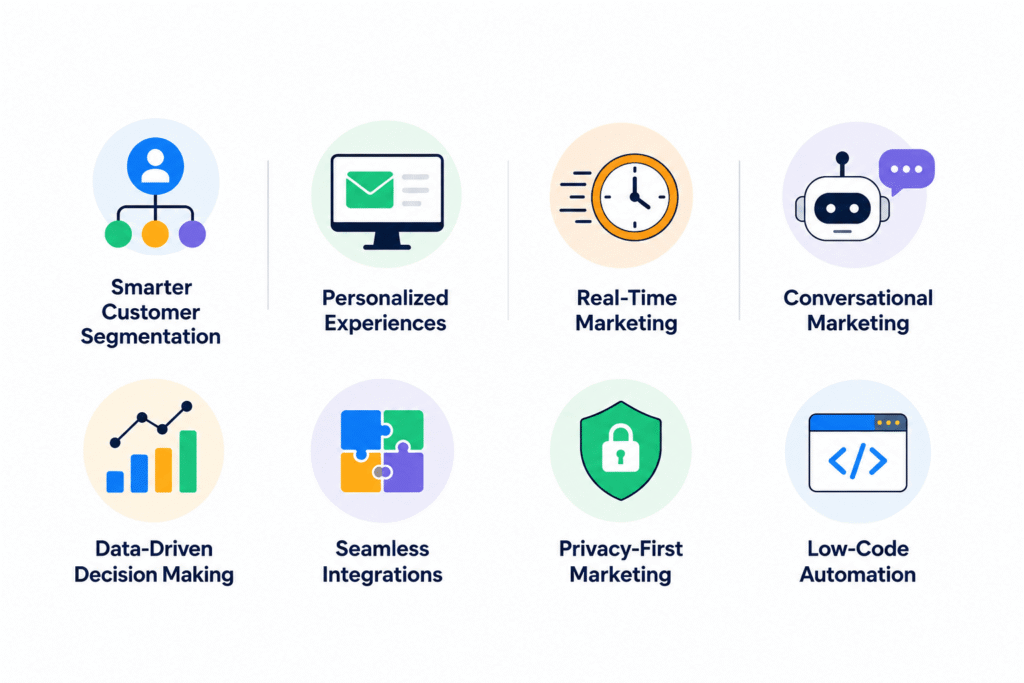
Artificial Intelligence (AI) is one of the biggest Marketing Automation Trends transforming digital marketing. AI-powered tools can analyze customer behavior, predict buying patterns, and automate repetitive marketing tasks with greater accuracy.
Businesses are now using AI to:
AI helps marketers save time while delivering highly relevant experiences that improve customer satisfaction and increase conversions.
Today’s customers expect personalized experiences. Modern marketing automation platforms use customer data to deliver highly targeted messages based on browsing history, purchase behavior, interests, and demographics.
Personalization includes:
Brands that invest in personalization often experience higher engagement, better customer loyalty, and improved sales.
Customer data has become one of the most valuable business assets. A Customer Data Platform (CDP) collects information from multiple channels and creates a unified customer profile.
This allows marketers to:
One of the fastest-growing Marketing Automation Trends is integrating automation tools with CDPs to deliver a seamless customer experience
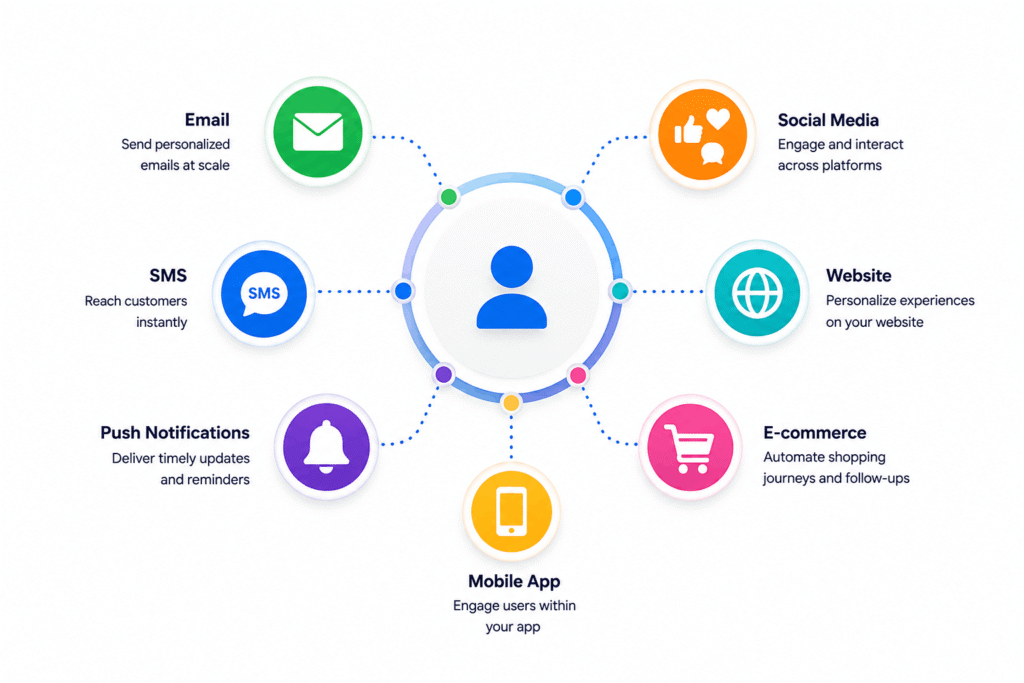
Customers interact with brands through multiple platforms, including websites, email, social media, messaging apps, and mobile applications. Businesses now need to provide a consistent experience across every touchpoint.
Marketing automation platforms allow companies to automate campaigns across:
Omnichannel automation helps businesses maintain consistent communication while improving customer engagement throughout the buying journey.
Successful marketing decisions are no longer based on guesswork. Businesses are increasingly relying on analytics to measure campaign performance and optimize their marketing strategies.
Important metrics include:
By analyzing performance data, businesses can continuously improve their marketing campaigns and maximize their return on investment.
Keeping up with the latest Marketing Automation Trends offers several advantages:
Businesses that embrace automation can focus more on strategy and creativity while technology handles repetitive processes.
Several powerful tools help businesses implement marketing automation effectively:
These platforms provide features such as email automation, CRM integration, lead nurturing, analytics, workflow automation, and customer segmentation.
Each platform offers different features depending on business requirements. For example, Mailchimp is commonly used for email marketing campaigns, while HubSpot provides CRM and marketing automation features.
Businesses should compare available features, pricing, integration options, and ease of use before selecting a platform. Choosing the right tool helps marketers manage campaigns efficiently and achieve better results.
If you’re new to automation, follow these simple steps:
Starting with small automation workflows allows businesses to gradually scale their marketing efforts while maintaining quality customer interactions.
Businesses can begin with simple tasks such as automated welcome emails, follow-up messages, and abandoned cart reminders. Once these workflows are working effectively, they can introduce more advanced automation strategies.
It is also important to regularly review automated campaigns. Customer preferences and business goals may change over time, so workflows should be updated to remain relevant and effective.
The future of marketing automation will focus on smarter technologies, better customer experiences, and improved efficiency. Artificial intelligence, predictive analytics, and advanced customer segmentation are expected to play important roles in future marketing strategies.
Businesses will increasingly use automation to understand customer needs and deliver relevant messages across different platforms. Voice technology, conversational marketing, and AI-powered chatbots may also create new opportunities for customer interaction.
However, successful automation will require more than just using advanced tools. Businesses must combine technology with creative content, effective communication, and a clear understanding of their target audience.
Companies that continuously learn and adapt to new developments will be better prepared to succeed in the changing digital marketing environment.
Other mistakes include:
Not defining clear marketing goals
Ignoring campaign performance reports
Using the same message for every audience
Failing to update automation workflows
Neglecting customer privacy
Choosing tools without understanding business requirements
Avoiding these mistakes helps businesses create more effective automation strategies and maintain positive customer relationships.
Although automation offers many benefits, businesses should avoid some common mistakes when implementing it.
One major mistake is automating every marketing activity without considering customer needs. Automated messages should still feel useful and relevant rather than repetitive or unnecessary.
Another mistake is ignoring customer data quality. Incorrect or outdated information can result in irrelevant messages and poor customer experiences.
Businesses should also avoid sending too many promotional emails or notifications. Excessive communication may annoy customers and increase unsubscribe rates.
Other mistakes include:
Not defining clear marketing goals
Ignoring campaign performance reports
Using the same message for every audience
Failing to update automation workflows
Neglecting customer privacy
Choosing tools without understanding business requirements
Avoiding these mistakes helps businesses create more effective automation strategies and maintain positive customer relationships.
The future of marketing automation is expected to become more intelligent, personalized, and customer-focused. Artificial intelligence, predictive analytics, and advanced customer data systems will continue influencing how businesses communicate with their audiences.
Automation will increasingly support marketers in understanding customer interests, predicting future behavior, and delivering relevant content across multiple platforms.
Voice technology, conversational marketing, and improved chatbot experiences may also create new opportunities for businesses to interact with customers. These developments can make digital communication faster and more convenient.
However, human creativity and strategic thinking will continue to play an important role. Automation can handle repetitive activities, but businesses still need marketers who understand customer needs, create meaningful content, and develop effective campaigns.
Companies that combine modern technology with strong marketing strategies will be better prepared for future changes in the digital marketing industry.
Marketing automation is the use of software and technology to automate repetitive marketing activities such as email campaigns, lead nurturing, customer segmentation, and follow-up messages. It helps businesses save time and improve marketing efficiency.
Some important Marketing Automation Trends include AI-powered automation, hyper-personalization, customer data platforms, omnichannel marketing, and data-driven analytics. These developments help businesses improve customer experiences and campaign performance.
Marketing automation helps businesses save time, generate leads, improve customer engagement, personalize communication, increase conversions, and measure campaign performance more effectively.
Popular marketing automation tools include HubSpot, Mailchimp, ActiveCampaign, Brevo, Klaviyo, Salesforce Marketing Cloud, and Zoho Marketing Automation. The best choice depends on business goals, budget, and marketing requirements.
Yes. Marketing automation is useful for small businesses because it reduces repetitive work, improves customer communication, and helps manage leads efficiently. Even small businesses can start with simple email automation workflows.
AI improves marketing automation by analyzing customer data, predicting customer behavior, generating content ideas, recommending products, and supporting personalized communication. It helps marketers make faster and more informed decisions.
Yes. Marketing automation is an important part of digital marketing because it helps businesses manage campaigns, communicate with customers, nurture leads, and improve marketing results across different channels.
Marketing automation continues to evolve rapidly, making it an essential part of every successful digital marketing strategy. From AI-powered automation and hyper-personalization to customer data platforms and omnichannel marketing, these Marketing Automation Trends are helping businesses deliver better customer experiences while improving efficiency and ROI.
Companies that invest in the latest automation technologies will be better positioned to attract new customers, strengthen relationships, and drive long-term business growth. By adopting these trends and continuously optimizing your campaigns, you can stay ahead of the competition and maximize your marketing success.