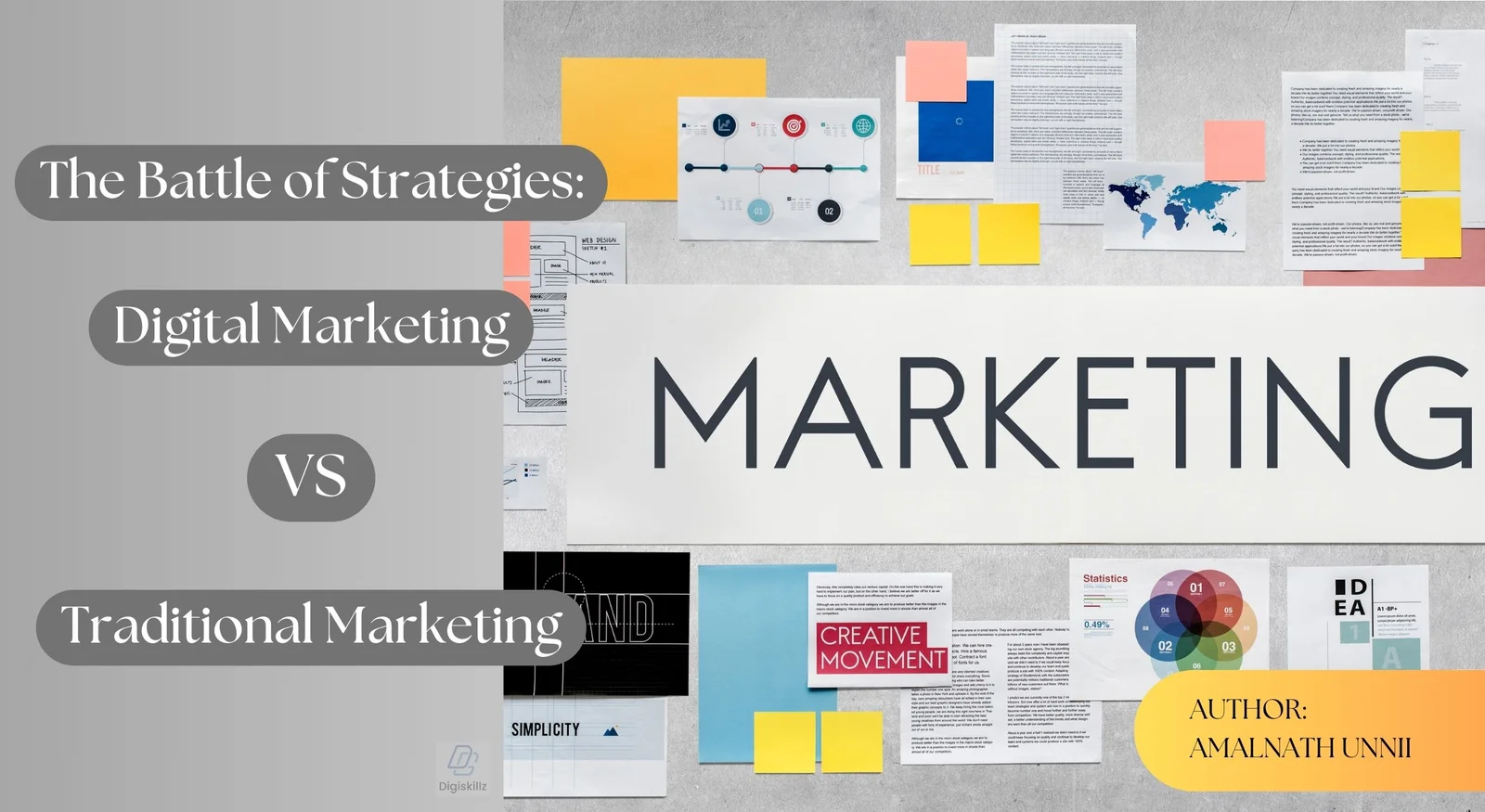
In today’s competitive business landscape, choosing the right marketing strategy is essential for long-term success. One of the most common debates among business owners and marketers is Digital Marketing vs Traditional Marketing. Both methods help businesses promote products and services, but they differ significantly in terms of reach, cost, targeting, and performance measurement.
Understanding Digital Marketing vs Traditional Marketing allows businesses to make informed decisions based on their goals, target audience, and budget. While traditional marketing has been trusted for decades, digital marketing has become the preferred choice for businesses looking to expand their online presence and generate measurable results.
In this guide, we’ll explore the major differences, advantages, disadvantages, and help you determine which marketing strategy best suits your business.

Traditional marketing refers to conventional advertising methods used before the internet became popular. These include television commercials, radio advertisements, newspapers, magazines, billboards, brochures, flyers, direct mail, and telemarketing.
Traditional marketing is highly effective for building local brand awareness and reaching audiences who consume offline media. Physical advertisements often create a lasting impression and help establish brand credibility.
However, when comparing Digital Marketing vs Traditional Marketing, traditional marketing offers limited audience targeting and makes campaign performance difficult to measure accurately.

Digital marketing is the promotion of products and services through online platforms and digital channels. It includes Search Engine Optimization (SEO), Social Media Marketing (SMM), Pay-Per-Click (PPC) advertising, content marketing, email marketing, influencer marketing, and video marketing.
One of the biggest advantages in the Digital Marketing vs Traditional Marketing comparison is the ability to reach highly targeted audiences. Businesses can monitor campaign performance in real time, optimize strategies instantly, and maximize return on investment.
As internet usage continues to grow, digital marketing has become an essential strategy for businesses of all sizes.
The biggest difference between Digital Marketing vs Traditional Marketing is audience reach.
Traditional marketing reaches a broad audience through newspapers, television, radio, and outdoor advertising. Digital marketing allows businesses to target specific audiences based on age, location, interests, online behavior, and purchasing habits.
For businesses seeking qualified leads, digital marketing provides greater precision.
Cost is another major factor in Digital Marketing vs Traditional Marketing.
Traditional marketing campaigns often require large budgets for printing, broadcasting, or outdoor advertising.
Digital marketing offers affordable advertising options where businesses can control budgets, adjust campaigns instantly, and only pay for measurable results like clicks or conversions.
This makes digital marketing ideal for startups and small businesses.
One of the strongest advantages in Digital Marketing vs Traditional Marketing is audience targeting.
Digital marketing platforms allow businesses to display advertisements only to users who match specific demographics and interests.
Traditional marketing lacks this level of precision since advertisements are shown to a general audience regardless of buying intent.
Tracking campaign performance is much easier with digital marketing.
Businesses can monitor website traffic, impressions, clicks, conversions, engagement, and ROI using analytics tools.
In contrast, measuring the effectiveness of traditional marketing often relies on surveys, customer feedback, or estimated audience numbers.
This makes performance analysis a major advantage in the Digital Marketing vs Traditional Marketing debate.
Digital marketing campaigns can be updated instantly.
Businesses can edit advertisements, change budgets, pause campaigns, or test different creatives in real time.
Traditional marketing campaigns require more planning, higher production costs, and cannot be modified once published.
This flexibility gives digital marketing a clear advantage.

Cost is another important consideration in the Digital Marketing vs Traditional Marketing discussion. Traditional marketing methods can be expensive, particularly for small businesses. The cost of producing a TV commercial, printing brochures, or placing a full-page ad in a magazine can add up quickly. Moreover, the ROI for traditional marketing is often harder to measure, making it challenging to justify the investment.
In contrast, digital marketing is generally more cost-effective, especially for businesses with limited budgets. In the digital marketing vs traditional marketing comparison, digital marketing allows for more control over spending. For example, businesses can set daily budgets for PPC campaigns, ensuring that they don’t exceed their marketing budget. Additionally, the ability to track ROI in real time means that businesses can quickly adjust their strategies to maximize results.

Flexibility is another area where digital marketing has a significant advantage in the Digital Marketing vs Traditional Marketing battle. Traditional marketing campaigns often require a long lead time and are difficult to change once they are in motion. For example, if a print ad is found to be ineffective, there is little that can be done to alter it until the next issue is printed.
On the other hand, digital marketing campaigns can be adjusted on the fly. If a social media ad isn’t performing as expected, businesses can tweak the content, change the targeting, or shift the budget to another campaign. This adaptability is a crucial advantage in today’s fast-paced market, where consumer preferences and trends can change rapidly.

The ability to measure success is a critical factor in the Digital Marketing vs Traditional Marketing discussion. Traditional marketing relies on indirect metrics such as increased foot traffic or sales, which can make it difficult to attribute results to specific campaigns. This lack of transparency can be a drawback for businesses looking to fine-tune their strategies.
In contrast, digital marketing excels in providing detailed analytics. We can track them using many key metrics. The Digital Marketing vs Traditional Marketing debate often highlights that digital marketing platforms offer comprehensive data on user interactions, from website visits to social media engagement and email open rates. This data-driven approach allows businesses to make informed decisions, continually improve their strategies, and ultimately achieve better results.

So, which strategy wins in the Digital Marketing vs Traditional Marketing battle? The answer depends on your business’s goals, target audience, and resources. For some businesses, traditional marketing methods may still hold significant value, particularly for reaching a local or older demographic. However, for those looking to engage a tech-savvy, global audience with precision and flexibility, digital marketing is likely the better choice.
In many cases, the most effective strategy may be a combination of both. By understanding the strengths and weaknesses of Digital Marketing vs Traditional Marketing, businesses can create a balanced approach that leverages the best of both worlds. Whether you choose to invest in traditional methods, digital strategies, or a mix of both, the key is to remain adaptable and focused on what drives the best results for your business.
The battle between Digital Marketing and Traditional Marketing is ongoing, with each approach offering unique benefits and challenges. Ultimately, the choice between these strategies depends on your business’s specific needs and objectives. By carefully considering the differences and advantages of Digital Marketing vs Traditional Marketing, you can make informed decisions that will help your business thrive in a competitive marketplace.