Author: Ahana

  • The Importance of Real-Time Marketing in Digital Marketing

    The Importance of Real-Time Marketing in Digital Marketing

    Real-Time Marketing in Digital Marketing Course in Kochi

    In today’s fast-paced digital world, customer expectations are higher than ever. People expect brands to respond instantly, engage with trending conversations, and provide personalized experiences across multiple channels. This is where Real-Time Marketing in Digital Marketing becomes essential.

    Real-time marketing allows businesses to create and deliver relevant content based on current events, customer interactions, and live market trends. Instead of relying solely on pre-planned campaigns, brands can respond immediately to opportunities, increasing engagement, improving customer satisfaction, and building stronger relationships.

    In this article, we’ll explore the importance of Real-Time Marketing in Digital Marketing, its benefits, strategies, real-world examples, and how businesses can successfully implement it.
    Real-Time Marketing in Digital Marketing Course in Kochi

    What is Real-Time Marketing in Digital Marketing?

    Real-Time Marketing in Digital Marketing is the practice of creating and sharing marketing content based on live events, customer behavior, trending topics, or immediate feedback. It enables businesses to communicate with their audience at the right moment using real-time insights.

    Unlike traditional marketing campaigns that are scheduled weeks or months in advance, real-time marketing focuses on delivering timely and relevant content that captures audience attention instantly.

    Businesses use real-time marketing across multiple channels, including:

    • Social media
    • Email marketing
    • Live chat
    • Websites
    • Mobile apps
    • Push notifications

    By responding quickly to customer needs and market changes, brands can stay relevant and competitive.

    Why is Real-Time Marketing Important in Digital Marketing?

    Consumers expect brands to be active, responsive, and relevant. Businesses that react quickly to trends and customer interactions are more likely to build trust and increase engagement.

    Real-time marketing allows businesses to connect with audiences through timely content, trending topics, and immediate responses to customer feedback. It helps brands stay relevant in a fast-changing digital environment and create meaningful interactions with their customers.

    By responding to current events, popular discussions, and audience interests, businesses can improve brand visibility and encourage more social media engagement. This approach also helps marketers understand customer expectations and strengthen relationships through relevant communication.

    Some key reasons why Real-Time Marketing in Digital Marketing is important include:

    • Builds stronger customer relationships
    • Increases brand visibility
    • Improves customer satisfaction
    • Encourages higher engagement
    • Boosts conversion rates
    • Helps brands stay relevant
    • Supports faster decision-making
    • Strengthens customer loyalty

    Real-time marketing also enables businesses to identify opportunities and respond before competitors do.

    Benefits of Real-Time Marketing in Digital Marketing

    1. Better Customer Engagement

    Responding quickly to comments, messages, and customer feedback makes audiences feel heard and valued. This improves engagement and strengthens brand loyalty.

    Real-time interactions also encourage customers to participate in conversations, share their opinions, and interact more frequently with brands. By responding to audience interests and questions, businesses can create meaningful connections and build an active online community.

    2. Increased Brand Awareness

    Participating in trending conversations and viral topics helps businesses reach wider audiences and increase brand visibility.

    When brands create relevant content around popular discussions, they have more opportunities to attract new followers and generate social media shares. This can introduce products or services to potential customers who may not have discovered the brand through traditional marketing methods.

    3. Improved Customer Experience

    Fast responses to customer inquiries create a positive experience that builds trust and encourages repeat business.

    Real-time marketing allows businesses to provide timely information, address customer concerns, and offer immediate support. A responsive communication approach makes customers feel appreciated and helps improve their overall satisfaction with the brand.

    4. Data-Driven Marketing Decisions

    Real-time analytics allow marketers to monitor campaign performance and make immediate improvements based on customer behavior.

    By analyzing engagement rates, clicks, impressions, and audience reactions, businesses can identify which content performs well. These insights help marketers adjust their campaigns, improve content strategies, and make more informed decisions without waiting for long reporting cycles.

    5. Competitive Advantage

    Brands that quickly adapt to changing trends can outperform competitors by delivering relevant content at the perfect moment.

    Real-time marketing helps businesses recognize emerging opportunities, respond to audience interests, and maintain a stronger digital presence. By staying informed about industry developments and customer expectations, marketers can create timely campaigns that differentiate their brands from competitors and improve market visibility.

    Effective Real-Time Marketing Strategies

    To succeed with Real-Time Marketing in Digital Marketing, businesses should implement the following strategies:

    Monitor Industry Trends

    Use social listening tools to track trending topics, hashtags, and customer conversations across digital platforms.

    Engage on Social Media

    Respond promptly to customer comments, reviews, and direct messages to build stronger relationships.

    Personalize Customer Communication

    Use customer data to send personalized emails, product recommendations, and promotional offers based on user behavior.

    Use Marketing Automation

    Automation tools help businesses deliver timely messages while reducing manual effort. Automated workflows ensure customers receive relevant communication at every stage of their journey.

    Track Campaign Performance

    Monitor important metrics such as:

    • Website traffic
    • Click-through rate (CTR)
    • Conversion rate
    • Customer engagement
    • Social media reach
    • Return on Investment (ROI)

    Regular analysis helps optimize future campaigns.

    Real-Time Marketing Examples

    Several global brands have successfully used Real-Time Marketing in Digital Marketing to increase engagement, strengthen brand awareness, and connect with audiences through timely communication. These examples demonstrate how responding quickly to relevant events and customer interests can create memorable marketing campaigns.

    Oreo’s Super Bowl Campaign

    During the Super Bowl power outage, Oreo quickly posted the famous “You can still dunk in the dark” message on social media. The campaign became one of the most successful examples of real-time marketing.

    The creative message was simple, relevant, and perfectly timed with the unexpected event. Instead of relying on a traditional advertising campaign, Oreo used the moment to capture audience attention through a creative social media post. This example highlights how brands can turn unexpected situations into valuable marketing opportunities through quick decision-making and creativity.

    Samsung’s Charger Campaign

    When Apple announced that iPhones would no longer include chargers, Samsung immediately launched social media content highlighting that its Galaxy phones still came with chargers. The campaign generated significant attention and brand awareness.

    By responding to a competitor’s product announcement, Samsung positioned its own offering as an alternative and communicated a clear product benefit. This strategy helped attract consumer attention and encouraged discussions around smartphone features. It also demonstrates how real-time marketing can be used to respond to competitor activities and communicate brand advantages effectively.

    Wendy’s Social Media Strategy

    Wendy’s is known for responding to customers with humorous, engaging posts on social media. Their real-time interactions have helped build a strong online community and increase brand recognition.

    The brand frequently uses witty replies, relatable conversations, and entertaining content to maintain audience interest. Rather than focusing only on promotional messages, Wendy’s creates opportunities for customers to interact with its brand personality. This approach makes social media communication more memorable and encourages users to participate in conversations, helping the brand maintain a recognizable online identity.

    Best Tools for Real-Time Marketing

    The right tools make real-time marketing easier and more effective. They help businesses monitor audience behavior, identify trending topics, respond to customer interactions, and improve marketing campaigns quickly.

    Popular tools include:

    • Google Analytics

    • Hootsuite

    • Buffer

    • Sprout Social

    • HubSpot

    • Mailchimp

    • Meta Business Suite

    • Google Trends

    These platforms help businesses monitor conversations, schedule content, analyze performance, and engage with audiences efficiently. By using the right marketing tools, businesses can identify emerging trends, understand customer preferences, and make informed decisions based on real-time insights. Integrating these tools into marketing workflows also helps improve campaign coordination, reduce manual tasks, and maintain consistent communication across different digital channels.

    Best Practices for Successful Real-Time Marketing

    To maximize results, follow these best practices:

    1. Monitor trends consistently.
    2. Respond quickly to customer interactions.
    3. Create relevant and engaging content.
    4. Personalize communication whenever possible.
    5. Use analytics to improve campaigns.
    6. Maintain a consistent brand voice.
    7. Prepare a crisis management plan.
    8. Test and optimize campaigns regularly.

      Consistency and speed are key to building a successful real-time marketing strategy.

    Frequently Asked Questions

    1. What is the main purpose of real-time marketing?

    The main purpose of real-time marketing is to connect with audiences through timely, relevant, and engaging content. It helps businesses respond to customer interactions, trending topics, and market changes quickly, improving brand visibility and customer engagement.

    2. How does real-time marketing help businesses attract customers?

    Real-time marketing helps businesses attract customers by participating in trending conversations, responding to audience interests, and delivering relevant messages at the right moment. These activities can increase brand awareness, encourage social media interactions, and introduce products or services to potential customers.

    3. Which platforms are commonly used for real-time marketing?

    Businesses commonly use Instagram, Facebook, X, LinkedIn, TikTok, and YouTube for real-time marketing. These platforms allow brands to share timely updates, respond to customer comments, participate in trending discussions, and communicate directly with their audiences.

    4. What tools help marketers implement real-time marketing strategies?

    Tools such as Google Analytics 4, Hootsuite, Buffer, Sprout Social, and social media monitoring platforms help marketers track audience engagement, monitor brand mentions, analyze campaign performance, and respond to customer interactions more efficiently.

    5. What are the challenges of implementing real-time marketing?

    Common challenges include responding quickly without compromising content quality, identifying relevant trends, managing customer expectations, and avoiding inappropriate participation in sensitive discussions. Businesses should maintain clear communication guidelines and verify information before publishing time-sensitive content.

    Conclusion

    Real-Time Marketing in Digital Marketing has become an essential strategy for businesses that want to stay competitive in today’s rapidly changing digital landscape. By responding to customer interactions, trending topics, and market events as they happen, brands can improve engagement, build trust, and create memorable customer experiences.

    Whether you’re a small business, startup, or established brand, investing in Real-Time Marketing in Digital Marketing can help you increase brand awareness, strengthen customer relationships, improve marketing performance, and drive long-term business growth. Businesses that embrace real-time communication and data-driven decision-making will be better positioned for success in 2026 and beyond.

    Tags :
    digitdal marketing strategy
    Author : Sana

    Freelance Digital Marketer passionate about helping businesses grow through SEO, content marketing, and data-driven digital strategies.

    Learner of DigiSkillz, Digital Marketing Institute in Kochi

  • The Top 5 Ways to Effectively Manage Multiple Social Media Accounts

    The Top 5 Ways to Effectively Manage Multiple Social Media Accounts

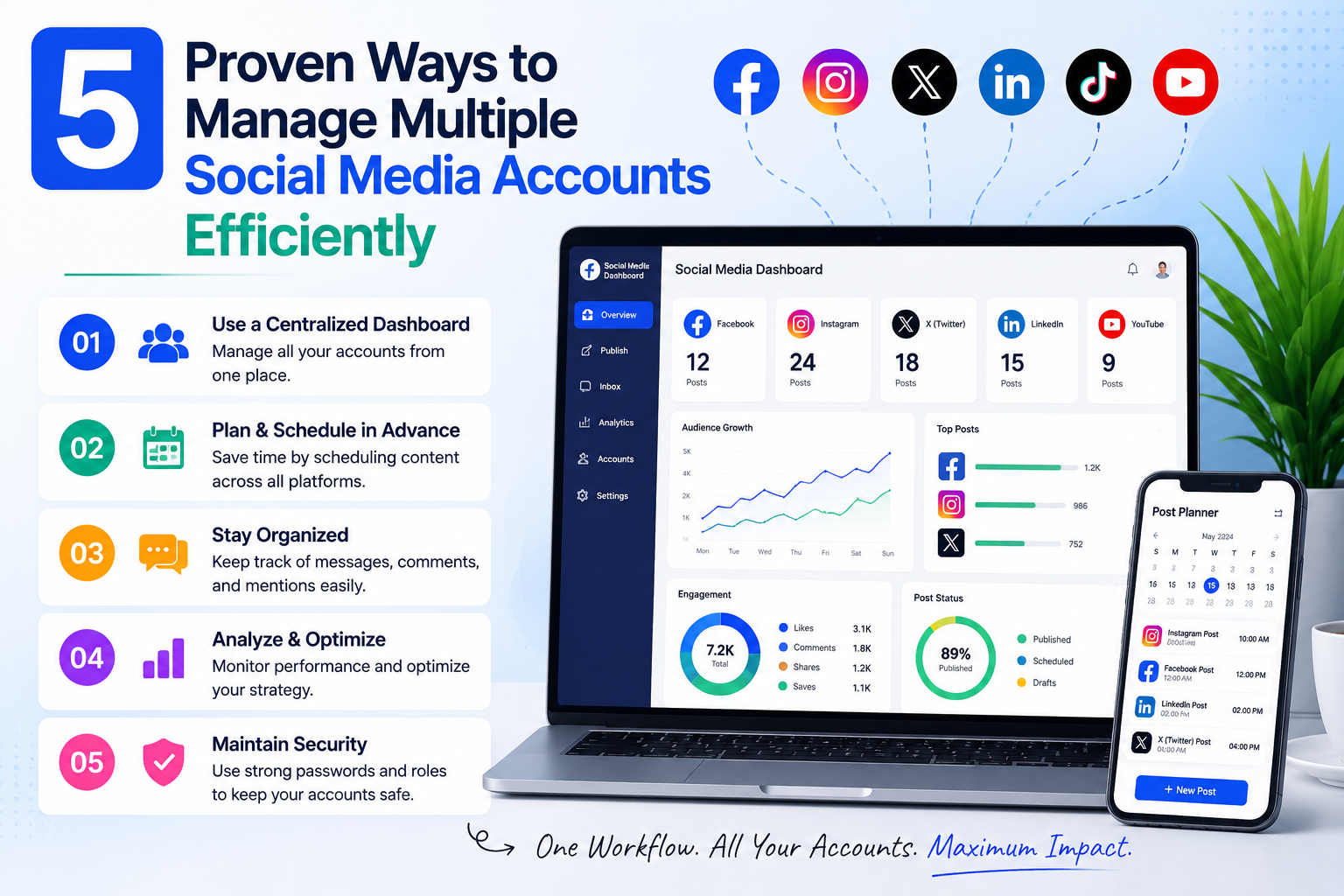
    5 Proven Ways to Manage Multiple Social Media Accounts Efficiently

    Managing multiple social media accounts has become a daily challenge for businesses, marketers, agencies, and content creators. With platforms like Facebook, Instagram, LinkedIn, X (formerly Twitter), Pinterest, TikTok, and YouTube, maintaining a consistent presence across every channel requires careful planning and organization.

    Without a proper strategy, switching between platforms, creating content, scheduling posts, and responding to audiences can quickly become overwhelming. Managing multiple accounts manually may also lead to missed posting schedules, inconsistent brand messaging, and difficulty tracking social media performance.

    Fortunately, managing multiple social media accounts does not have to be complicated. By using the right tools, developing a structured content strategy, and organizing daily tasks effectively, businesses can simplify their social media workflows and maintain a stronger online presence.

    A well-organized social media management process helps marketers save time, improve audience engagement, and maintain consistency across different platforms. It also makes it easier to monitor performance, identify successful content strategies, and understand what audiences expect from each channel.

    Whether you are managing social media accounts for a small business, handling multiple clients as an agency, or building your personal brand across different platforms, adopting efficient management practices can significantly improve your productivity.

    Why It’s Important to Manage Multiple Social Media Accounts

    Each social media platform serves a different audience and requires unique content. Posting randomly or managing each account separately often leads to inconsistent branding, lower engagement, and missed marketing opportunities.

    Effective social media management helps businesses maintain a consistent brand identity while adapting their messaging to different platforms. For example, Instagram focuses more on visual content, LinkedIn supports professional communication, and Facebook helps businesses connect with broader communities. Understanding these differences allows marketers to create platform-specific content that resonates with their target audience.

    Learning how to manage multiple social media accounts offers several benefits:

    • Maintain a consistent brand identity across platforms
    • Save time with organized workflows
    • Increase audience engagement
    • Improve marketing performance
    • Track campaigns and analytics more effectively

    Let’s explore the best strategies to simplify your social media management.

    1. Create a Social Media Content Calendar

    A content calendar is one of the most effective tools to manage multiple social media accounts. Planning your content in advance keeps your posting schedule organized and ensures every platform stays active.

    It also helps you coordinate campaigns, prepare seasonal content, and maintain consistency across different channels. By assigning specific dates, content formats, and topics to each post, you can avoid last-minute planning and reduce repetitive work. A well-structured content calendar makes it easier to identify content gaps, balance promotional and informative posts, and align social media activities with your marketing goals. This approach allows businesses to maintain a consistent online presence while saving valuable time.

    Your content calendar should include:

    • Publishing dates and times
    • Social media platforms
    • Content topics
    • Images or videos
    • Captions
    • Hashtags
    • Campaign objectives

    Planning weekly or monthly content reduces last-minute stress while improving consistency.

    Benefits of a Content Calendar

    • Keeps posting consistent
    • Saves planning time
    • Organizes marketing campaigns
    • Prevents missed publishing dates
    • Simplifies team collaboration

    2. Batch Create Your Content

    Creating content every day can become exhausting. Instead, dedicate one or two days each week to producing multiple posts at once.

    Content batching allows you to create captions, graphics, videos, and stories in one session before scheduling them for future publishing. This approach reduces the time spent switching between creative tasks and helps maintain a consistent content production workflow.

    You can begin by selecting weekly topics, preparing post ideas, designing visuals, and writing captions for different platforms. Once the content is ready, organize it into categories and schedule it according to your content calendar. Batch creation also provides more opportunities to review content quality, maintain brand consistency, and make necessary edits before publishing. By preparing content in advance, marketers can reduce daily workloads, avoid last-minute stress, and focus more on audience engagement and marketing performance.

    You can also repurpose existing content into different formats:

    • Turn blog posts into Instagram carousel posts.
    • Convert articles into LinkedIn updates.
    • Create short-form videos from long-form content.
    • Share customer testimonials across multiple platforms.

    Batching helps you manage multiple social media accounts while improving productivity and reducing creative burnout.

    Advantages of Content Batching

    • Saves valuable time
    • Improves productivity
    • Maintains posting consistency
    • Reduces daily workload
    • Produces higher-quality content

    3. Automate Your Social Media Management

    Automation is one of the smartest ways to manage multiple social media accounts without spending hours online every day.

    Modern social media management tools allow you to:

    • Schedule posts in advance

    • Publish content automatically

    • Monitor brand mentions

    • Track audience engagement

    • Respond to comments faster

    • Analyze campaign performance

    Popular social media management tools include Buffer, Hootsuite, Later, Sprout Social, and Metricool.

    While automation improves efficiency, remember that genuine interaction is still essential. Responding personally to comments and messages helps build trust and strengthen relationships with your audience.

    Additionally, automation helps reduce repetitive tasks and maintain a consistent publishing schedule across different platforms. By automating routine activities, marketers can dedicate more time to developing creative content, understanding audience preferences, and improving their overall social media strategy. However, regularly reviewing automated posts and interactions ensures that your content remains relevant, accurate, and aligned with your brand voice.

    manage multiple social media accounts

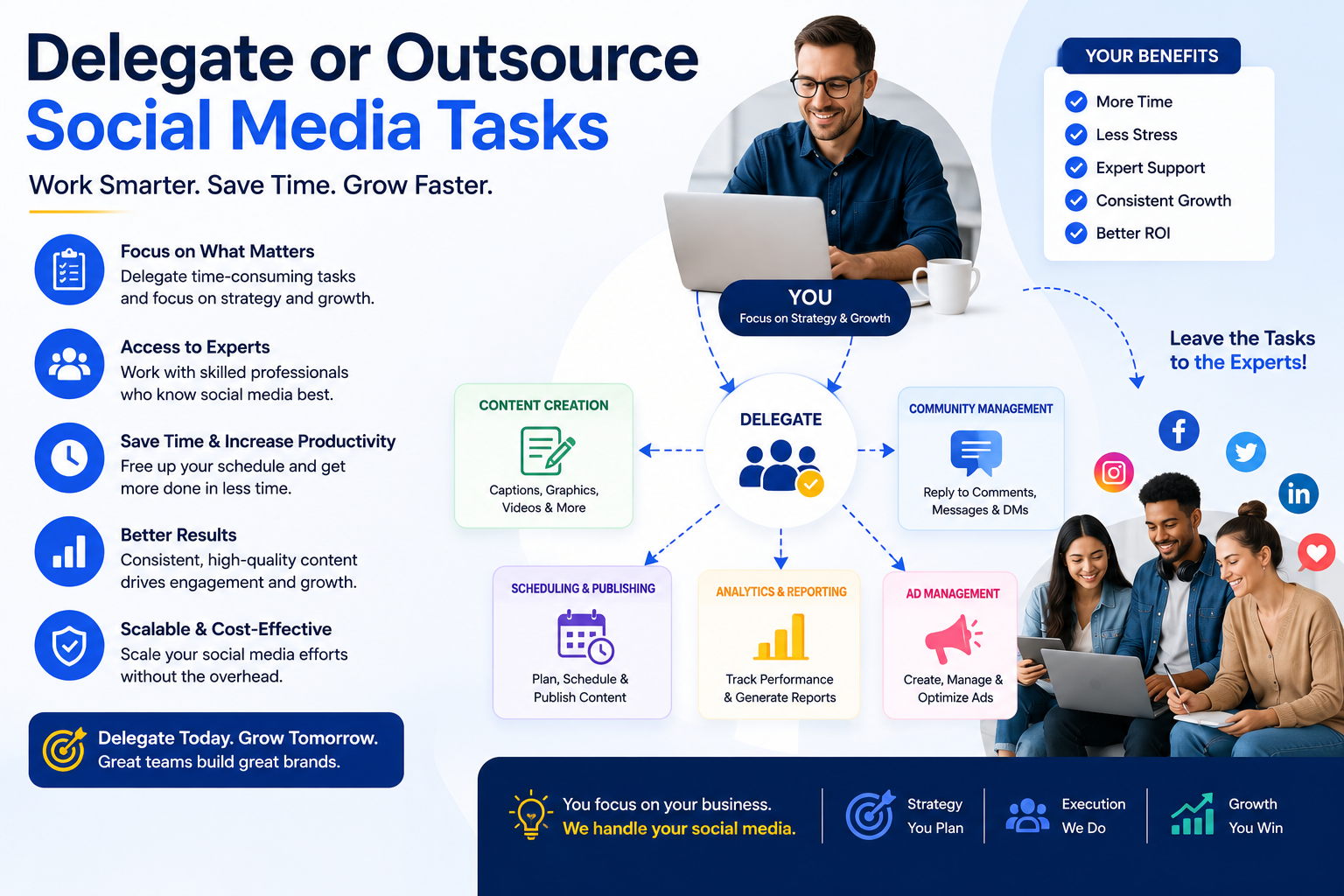
    4. Delegate or Outsource Social Media Tasks

    As your business grows, managing every social media account yourself becomes increasingly difficult. Delegating responsibilities to team members or outsourcing to professionals can significantly reduce your workload.

    Freelancers and digital marketing agencies can assist with:

    • Content creation
    • Graphic design
    • Video editing
    • Scheduling posts
    • Community management
    • Performance reporting

    Platforms like Upwork, Fiverr, and Freelancer make it easy to hire experienced social media professionals.

    Before hiring, review portfolios, check client feedback, and clearly define responsibilities to ensure successful collaboration.

    Delegation allows you to manage multiple social media accounts more efficiently while focusing on growing your business.

    manage multiple social media accounts

    5. Take Regular Breaks to Avoid Burnout

    Managing social media doesn’t mean staying online 24/7. Taking regular breaks helps you stay creative, productive, and motivated.

    Stepping away from your screens allows you to:

    • Refresh your creativity

    • Reduce stress

    • Prevent burnout

    • Analyze campaign performance objectively

    • Return with fresh marketing ideas

    A healthy work-life balance helps you maintain long-term success while effectively managing your social media presence.

    Setting clear working hours and avoiding unnecessary notifications outside your schedule can also improve mental well-being. Delegating tasks when possible and planning workloads realistically helps reduce pressure. By maintaining healthy boundaries between work and personal time, social media managers can stay focused, generate better content ideas, and maintain consistent performance without feeling overwhelmed.


    Frequently Asked Questions (FAQs)

    1. How do businesses handle social media accounts across different platforms?

    Businesses can manage their social media presence by using centralized dashboards, organizing content schedules, and assigning responsibilities to team members. This approach helps simplify daily activities and maintain consistent communication across channels.

    2. What is the easiest way to organize social media posts for different platforms?

    Creating a content calendar is an effective way to organize posts across multiple platforms. It allows marketers to plan publishing dates, prepare captions, coordinate campaigns, and ensure that content reaches the right audience at the right time.

    3. Can social media automation improve marketing productivity?

    Yes, automation can improve productivity by reducing repetitive tasks such as scheduling posts and collecting performance reports. It allows marketers to focus more on content creation, audience interaction, and developing effective marketing strategies.

    4. How often should businesses review their social media performance?

    Businesses should review their social media analytics at least weekly or monthly, depending on their marketing goals. Regular performance monitoring helps identify successful content, understand audience behavior, and improve future posting strategies.

    5. What should businesses consider when choosing a social media management platform?

    Businesses should consider supported social media networks, scheduling features, analytics capabilities, collaboration options, ease of use, and pricing. Selecting a platform that matches their workflow and marketing requirements can make account management more efficient and organized.


    manage multiple social media accounts

    Conclusion

    Learning how to manage multiple social media accounts doesn’t have to be complicated. With proper planning, content batching, automation, delegation, and regular breaks, you can stay organized while growing your audience across multiple platforms.

    Start by creating a content calendar, automate repetitive tasks, and use scheduling tools to save time. As your business expands, don’t hesitate to outsource tasks that consume too much of your schedule.

    By following these five proven strategies, you’ll improve consistency, increase engagement, and make your social media marketing more effective than ever.

    Tags :
    digitdal marketing strategy
    Author : sona

    Consectetur sollicitudin cubilia facilisis lobortis lacus a ac phasellus. Mus pulvinar enim suspendisse pharetra id commodo platea nunc aliquet.

    Learner of DigiSkillz, Digital Marketing Institute in Kochi.

  • Best AI Tools for Digital Marketers in 2026: Which Tools Should You Choose?

    Best AI Tools for Digital Marketers in 2026: Which Tools Should You Choose?

    Tags :

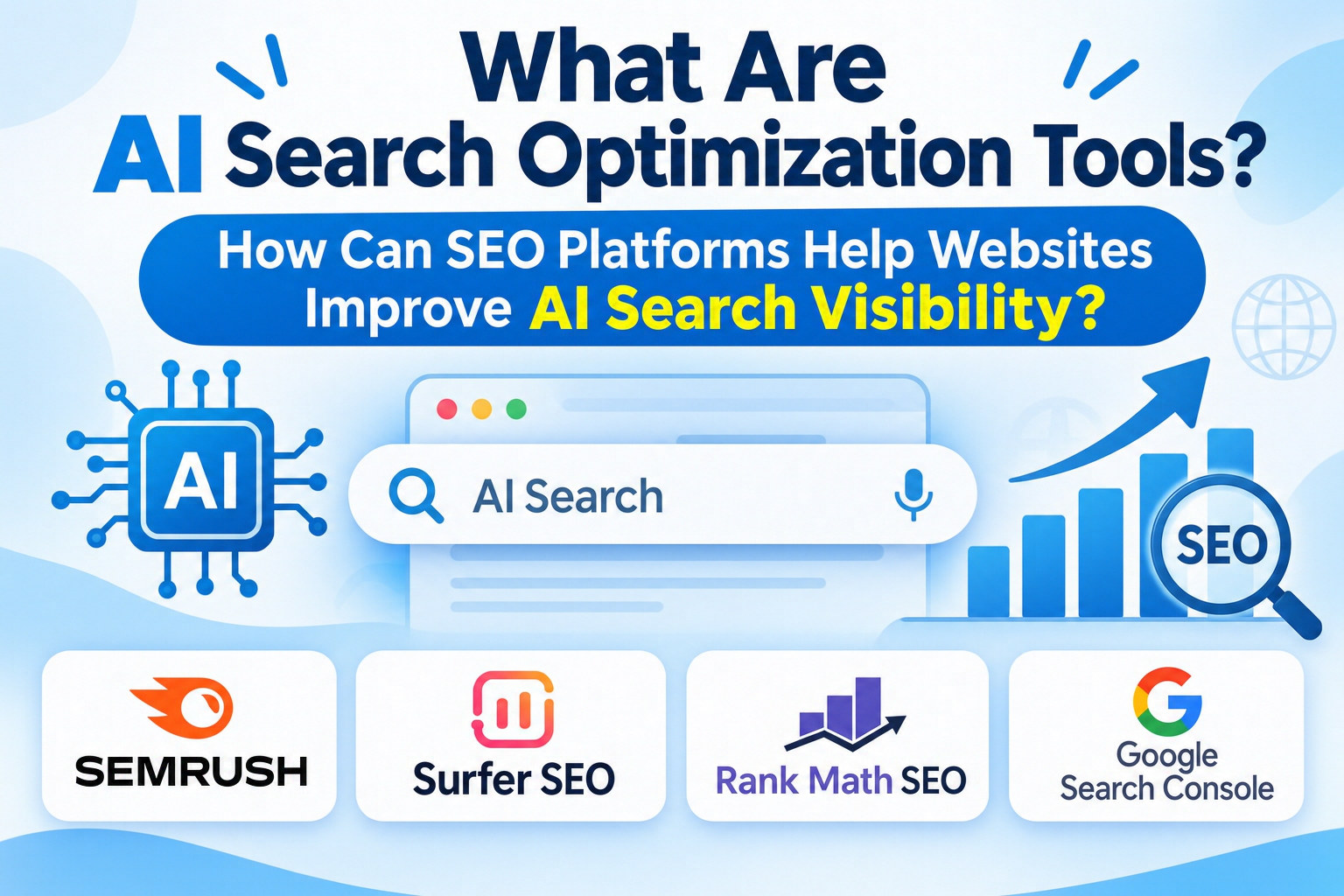
    best ai tools for digital marketers Explore how SEO platforms like Semrush, Surfer SEO, Rank Math SEO, and Google Search Console help improve AI search visibility.[/caption]

    Best AI Tools for Digital Marketers in 2026: Which Tools Should You Choose?

    Digital marketing is becoming more competitive, and AI is changing how marketers create content, optimize websites, analyze performance, and connect with customers. In 2026, the best AI tools for digital marketers help businesses save time, improve productivity, and make smarter marketing decisions without increasing their workload. AI search optimization tools are also becoming essential for improving content visibility across traditional search engines and AI-powered search platforms.

    However, choosing the right tools is not always easy. Some platforms focus on content creation, while others specialize in SEO, analytics, advertising, or customer personalization. The best choice depends on your marketing goals, budget, and the size of your team.

    In this guide, you will discover the best AI tools for digital marketers in 2026, understand what each category offers, and learn how to choose the right solutions for your business.

    Which AI Solutions Help Marketers Manage Multiple Marketing Tasks? 

    AI tools for digital marketers are platforms that automate repetitive tasks, support creative work, and provide useful insights for improving marketing performance. Choosing the best AI tools for digital marketers improves productivity, helps businesses save time, and makes marketing workflows more efficient.

    Instead of relying on one platform for everything, marketers can combine different AI tools based on their requirements.

    Some popular AI tools and platforms include:

    • ChatGPT for content planning, research assistance, brainstorming, and marketing copy.
    • Claude for writing assistance, content analysis, and working with longer documents.
    • Jasper for marketing-focused content creation and brand messaging.
    • Copy.ai for marketing copy generation, sales content, and automated content workflows.
    • Ahrefs for backlink analysis, competitor research, keyword discovery, and SEO performance tracking.
    • Google Analytics 4 for website performance measurement and audience insights.
    • HubSpot for marketing automation, CRM workflows, and customer engagement.

    These tools serve different purposes. Understanding their capabilities is more important than simply choosing the most popular platform.

    How Can Marketers Use AI to Write and Edit Content Faster? 

    AI content creation tools help marketers develop ideas, write marketing content, improve readability, and reduce the time spent on repetitive writing tasks. These AI tools support different digital marketing activities, making it easier for marketers to create engaging content and manage their marketing workflows efficiently.

    For website owners, these tools can be especially useful when publishing blog posts, landing pages, product descriptions, and website content regularly.

    What Makes ChatGPT, Claude, and Jasper Useful for Content Creation?

    ChatGPT, Claude, and Jasper are useful options for different content requirements.

    ChatGPT can assist with blog outlines, SEO content planning, social media captions, email drafts, and content brainstorming. It is particularly useful when you need flexible assistance across multiple marketing tasks.

    Claude is helpful for analyzing longer documents, developing structured content, and refining writing for clarity and consistency.

    Jasper focuses on marketing content workflows, including campaign messaging, brand voice, and promotional copy.

    When evaluating AI writing tools, consider:

    • Writing quality and readability.
    • Integration with your existing workflow.
    • Support for different content formats.
    • Editing and collaboration features.

    AI writing tools can make content creation easier, but human creativity still plays an important role in producing quality content. Marketers should focus on creating meaningful content that reflects their brand voice, answers audience questions, and provides useful information. Combining AI assistance with human creativity helps create engaging and reader-friendly content.

    What Are AI Search Optimization Tools?

    AI tools for digital marketers are platforms that automate repetitive tasks, support creative work, and provide useful insights for improving marketing performance. Choosing the best AI tools for digital marketers improves productivity, helps businesses save time, and makes marketing workflows more efficient. In addition, AI search optimization tools help marketers improve content visibility across search engines and AI-powered search platforms.

    Instead of relying on one platform for everything, marketers can combine different AI tools based on their requirements.

    Some popular AI tools and platforms include:

    • ChatGPT for content planning, research assistance, brainstorming, and marketing copy.

    • Claude for writing assistance, content analysis, and working with longer documents.

    • Jasper for marketing-focused content creation and brand messaging.

    • Copy.ai for marketing copy generation, sales content, and automated content workflows.

    • Ahrefs for backlink analysis, competitor research, keyword discovery, and SEO performance tracking.

    • Google Analytics 4 for website performance measurement and audience insights.

    • HubSpot for marketing automation, CRM workflows, and customer engagement.

    These tools serve different purposes. Understanding their capabilities is more important than simply choosing the most popular platform.

    How Can SEO Platforms Help Websites Improve AI Search Visibility? 

    Several established SEO platforms offer features that support AI-assisted search optimization.

    Semrush provides keyword research, competitor analysis, site auditing, and content optimization capabilities. It can help website owners identify opportunities and understand their search performance.

    Surfer SEO helps writers optimize content using keyword recommendations, topic coverage, and content analysis.

    Rank Math SEO helps website owners optimize page titles, meta descriptions, schema markup, and on-page SEO elements. Its structured data features can help search engines better understand website content. 

    Google Search Console helps website owners monitor search impressions, clicks, indexing issues, and search queries. Although it is not primarily an AI writing tool, it remains an important source of SEO performance data.

    For AI search optimization, combine these tools with a strong content strategy. Publish accurate, helpful information, organize content using clear headings, answer questions directly, and support important claims with reliable sources.

    Remember that no AI tool can guarantee rankings or citations in AI-generated search answers.

    How Do AI Tools Simplify Marketing Data Analysis? 

    AI tools for marketing data analysis

    AI analytics tools help marketers understand campaign performance, identify patterns, and make better decisions using marketing data.

    Instead of manually reviewing multiple reports, marketers can use AI-assisted analysis to summarize trends, investigate performance changes, and identify potential opportunities.

    How Can AI Improve Marketing Analytics?

    Google Analytics 4 is an essential platform for understanding website traffic, user engagement, and conversions, making it one of the best AI tools for digital marketers when combined with AI-powered data analysis solutions. Marketers can also use AI search optimization tools to understand search visibility and improve content performance across search engines and AI-powered search platforms.

    Marketers can use it to measure:

    • Website traffic sources.

    • Landing page performance.

    • User engagement.

    • Conversion events.

    • Campaign performance.

    • Audience behavior.

    AI assistants such as ChatGPT can also help explain datasets, summarize reports, and support data analysis when the relevant information is provided securely.

    For reporting workflows, look for tools that connect with your existing analytics platforms and provide understandable insights rather than complicated dashboards.

    The most useful analytics tool is one that helps you answer practical questions, such as which pages generate leads, which campaigns perform well, and where visitors leave your website.

    How Do AI Tools Help Create Social Media Content and Ads? 

    AI-powered social media and advertising tools help marketers create content, generate creative ideas, optimize campaigns, and manage multiple channels more efficiently.

    They are especially useful for businesses that publish regularly or manage paid advertising campaigns across different platforms.

    What AI Tools Can Help With Social Media Marketing?

    Canva AI supports the creation of marketing graphics, presentations, social media visuals, and creative assets.

    Meta Ads tools include AI-powered advertising capabilities that help advertisers create and optimize campaign creatives and delivery.

    Google Ads offers AI-driven campaign features that assist with advertising automation, targeting, bidding, and campaign optimization.

    These tools can reduce manual work, but marketers still need to understand their audience and campaign objectives.

    When choosing social media and advertising tools, evaluate:

    • Creative generation capabilities.
    • Scheduling and publishing options.
    • Advertising integrations.
    • Performance reporting.
    • Audience targeting support.
    • Campaign management features.

    AI can help produce more creative variations, but successful advertising still depends on good messaging, relevant offers, and accurate audience targeting.

    Which AI Tools Are Best for Email Marketing and Personalization?

    AI email marketing tools help businesses create personalized messages, automate customer communication, and improve campaign relevance.

    They can support everything from welcome emails and promotional campaigns to abandoned-cart reminders and customer follow-ups.

    How Can AI Improve Email Marketing?

    Platforms such as HubSpot, Mailchimp, and ActiveCampaign offer email marketing and automation capabilities, with AI features varying by platform and subscription.

    These tools can help marketers:

    • Draft email subject lines and content.
    • Organize audience segments.
    • Automate customer journeys.
    • Personalize messages using customer information.
    • Schedule campaigns.
    • Analyze email performance.

    For example, an online store can send different messages to new subscribers, returning customers, and customers who have not purchased recently.

    When comparing email platforms, focus on automation flexibility, segmentation options, integration support, deliverability, and pricing.

    Personalization should also respect customer privacy. Use customer information responsibly and follow applicable data protection requirements.

    How Should You Choose the Best AI Marketing Tools for Your Business?
    The best AI marketing tools are not necessarily the most expensive or feature-rich platforms. They are the ones that solve your actual marketing problems efficiently.

    Before investing in a tool, consider these factors.


    1. What Is Your Main Marketing Goal?

    Start by identifying the task you want to improve.

    • For content creation, consider ChatGPT, Claude, or Jasper.
    • For SEO and search optimization, explore Semrush, Ahrefs, or Surfer SEO.
    • For analytics, use Google Analytics 4 and suitable reporting tools.
    • For creative design, consider Canva AI.
    • For email automation, evaluate HubSpot, Mailchimp, or ActiveCampaign.

    2. How Much Should You Spend on AI Marketing Tools?

    Your budget should match your business requirements.

    Freelancers and beginners can often start with free plans or a small number of affordable subscriptions.

    Small businesses may benefit from combining a writing assistant with an SEO platform and an email marketing solution.

    Agencies and larger marketing teams may require advanced reporting, collaboration features, automation, and multiple integrations.

    Always verify current pricing, usage limits, available features, and subscription conditions before committing. AI tools frequently change their plans and capabilities.

    3. Does the Tool Fit Your Existing Workflow?

    A useful AI tool should make your work easier, not create additional complexity.

    Check whether it integrates with your website platform, analytics tools, advertising accounts, or CRM system.

    Also consider whether your team can learn and use the platform without extensive training.

    4. Can You Trust the Results?

    AI tools can produce incorrect information, misleading insights, or generic content.

    Before publishing content or acting on recommendations, verify important facts, review generated material, and check whether the output supports your business objectives.

    Human judgment remains essential in digital marketing.

    What Are the Best AI Marketing Tools for Beginners?

    Beginners should start with a small collection of tools that covers their most important marketing activities.

    A practical starting setup could include:

    • ChatGPT for content planning and writing assistance.
    • Canva AI for marketing graphics.
    • Google Analytics 4 for website performance tracking.
    • Google Search Console for search visibility monitoring.
    • A suitable SEO platform when keyword research and content optimization become regular requirements.

    This approach helps beginners understand how AI fits into their workflow without spending too much money.

    As your business grows, you can add automation, advanced reporting, and specialized marketing tools.

    Frequently Asked Questions About AI Tools for Digital Marketers

    What is the best AI tool for digital marketing in 2026?

    ChatGPT is a versatile option for content planning, brainstorming, and writing assistance. However, the best tool depends on your requirements. SEO, analytics, advertising, and email marketing often require specialized platforms.

    Are AI marketing tools worth it for small businesses?

    Yes. AI marketing tools can help small businesses save time, improve content production, and automate repetitive tasks. Starting with affordable tools that solve specific problems is usually the most practical approach.

    Can AI tools replace digital marketers?

    No. AI tools can automate certain tasks and support decision-making, but marketers still need creativity, strategic thinking, audience understanding, and critical judgment.

    What are AI search optimization tools used for?

    AI search optimization tools help marketers research keywords, understand search intent, analyze competitors, improve content structure, and support visibility across search engines and AI-powered search experiences.

    Are free AI marketing tools enough for beginners?

    Free tools can be sufficient for learning, basic content creation, and simple marketing workflows. Paid plans become useful when you need higher usage limits, advanced features, integrations, or team collaboration.

    How many AI tools should a digital marketer use?

    There is no fixed number. Most marketers can begin with two or three tools that support their primary tasks. Adding more platforms makes sense only when they provide clear value.

    Conclusion: Which AI Tools Should Digital Marketers Choose in 2026?

    AI is becoming an important part of modern digital marketing, helping professionals create content, optimize websites, analyze data, manage advertising, and personalize customer communication.

    The best AI tools for digital marketers in 2026 depend on your business goals, team size, and budget. Instead of subscribing to every new platform, focus on tools that solve real problems and improve your workflow.

    For website owners and digital marketers, a combination of AI writing assistance, SEO tools, analytics platforms, and marketing automation can provide a practical foundation.

    Start by identifying one repetitive marketing task that takes too much time. Choose a suitable AI tool, test its results, and measure whether it improves productivity or performance.

    The smartest approach is not to use more AI tools, but to use the right AI tools effectively.

    Author : ATHUL KRISHNA P.S

    Digital Marketing Freelancer dedicated to boosting brands with SEO, engaging content, and performance-focused online marketing strategies.

    Learner of DigiSkillz, Digital Marketing Course in Kochi.

    Freelance Digital Marketer in Vaduthala

Call Now Button