
Digital advertising is evolving faster than ever, and Meta continues to remain one of the most influential platforms shaping the future of online marketing. As artificial intelligence becomes deeply integrated into advertising systems, businesses are witnessing a major transformation in how campaigns are created, optimized, and measured.
The Future of Meta Ads in 2026 is no longer centered around manual campaign management, detailed audience targeting, and endless A/B testing. Instead, advertisers are entering an era where AI handles much of the heavy lifting while marketers focus on strategy, customer experience, and creative direction.
From automated campaign optimization and AI-generated creatives to privacy-focused measurement and messaging-driven conversions, Meta is building an ecosystem designed to deliver better results with less manual intervention. Businesses that adapt early will gain a significant competitive advantage, while those relying on outdated advertising methods may struggle to keep pace.
This guide explores the most important trends shaping The Future of Meta Ads in 2026 and explains how businesses can prepare for the next generation of digital advertising.
How Meta Advertising Has Changed
Over the last decade, Meta advertising has undergone several major transformations.
Initially, advertisers had extensive control over audience targeting, placements, bidding strategies, and campaign structures. Success often depended on a marketer’s ability to identify highly specific audience segments and manually optimize performance.
Today, Meta’s advertising ecosystem operates very differently.
The platform has shifted from audience-first advertising to AI-first advertising. Instead of asking advertisers to define every targeting parameter, Meta’s machine learning systems now analyze billions of user signals to identify potential customers automatically.
Several key developments have driven this change:
- Increased AI adoption
- Reduced third-party tracking
- Privacy regulations
- Automation-focused campaign structures
- Growth of short-form video content
- Expansion of messaging-based commerce
These changes form the foundation of The Future of Meta Ads in 2026, where automation and predictive intelligence play a central role in campaign success.
AI-Powered Campaign Management
Artificial intelligence has become the backbone of Meta’s advertising platform. AI systems now influence nearly every aspect of campaign performance.
Advantage+ Campaigns
Advantage+ campaigns represent Meta’s strongest move toward full automation.
Rather than manually selecting audience segments, placements, and optimization settings, advertisers provide business goals and creative assets while Meta’s AI determines the most effective delivery strategy.
Benefits include:
- Faster campaign setup
- Improved conversion efficiency
- Reduced manual management
- Better budget allocation
- Continuous machine learning optimization
For eCommerce brands, Advantage+ Shopping Campaigns have already demonstrated strong performance improvements. By 2026, these automated campaign formats are expected to become the default choice for many advertisers.
The Future of Meta Ads in 2026 will likely see even greater reliance on Advantage+ systems as AI becomes more accurate at predicting customer behavior.
Automated Creative Optimization
Creative performance is becoming increasingly data-driven.
Meta’s AI can now automatically:
- Test multiple headlines
- Adjust ad copy
- Reorder creative elements
- Optimize call-to-action buttons
- Modify image formats
- Select the best-performing combinations
Instead of manually creating dozens of ad variations, marketers can provide a collection of assets while Meta automatically assembles and tests different combinations.
This significantly reduces workload while improving campaign efficiency.
AI Audience Expansion
Traditional audience targeting is becoming less important.
Meta’s AI can now identify high-converting users beyond advertiser-defined audience groups.
For example:
A fitness brand targeting gym enthusiasts may discover that Meta’s AI identifies additional audiences interested in wellness, nutrition, wearable technology, or productivity tools.
This expanded targeting capability allows advertisers to reach customers they may never have considered manually.
The End of Manual Targeting?
One of the biggest discussions surrounding The Future of Meta Ads in 2026 is whether manual targeting will eventually disappear.
Historically, advertisers built campaigns around:
- Interests
- Behaviors
- Demographics
- Lookalike audiences
- Custom audience segments
While these tools remain valuable, Meta increasingly encourages broader targeting approaches.
Why?
Because machine learning often outperforms human assumptions.
Many advertisers unknowingly limit campaign potential by restricting audience size. AI systems can analyze thousands of behavioral signals that humans cannot access or interpret effectively.
In 2026, successful advertisers will likely focus less on finding audiences and more on providing Meta with:
- High-quality creative assets
- Strong conversion signals
- Accurate tracking
- Clear business objectives
Audience discovery will increasingly become the responsibility of AI.
How AI Is Reshaping Ad Creative
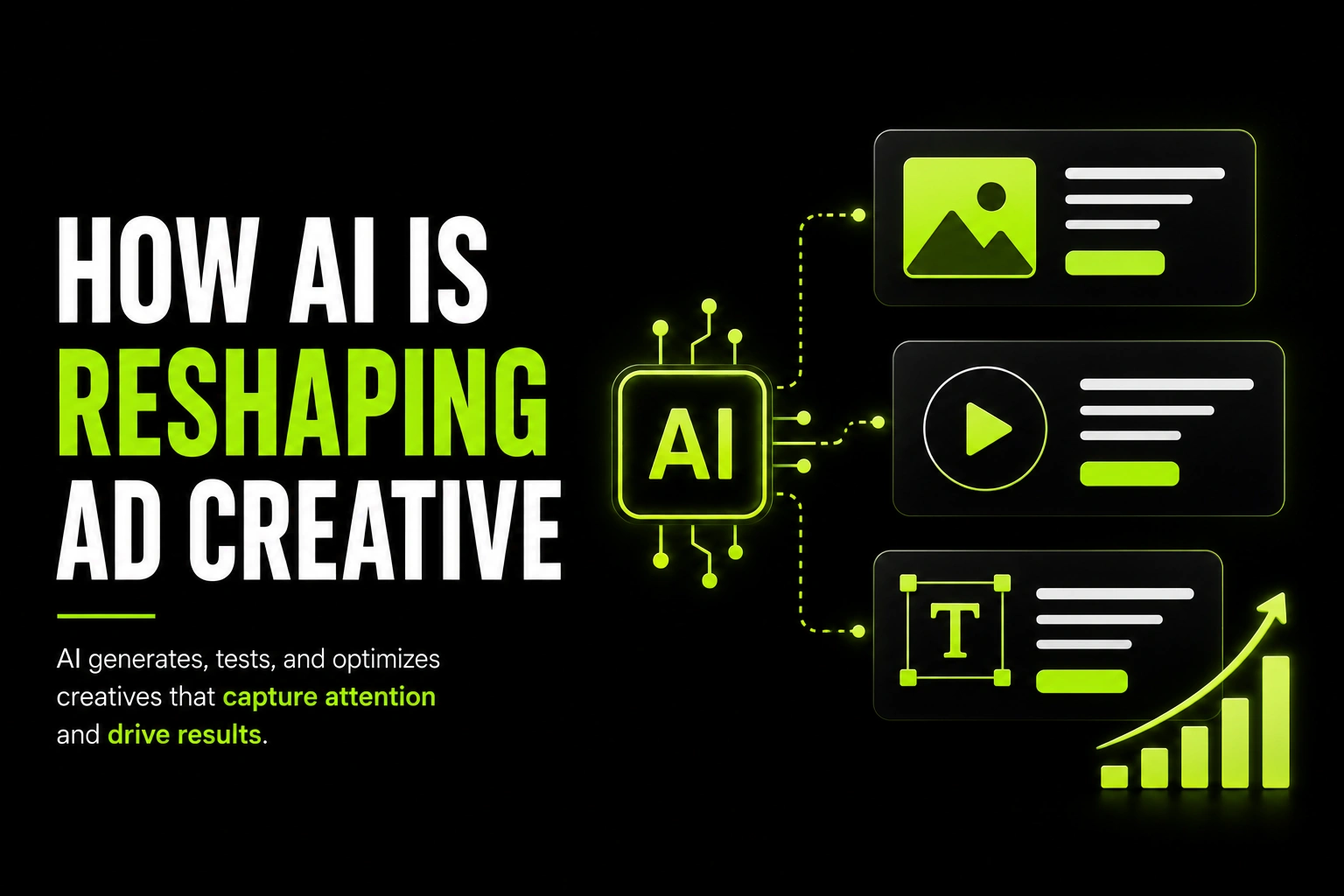
Creative quality remains the single biggest driver of advertising performance.
However, the creative production process is changing dramatically.
AI Image Generation
AI-powered image generation tools are reducing the time and cost required to produce advertising assets.
Businesses can now create:
- Product visuals
- Lifestyle imagery
- Promotional graphics
- Seasonal campaigns
- Social media creatives
Instead of organizing expensive photo shoots, brands can generate multiple creative concepts within minutes.
Small businesses especially benefit from this technology because they can compete visually with larger brands despite having smaller budgets.
AI Video Production
Video continues to dominate engagement across Meta platforms.
AI video generation tools are making video creation more accessible than ever.
Businesses can transform:
- Product photos into videos
- Blog content into visual stories
- Customer testimonials into video ads
- Static graphics into animated creatives
As AI technology advances, advertisers will produce larger volumes of personalized video content without significantly increasing production costs.
Dynamic Ad Personalization
Personalization is becoming increasingly sophisticated.
Meta’s AI can adapt ad experiences based on:
- User interests
- Purchase behavior
- Location
- Device usage
- Engagement history
Instead of serving identical advertisements to everyone, campaigns will dynamically adjust messaging and visuals based on individual user profiles.
This personalized approach increases relevance and improves conversion rates.
Attribution in the Privacy-First Era
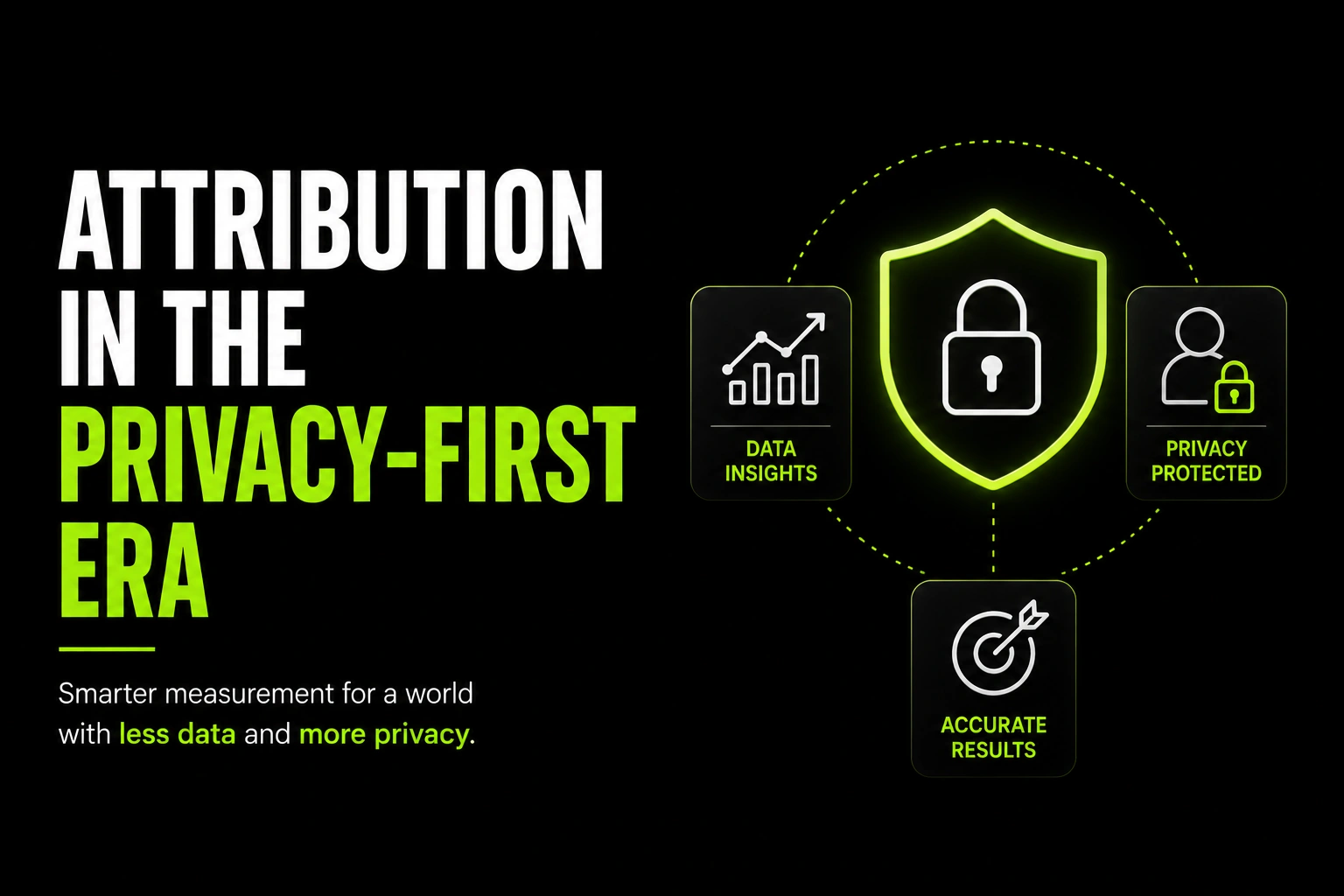
Privacy changes have significantly altered digital advertising measurement.
Consumers increasingly expect:
- Data transparency
- Greater privacy controls
- Reduced tracking
At the same time, governments continue implementing stricter regulations regarding user data collection.
As a result, advertisers face new challenges in understanding customer journeys.
The Future of Meta Ads in 2026 requires marketers to embrace privacy-friendly measurement strategies rather than relying on traditional tracking methods.
Businesses must prioritize:
- First-party data collection
- CRM integration
- Conversion APIs
- Server-side tracking
- Consent management systems
These technologies help maintain measurement accuracy while respecting user privacy.
Meta’s New Measurement Models
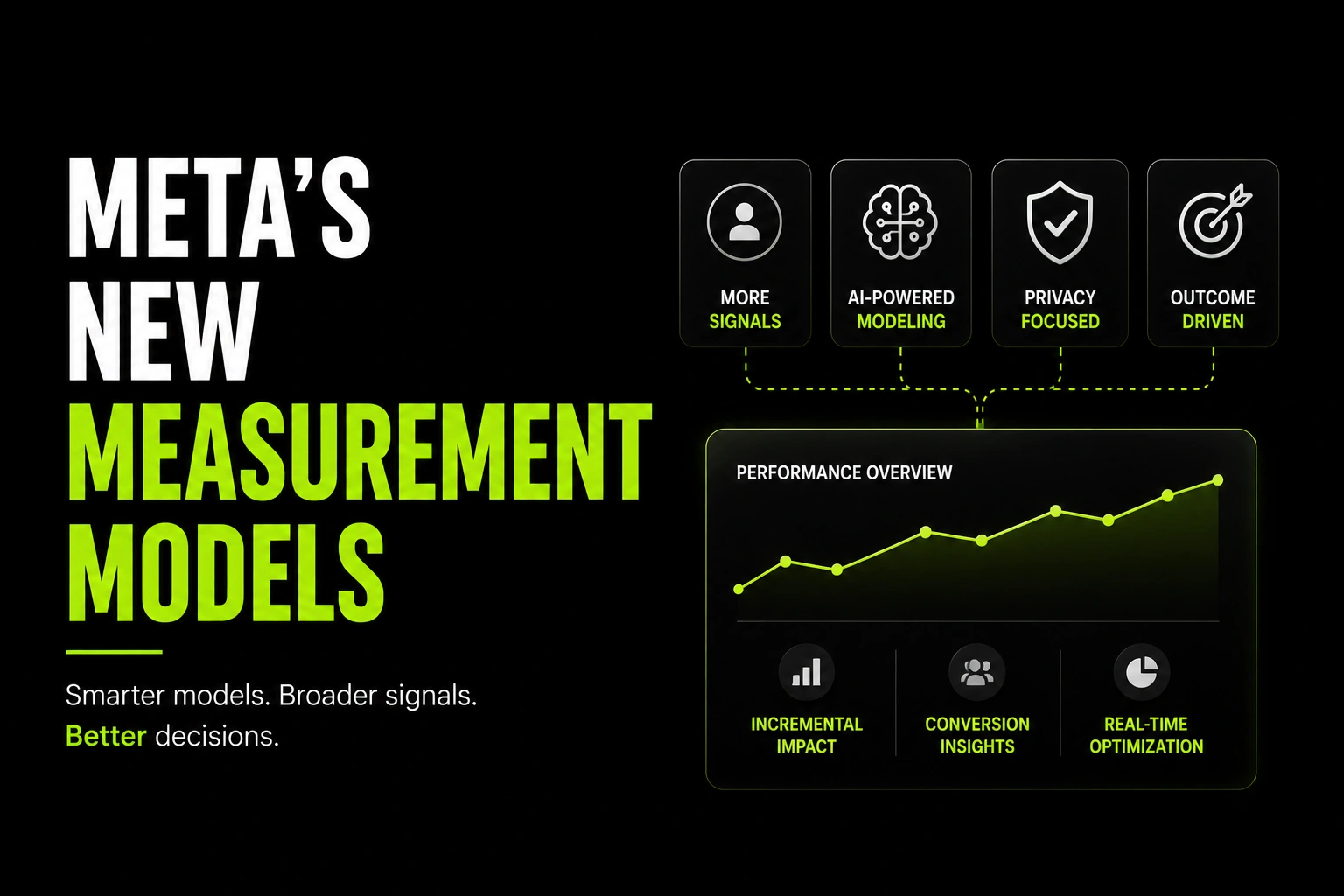
Measurement is becoming more predictive rather than purely observational.
Instead of tracking every user action directly, Meta increasingly relies on statistical modeling and machine learning.
Key measurement innovations include:
Conversion Modeling
Meta estimates conversions that cannot be directly observed due to privacy restrictions.
Incrementality Testing
Advertisers increasingly measure the true impact of advertising by comparing exposed and non-exposed audiences.
Aggregated Event Measurement
Privacy-friendly reporting provides performance insights while protecting user information.
The Future of Meta Ads in 2026 will place greater emphasis on modeled performance metrics rather than exact attribution.
Marketers must learn to evaluate trends and business outcomes instead of focusing solely on individual conversion paths.
The Rise of Messaging Ads
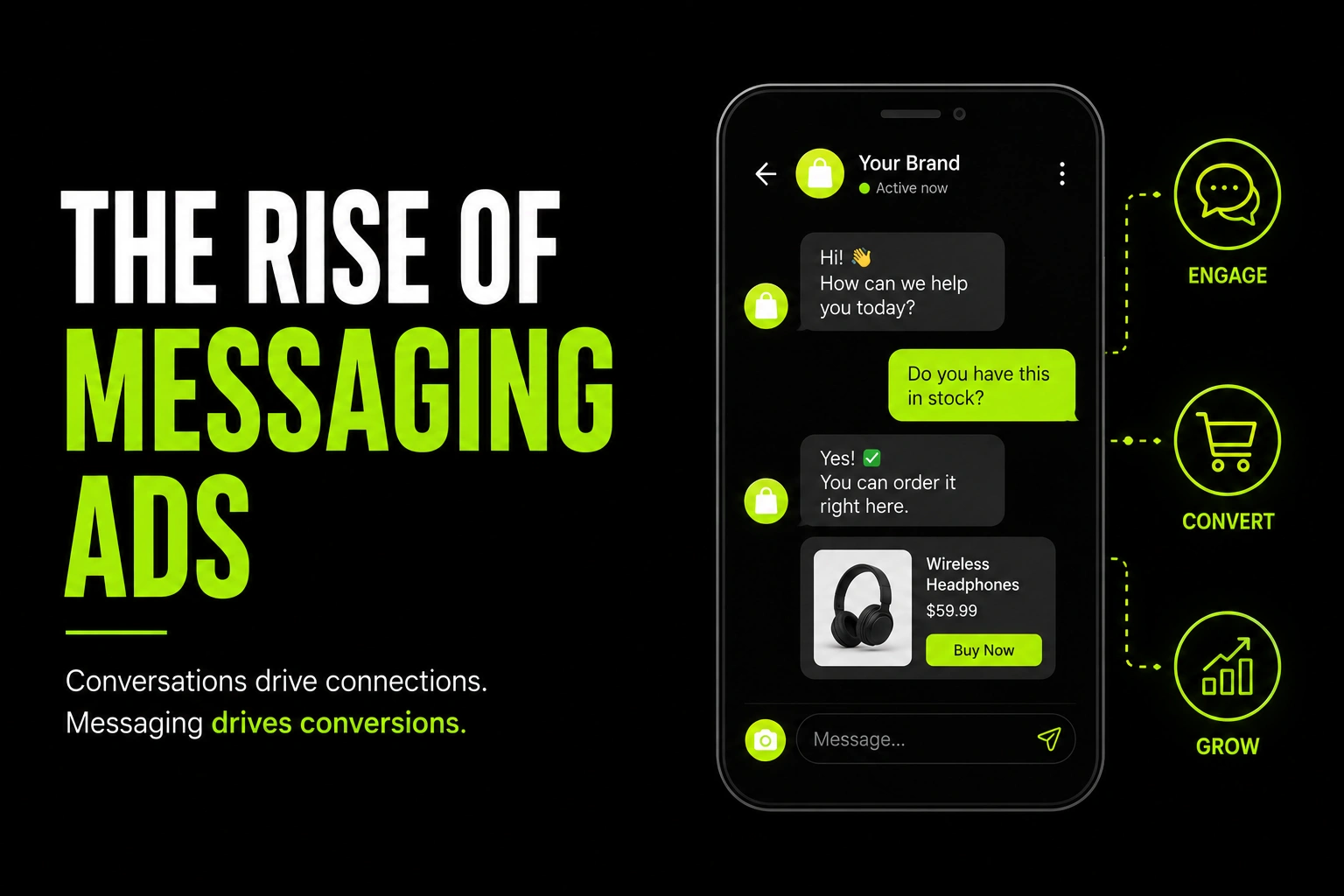
Messaging is becoming one of the most important advertising channels within Meta’s ecosystem.
Consumers increasingly prefer direct conversations over traditional website interactions.
Benefits of messaging ads include:
- Faster response times
- Higher engagement
- Better lead qualification
- Personalized customer support
- Improved conversion rates
Businesses can guide prospects directly into conversations through:
- Messenger ads
- Instagram Direct ads
- WhatsApp ads
This creates a more interactive customer experience and shortens the sales cycle.
WhatsApp Marketing in 2026
WhatsApp is becoming a powerful marketing and sales platform.
With billions of users worldwide, it offers unique opportunities for businesses to build direct relationships with customers.
Popular use cases include:
Lead Generation
Advertisers can drive prospects directly into WhatsApp conversations.
Customer Support
Businesses can answer questions and resolve concerns in real time.
Product Recommendations
AI-powered chat experiences can guide customers toward suitable products.
Automated Follow-Ups
Businesses can nurture leads through personalized messaging sequences.
For small businesses, WhatsApp marketing offers a cost-effective alternative to complex sales funnels.
The Future of Meta Ads in 2026 will likely include deeper integration between advertising, customer service, and conversational commerce.
Reels Advertising Dominance
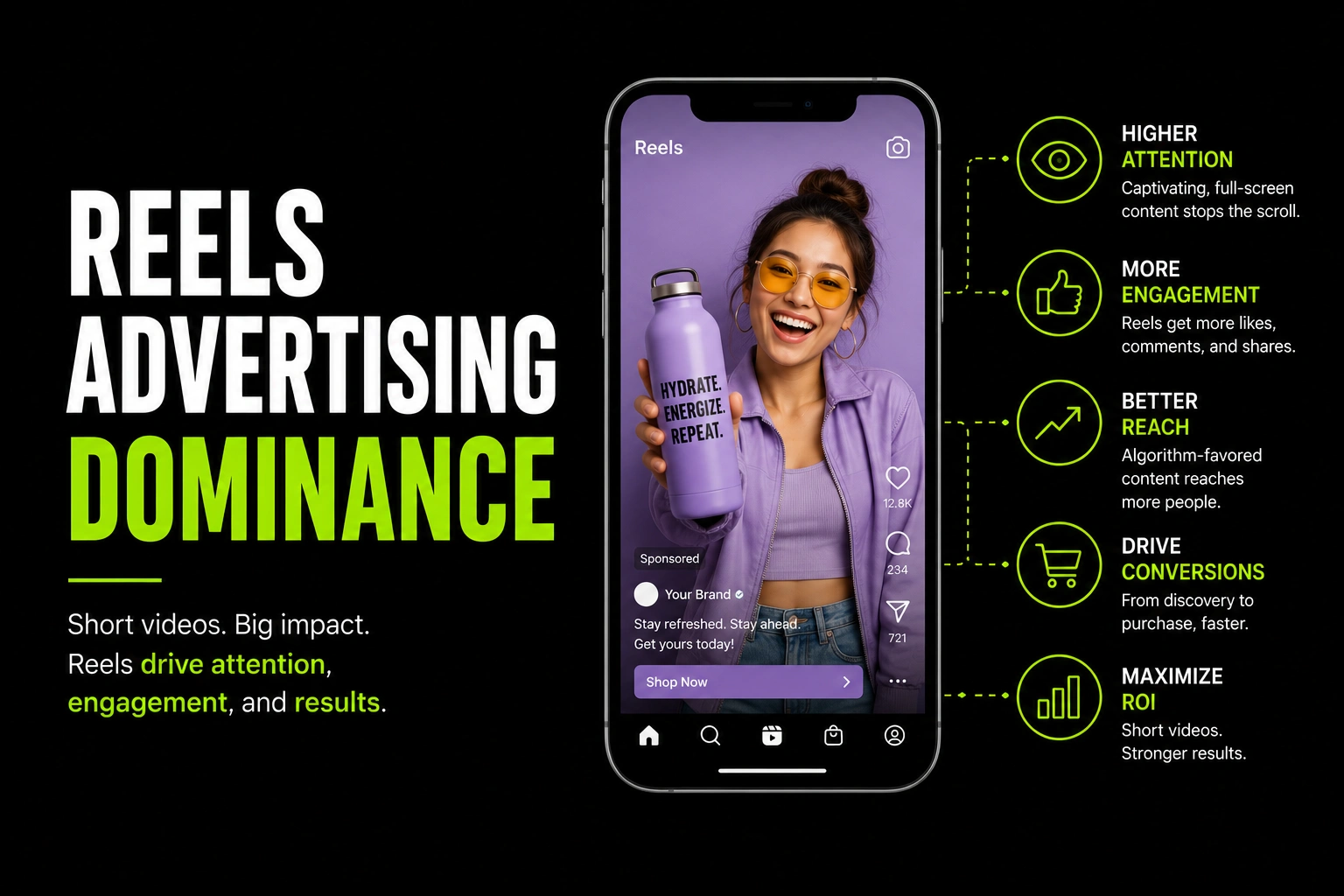
Short-form video continues to dominate user attention.
Reels have become one of Meta’s fastest-growing content formats and are expected to remain central to advertising strategies.
Why Reels perform well:
- High engagement rates
- Mobile-first experience
- Strong algorithmic distribution
- Better content discovery
- Increased watch time
Successful Reels advertisements often:
- Capture attention immediately
- Deliver value quickly
- Use authentic storytelling
- Include clear calls to action
Businesses that master short-form video creation will gain a significant advantage in 2026.
How Businesses Should Prepare

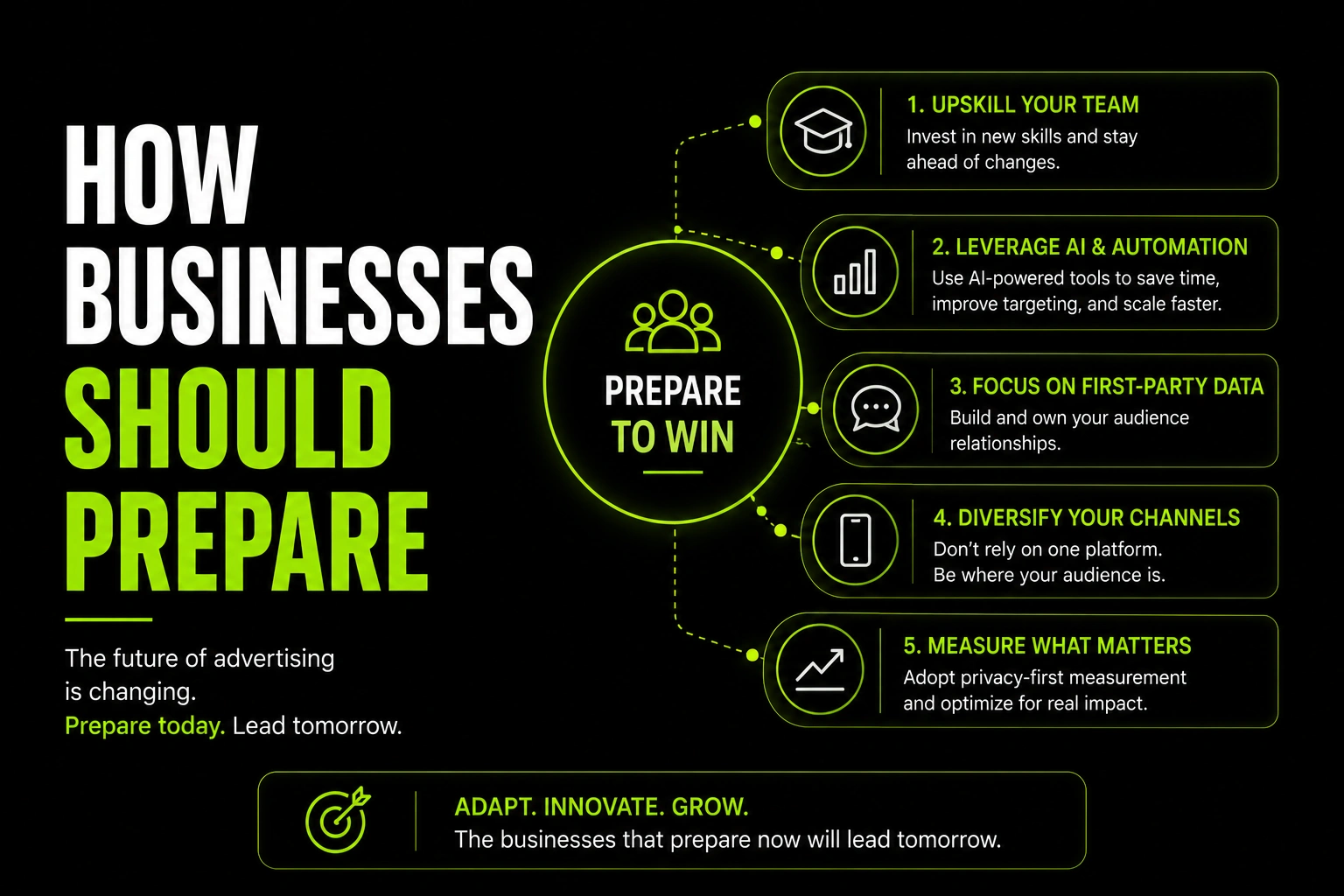
Adapting to The Future of Meta Ads in 2026 requires strategic preparation.
Invest in Creative Excellence
Creative quality remains the most important success factor.
Focus on:
- Authentic storytelling
- User-generated content
- Video production
- Visual branding
Build First-Party Data
Collect customer information responsibly through:
- Email subscriptions
- Loyalty programs
- CRM systems
- Lead generation campaigns
Implement Conversion API
Server-side tracking improves measurement accuracy and strengthens campaign optimization.
Embrace Automation
Rather than fighting automation, learn how to leverage AI effectively.
Allow Meta’s algorithms to optimize delivery while focusing on business strategy.
Prioritize Customer Experience
The most successful advertisers will create seamless customer journeys across ads, websites, messaging channels, and support systems.
Common Mistakes Advertisers Will Make
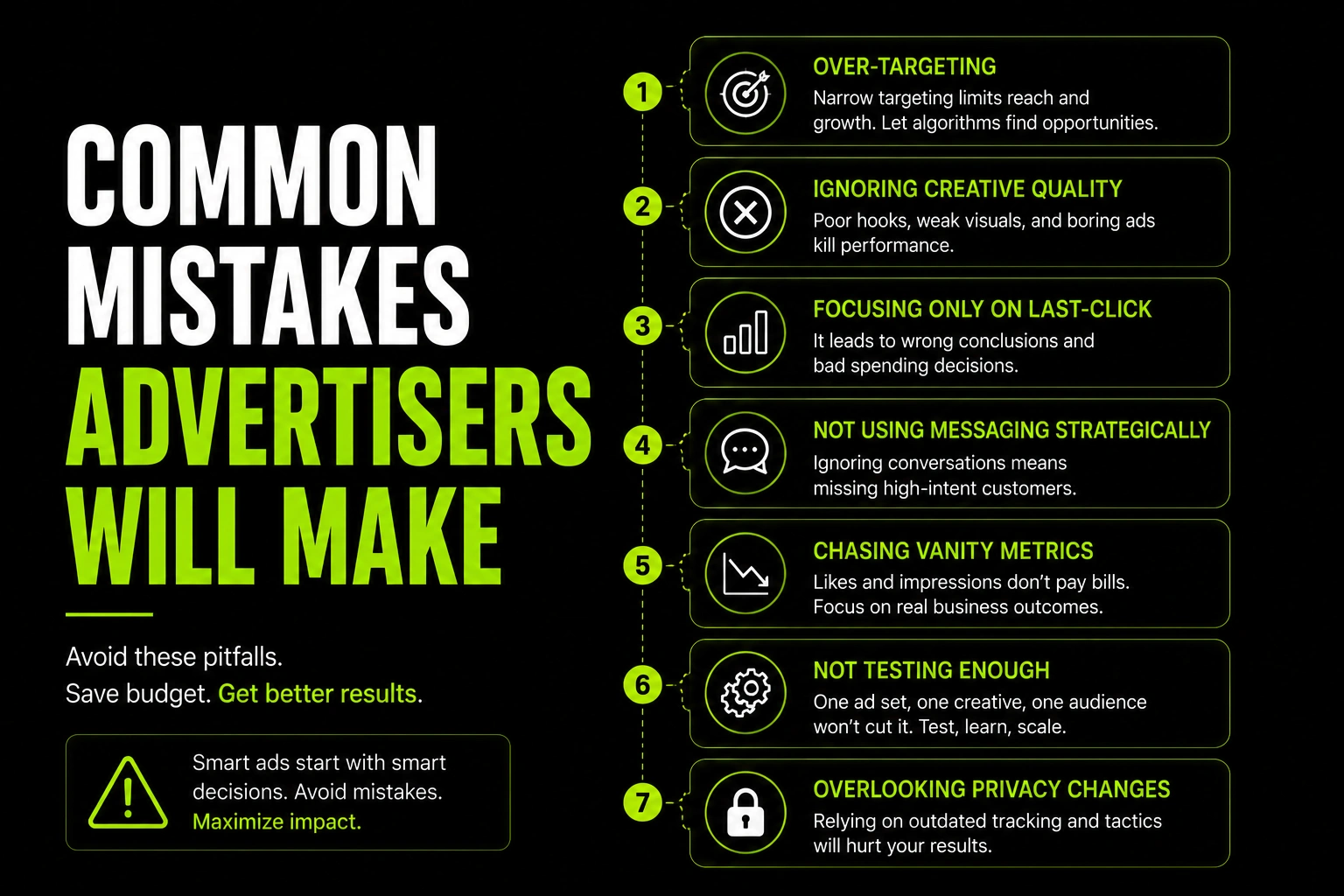
Many businesses will struggle with the transition toward AI-driven advertising.
Common mistakes include:
Overcontrolling Campaigns
Excessive manual restrictions can limit algorithm performance.
Ignoring Creative Quality
Even advanced AI cannot compensate for weak creative assets.
Relying on Outdated Attribution Models
Traditional tracking methods may no longer provide complete performance insights.
Avoiding Video Content
Businesses that fail to invest in video will lose visibility across Meta’s platforms.
Neglecting First-Party Data
Data ownership becomes increasingly important as privacy regulations continue evolving.
Avoiding these mistakes can significantly improve advertising results.
Future Predictions for Meta Advertising
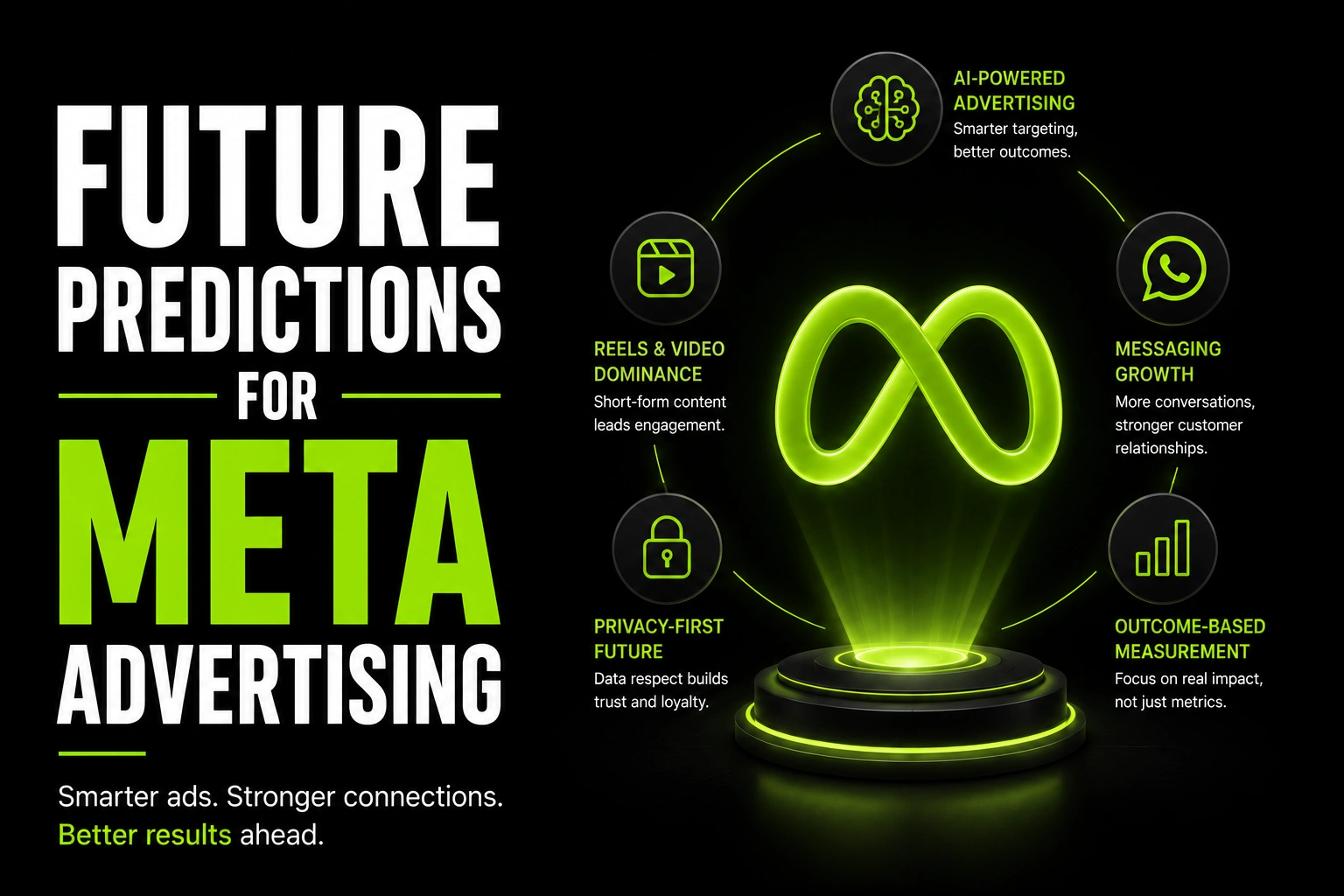
Several trends are likely to define The Future of Meta Ads in 2026 and beyond.
AI Will Manage Most Campaign Decisions
Campaign setup, optimization, targeting, and budget allocation will become increasingly automated.
Creative Will Become the Primary Competitive Advantage
As targeting becomes automated, creative differentiation will determine campaign success.
Conversational Commerce Will Expand
Messaging-based customer journeys will continue replacing traditional website-first experiences.
AI-Generated Content Will Become Standard
Brands will produce larger volumes of personalized content at lower costs.
Measurement Will Become More Predictive
Modeled attribution and incrementality testing will become standard performance evaluation methods.
Full-Funnel Automation Will Increase
Meta’s ecosystem will continue integrating discovery, engagement, conversion, and customer retention into a unified platform.
Businesses that adapt to these changes early will be positioned for sustainable growth.
The Future of Meta Ads in 2026 is defined by artificial intelligence, automation, privacy-focused measurement, and personalized customer experiences. The days of relying solely on manual targeting and traditional optimization techniques are fading as Meta’s machine learning systems become increasingly sophisticated.
Success in this new advertising landscape will depend on a company’s ability to embrace automation while investing heavily in creative quality, first-party data, video content, and conversational marketing.
Businesses that understand how AI-powered campaign management, messaging-based commerce, Reels advertising, and privacy-first measurement work together will gain a significant competitive advantage. Those who continue using outdated advertising strategies risk falling behind.
As Meta continues evolving into a fully AI-driven advertising ecosystem, marketers who adapt quickly will be best positioned to capture attention, drive conversions, and build long-term customer relationships in the years ahead.
Author – Saneeb
Learner of Digiskillz, Digital Marketing Course in Kottakkal