
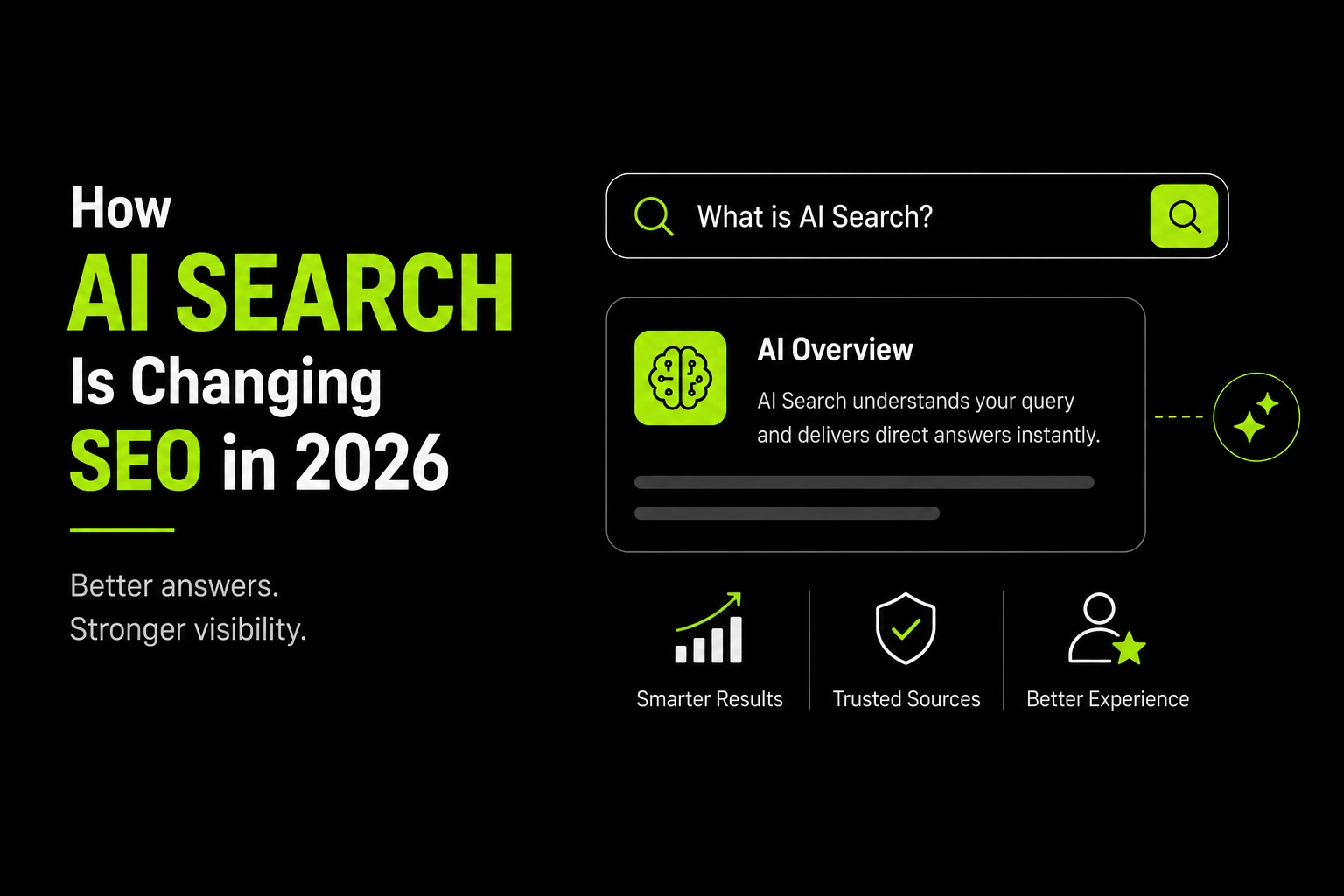
 Search has never remained the same for long. Over the years, businesses have adapted to algorithm updates, changing ranking factors, mobile-first indexing, and evolving user behavior. However, the transformation taking place today is different from previous updates. The conversation around how AI search is changing SEO in 2026 is not simply about another adjustment to search engine algorithms. It is about a fundamental shift in how people discover information online.
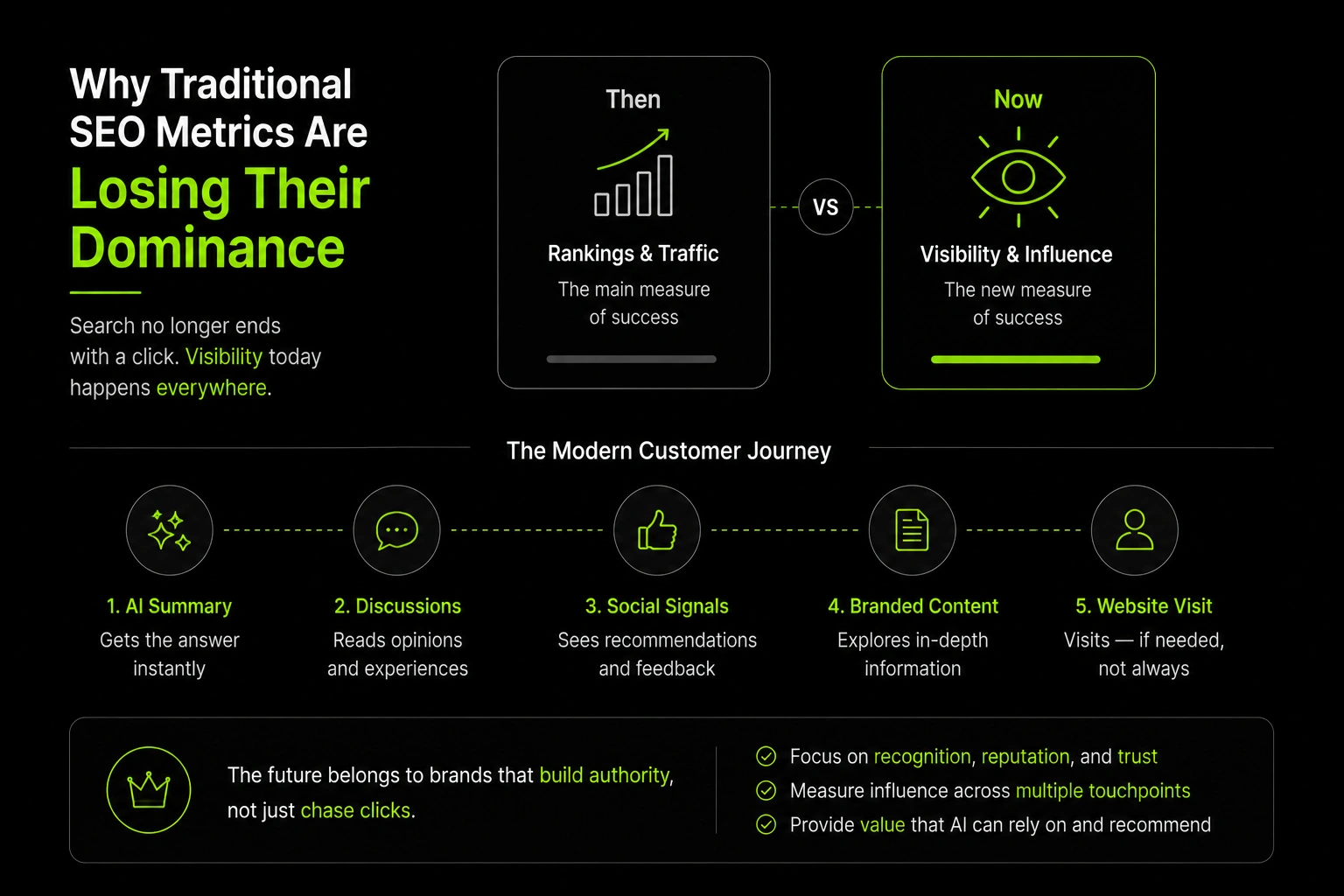
For decades, search engines acted as gateways to websites. Users entered a query, reviewed a list of results, and clicked through to different pages until they found the information they needed. Success in SEO was often measured by rankings, organic traffic, and click-through rates.
Today, artificial intelligence is changing that experience. Search engines are increasingly providing answers directly within search results. Instead of sending users to multiple websites, AI-powered systems can summarize information, answer questions, and present recommendations instantly. This shift is changing the relationship between websites, search engines, and users.
The Day Search Stopped Sending Visitors
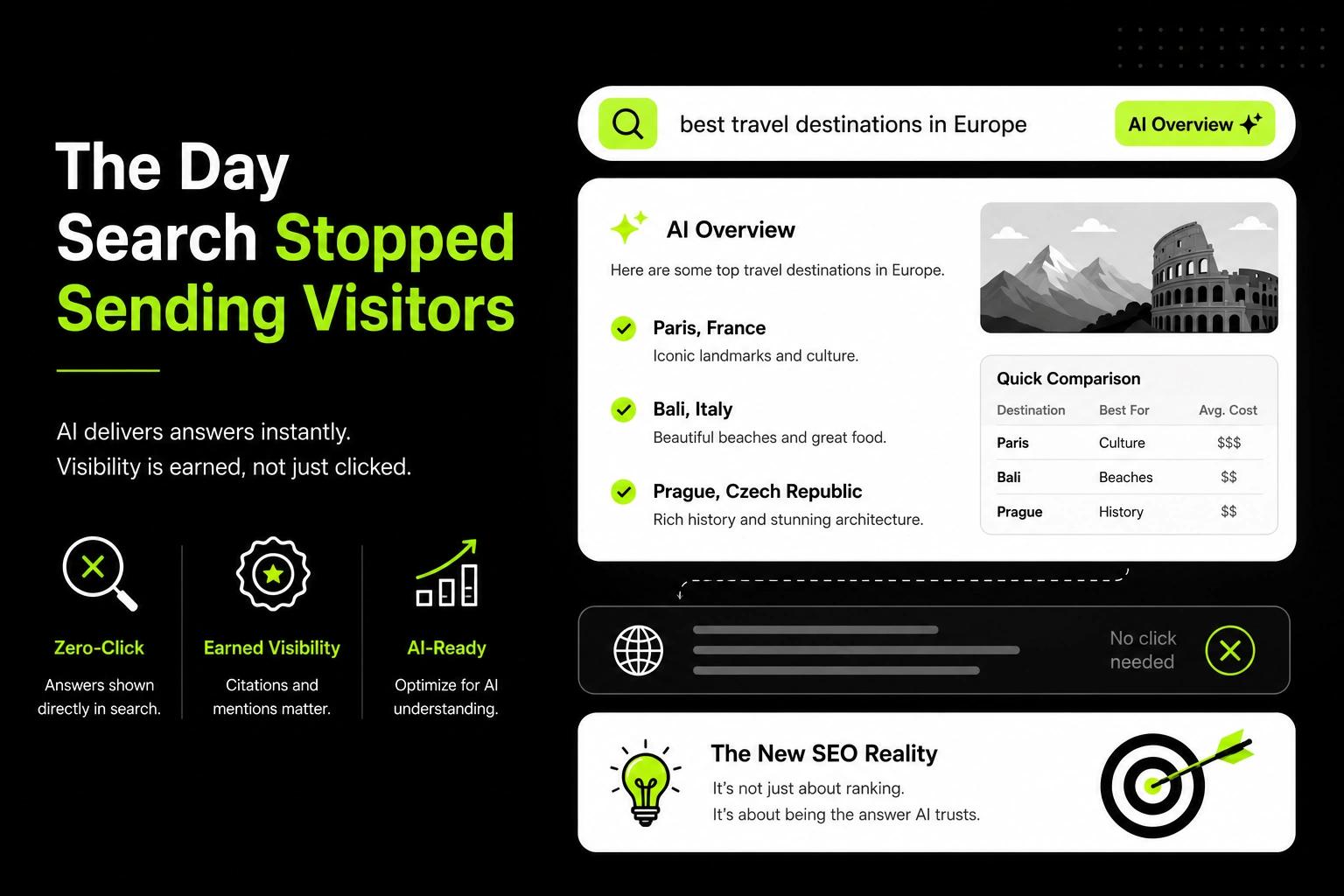
One of the biggest changes in modern search is the growing number of searches that end without a website visit. Users can receive weather updates, product comparisons, travel recommendations, and detailed explanations without clicking a single result.
This trend highlights one of the most important aspects of How AI Search Is Changing SEO in 2026. Visibility no longer depends entirely on attracting clicks. Businesses must now consider how often their content is referenced, cited, or recognized by AI-powered search systems.
Many organizations still focus exclusively on rankings, but rankings alone no longer tell the complete story. A page may rank highly while receiving fewer visits because users already received their answer directly within the search interface.
Search Engines Are Becoming Answer Engines
Traditional search engines worked like digital directories. Their primary role was to organize information and help users locate relevant resources.
AI-powered search operates differently.
Instead of presenting a list of links, modern search systems evaluate information from multiple sources and generate a direct response. Users receive a summary rather than a collection of options.
This development demonstrates How AI Search Is Changing SEO in 2026 in a significant way. Websites are no longer competing solely for rankings. They are competing to become trusted sources that AI systems choose to reference.
As a result, authority and credibility are becoming increasingly valuable. The content most likely to succeed is content that demonstrates expertise, accuracy, and reliability.
Why Users Prefer AI-Powered Search
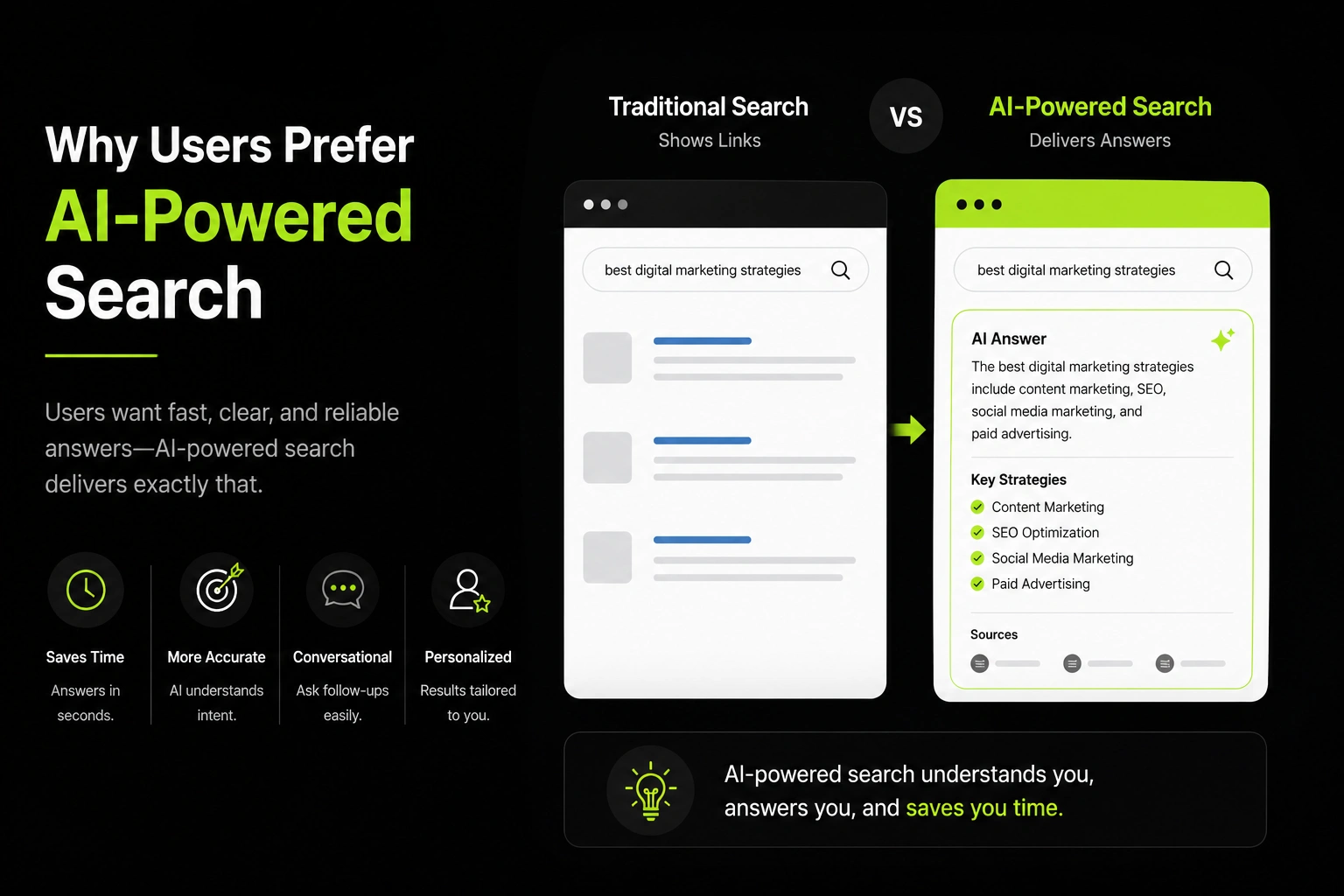
The rapid adoption of AI-powered search is largely driven by convenience.
Most users want answers quickly. They do not necessarily want to compare ten different articles or spend time reviewing multiple websites. They want information delivered in a clear and understandable format.
Artificial intelligence helps satisfy that expectation by simplifying the search process.
A person researching digital marketing strategies, for example, can receive a detailed answer in seconds rather than spending time visiting multiple websites. This convenience is reshaping user expectations and influencing how people interact with search platforms.
Understanding How AI Search Is Changing SEO in 2026 requires understanding this change in user behavior. Search is becoming more conversational, more personalized, and more focused on immediate solutions.
The New Competition Is Attention
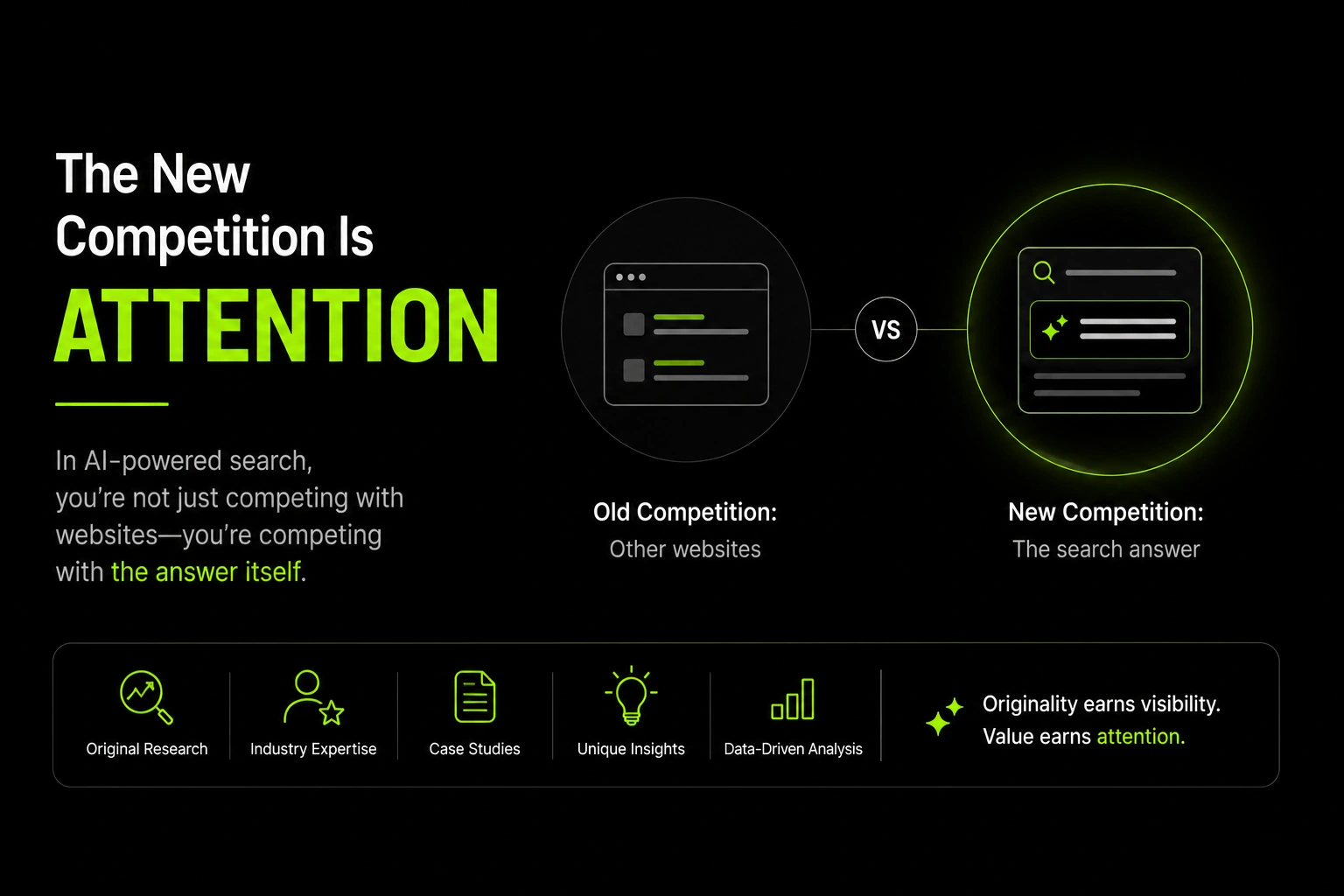
Many businesses continue to believe that their primary competition is other websites targeting the same keywords.
That perspective is becoming outdated.
In an AI-driven environment, the real competition is attention.
When search engines provide answers directly within results pages, businesses are competing against the search experience itself. To stand out, content must offer something unique that cannot easily be replicated through automated summaries.
This includes:
- Original research
- Industry expertise
- Case studies
- Personal experiences
- Unique insights
- Data-driven analysis
One of the key lessons from How AI Search Is Changing SEO in 2026 is that originality matters more than ever before.
Content that simply repeats information available elsewhere often struggles to gain visibility. Content that contributes something new has a greater opportunity to stand out.
Visibility Is Becoming More Important Than Traffic
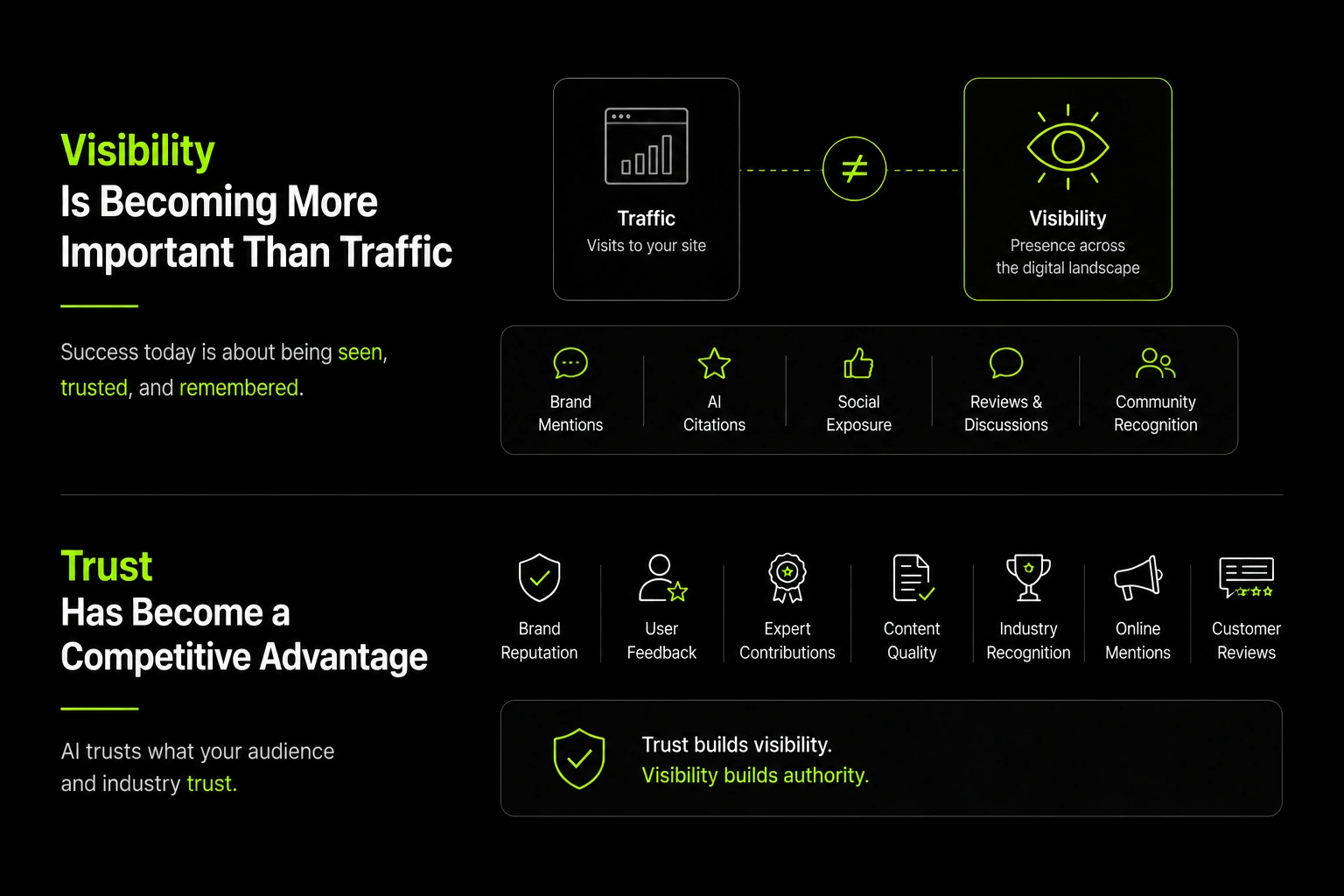
For many years, SEO professionals treated traffic as the ultimate measure of success.
Today, visibility and traffic are no longer identical concepts.
A business can become highly visible even if users do not immediately visit its website. Brand mentions, AI-generated citations, social media exposure, reviews, and online discussions all contribute to awareness.
This is another example of How AI Search Is Changing SEO in 2026. Businesses must begin measuring success using broader indicators rather than relying solely on website visits.
The goal is not only to generate traffic but also to establish recognition, trust, and authority within an increasingly AI-driven search environment.
Trust Has Become a Competitive Advantage
Artificial intelligence depends on trustworthy information.
To generate accurate responses, AI systems must evaluate which sources deserve confidence. As a result, trust is becoming one of the most valuable assets a business can build online.
Search platforms increasingly assess:
- Brand reputation
- User feedback
- Expert contributions
- Content quality
- Industry recognition
- Online mentions
- Customer reviews
Trust extends beyond individual webpages. It exists across an entire digital presence.
Businesses that consistently provide valuable information and maintain a positive reputation are more likely to earn visibility within AI-generated responses.
This trend further illustrates How AI Search Is Changing SEO in 2026 by shifting attention toward credibility rather than simple optimization tactics.
Why Businesses Must Rethink Their Content Strategy
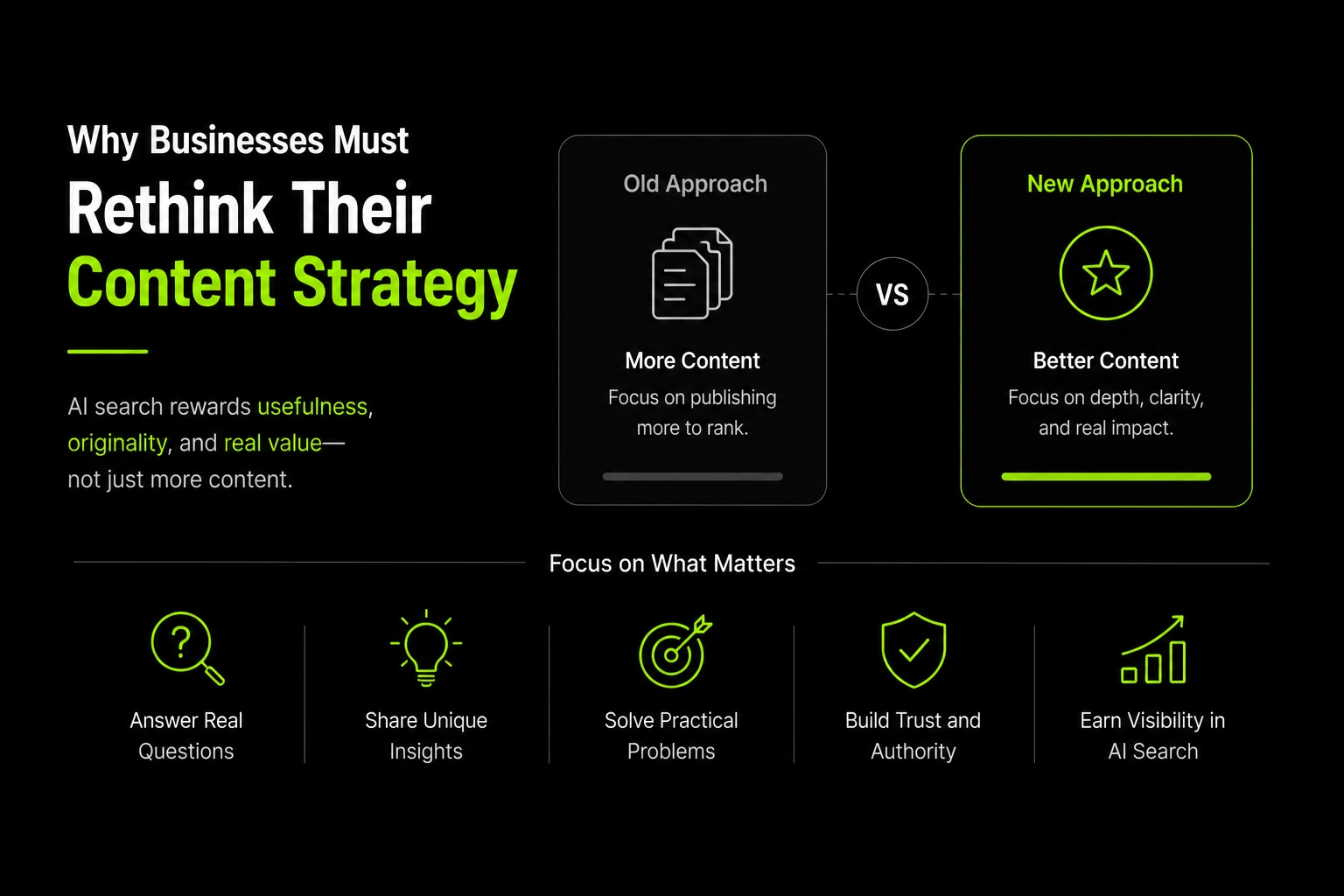
Another important aspect of How AI Search Is Changing SEO in 2026 is the way businesses approach content creation. For many years, companies focused on publishing large amounts of content to increase their chances of ranking for different keywords. While quantity once played a significant role in SEO, artificial intelligence is shifting the focus toward usefulness and originality.
Modern search experiences reward content that offers genuine value rather than simply targeting search terms. AI-powered systems are becoming increasingly capable of identifying whether a page contributes unique insights or merely repeats information already available elsewhere. This means businesses can no longer rely on producing dozens of similar articles and expecting strong results.
Instead, organizations should focus on creating resources that answer real questions, solve practical problems, and provide perspectives based on experience. A well-researched article with actionable information is often more valuable than multiple pages covering the same topic in slightly different ways. Readers are also becoming more selective about the content they consume. They want information that is clear, relevant, and trustworthy.
As businesses evaluate How AI Search Is Changing SEO in 2026, they must recognize that content quality is becoming a competitive advantage. Brands that consistently publish useful and reliable information are more likely to build authority over time. This authority can influence not only traditional rankings but also how often a brand appears in AI-generated responses.
Ultimately, the future of content marketing is less about producing more content and more about producing better content. Companies that prioritize expertise, originality, and user value will be in a stronger position to earn visibility as AI-powered search continues to evolve.
Expertise Is Replacing Generic Content
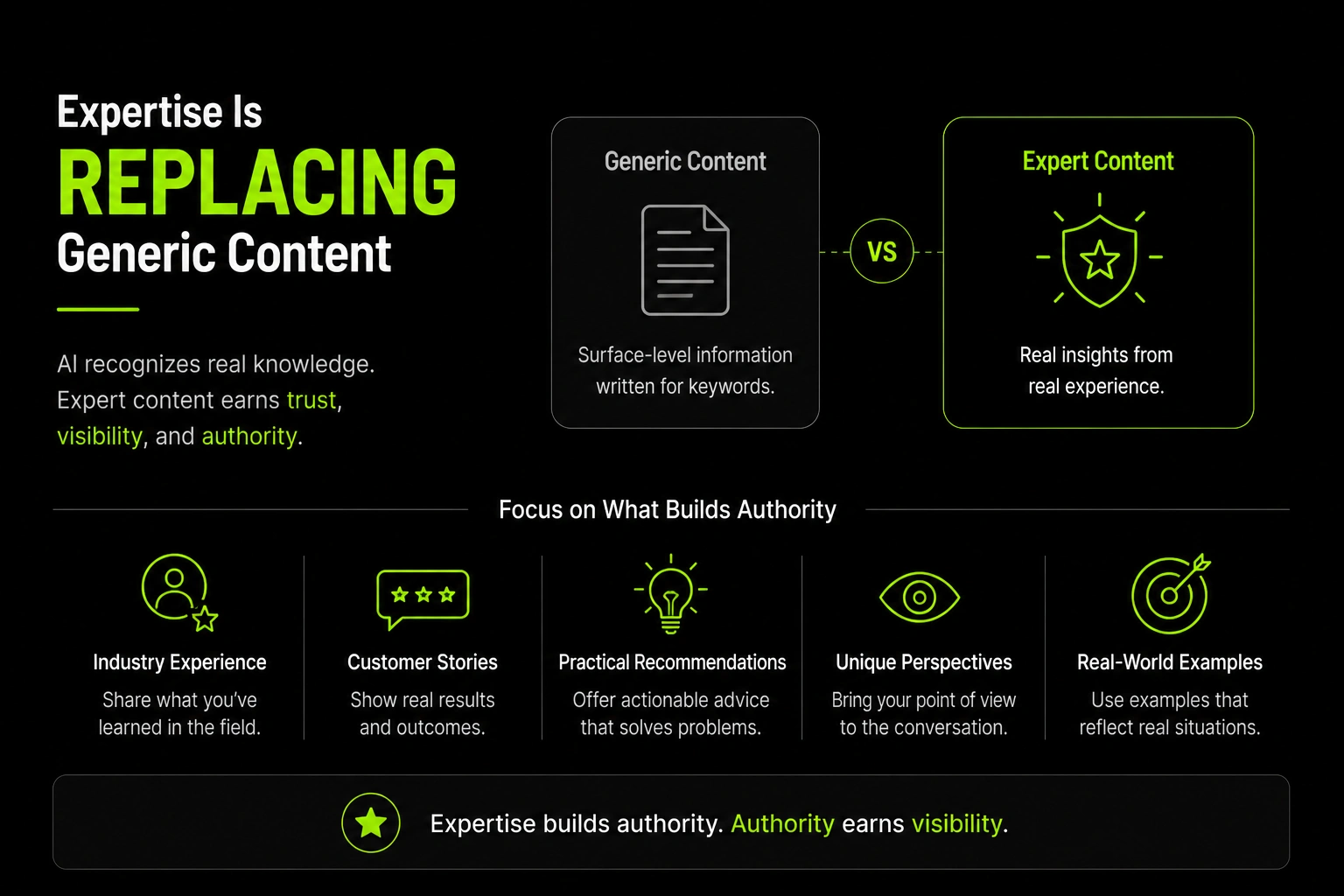
Artificial intelligence is becoming increasingly effective at identifying genuine expertise.
In the past, some websites achieved rankings through aggressive keyword targeting and large-scale content production. While optimization remains important, AI systems are becoming better at recognizing content that demonstrates real knowledge.
An article written by an experienced professional often contains insights, examples, and observations that generic content cannot provide.
Businesses should focus on sharing:
- Industry experience
- Customer success stories
- Practical recommendations
- Unique perspectives
- Real-world examples
These elements help establish authority and increase the likelihood of being recognized as a trusted source.
Organizations that prioritize expertise are likely to benefit most from How AI Search Is Changing SEO in 2026.
Human-Centered Content Matters More Than Ever
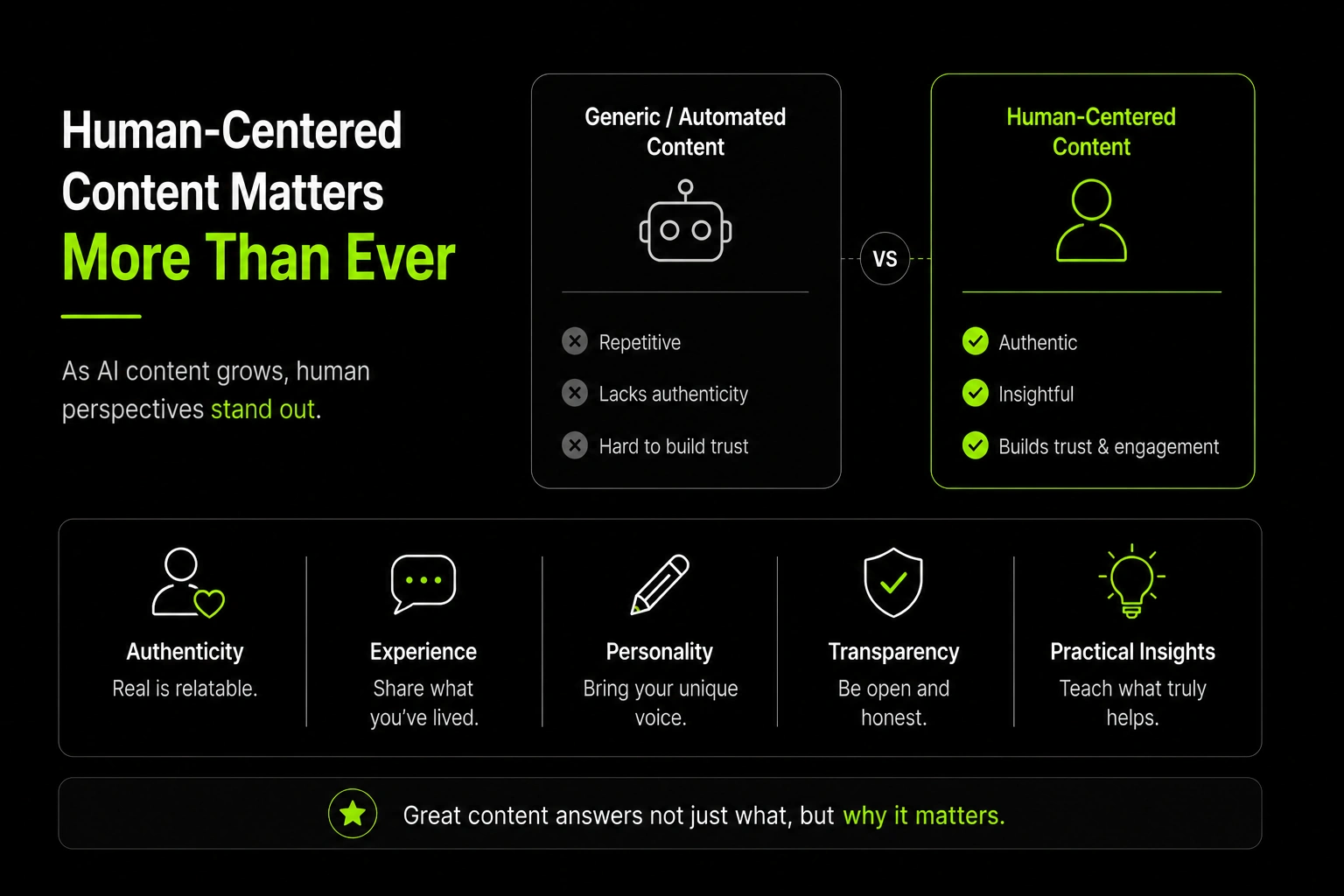
One of the most interesting outcomes of AI-generated content is the growing importance of human perspectives.
As more automated content appears online, originality becomes easier to recognize.
Readers increasingly value authenticity, experience, personality, transparency, and practical insights.
Content that feels repetitive or generic often struggles to build trust and engagement. Successful content in 2026 focuses on helping users understand not only what something is, but also why it matters.
Conclusion
The discussion around how AI search is changing SEO in 2026 goes far beyond algorithms and rankings. It reflects a broader transformation in how information is discovered, evaluated, and delivered.
Search engines are becoming smarter. Users are becoming more demanding. Content quality, expertise, trust, and originality are becoming more important than ever before.
While traditional SEO principles still matter, businesses must adapt to a world where visibility depends on credibility as much as optimization. Organizations that embrace this change, focus on helping users, and build genuine authority will be best positioned to succeed in the future of search.
Author – Saneeb
Learner of Digiskillz, Digital Marketing Course in Kottakkal