

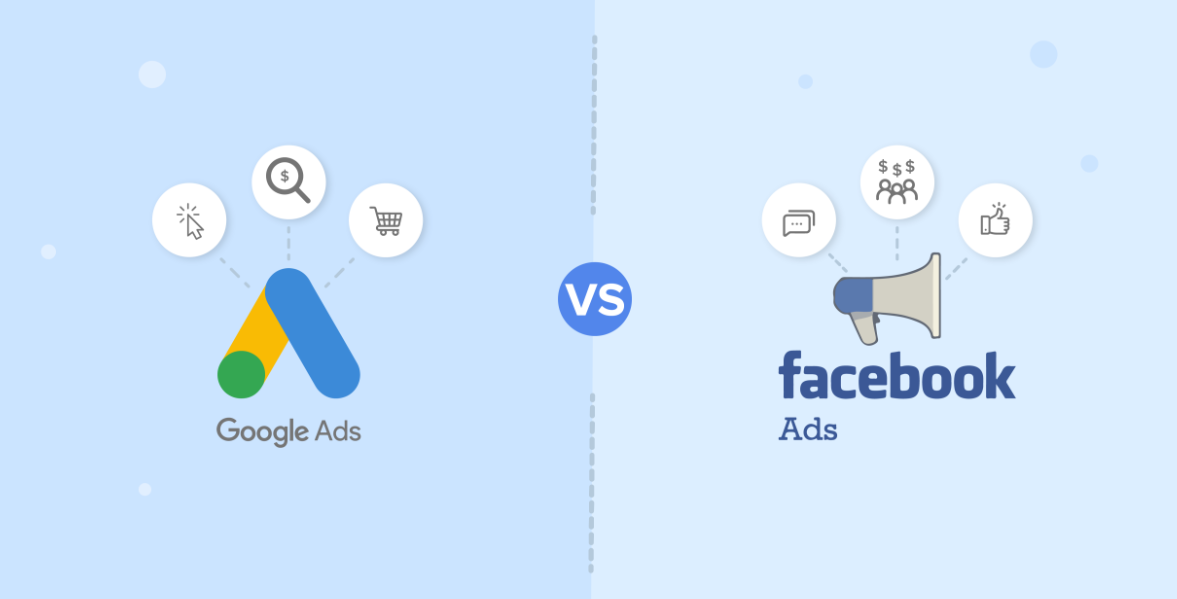
In today’s digital-first economy, businesses are no longer confined to traditional advertising channels like newspapers, billboards, or television commercials. The modern consumer spends a significant portion of their day online—scrolling through social media feeds, searching for products and services, watching videos, and reading blogs. As a result, digital advertising has become one of the most powerful tools for business growth. Among the leading platforms dominating this space are Facebook Ads and Google Ads.
If you are a business owner, startup founder, marketing manager, or digital marketing professional, you’ve likely asked yourself: Facebook Ads vs Google Ads – which is better? The answer isn’t as simple as choosing one over the other. Both platforms are incredibly powerful, but they operate on fundamentally different principles. Understanding these differences is essential for making smart marketing decisions and maximizing return on investment (ROI).
Table of Contents
The Rise of Digital Advertising
 Over the past decade, digital advertising has transformed how businesses connect with customers. Unlike traditional advertising, online platforms allow advertisers to target specific audiences, control budgets precisely, track campaign performance in real time, and optimize strategies based on measurable data.
This level of control and accountability makes digital marketing far more efficient. Instead of spending money hoping the right people see your ad, you can strategically position your message in front of the exact audience most likely to convert.
Within this ecosystem, Facebook Ads and Google Ads have emerged as two of the most dominant advertising platforms worldwide. However, their strengths lie in different areas.
Understanding the Core Difference: Intent vs Interest
-
Why Facebook Ads vs Google Ads Is Important for Businesses
-
Cost Comparison of Facebook Ads vs Google Ads
-
ROI Analysis: Facebook Ads vs Google Ads
 The primary difference between Google Ads and Facebook Ads lies in user intent.
Google Ads: Capturing Existing Demand
Google Ads is built around intent-based marketing. When users type a query into Google, they are actively searching for something. For example, someone searching for “best digital marketing consultant near me” or “buy running shoes online” has a clear purpose. They are looking for a solution.
Google Ads allows businesses to appear at the top of search engine results pages (SERPs) when users search for relevant keywords. This means advertisers can capture demand at the exact moment a user is ready to take action.
Because of this high intent, Google Ads often generates strong conversion rates. You’re not interrupting someone—you’re providing a solution they’re actively looking for.
Facebook Ads: Creating and Nurturing Demand
Facebook Ads, on the other hand, focuses on interest-based and behavior-based marketing. Instead of targeting what people are searching for, it targets who they are and what they’re interested in.
When users scroll through Facebook or Instagram, they aren’t necessarily looking to buy something. They’re browsing content, engaging with friends, and consuming entertainment. Facebook Ads allows businesses to insert their message into this browsing experience by targeting users based on demographics, interests, behaviors, life events, job roles, and more.
This makes Facebook Ads incredibly powerful for brand awareness, storytelling, and audience nurturing. It’s less about capturing existing demand and more about generating new interest.
The Strengths of Google Ads
 Google Ads operates across multiple channels, including:
-
Search Network
-
Display Network
-
YouTube advertising
-
Google Shopping
Its strongest advantage is the ability to target users with immediate buying intent.
Ideal Use Cases for Google Ads
Google Ads is particularly effective for:
-
Local service providers (plumbers, lawyers, doctors)
-
High-intent service businesses
-
E-commerce stores targeting purchase-ready customers
-
Emergency or urgent services
When someone searches for “emergency electrician near me,” they need help immediately. Appearing at the top of search results can directly translate into a lead or sale.
Benefits of Google Ads
-
High purchase intent
-
Fast lead generation
-
Measurable ROI
-
Scalable campaigns
-
Strong local targeting
However, the downside is competition. High-demand keywords can be expensive, especially in industries like finance, healthcare, and real estate.
The Strengths of Facebook Ads
 Facebook Ads thrives in visual storytelling and audience segmentation. It allows businesses to create engaging ad formats such as images, videos, carousels, and stories.
Ideal Use Cases for Facebook Ads
Facebook Ads works exceptionally well for:
-
Brand awareness campaigns
-
New product launches
-
Fashion, beauty, and lifestyle brands
-
Coaching and online courses
-
Community building
If your goal is to introduce a new product or educate people about your service, Facebook Ads can help build awareness before users even start searching for you.
Benefits of Facebook Ads
-
Advanced demographic and interest targeting
-
Lower entry costs
-
Strong retargeting capabilities
-
Visual and engaging formats
-
Effective for building long-term brand recognition
Facebook Ads excels in building relationships and nurturing cold audiences over time.
-
The long-term success of Facebook Ads vs Google Ads depends on proper targeting, creative quality, and continuous optimization.
Cost Comparison
-
When comparing Facebook Ads vs Google Ads, businesses must first define clear goals.
-
The debate around Facebook Ads vs Google Ads continues to grow among marketers.
-
Understanding Facebook Ads vs Google Ads helps improve advertising decisions.
-
Many businesses struggle to choose between Facebook Ads vs Google Ads.
-
The key difference in Facebook Ads vs Google Ads lies in user intent.
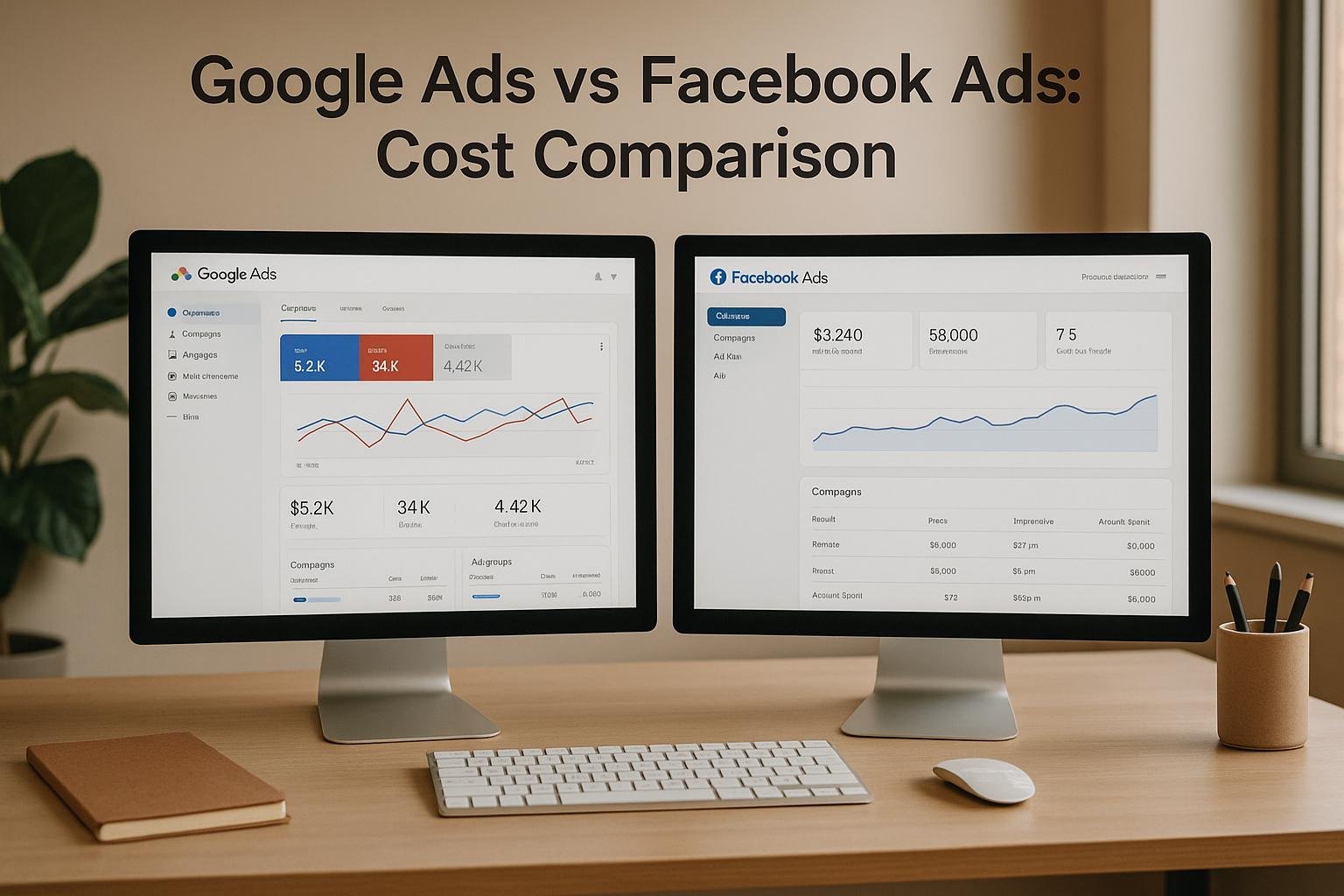 One of the biggest questions businesses ask is: Which platform is more affordable?
The answer depends on your industry and campaign objectives.
Google Ads often has a higher cost-per-click (CPC) because you’re bidding on keywords with high commercial intent. However, higher CPC doesn’t always mean higher overall cost—if conversions are strong, ROI can justify the expense.
Facebook Ads typically offers lower CPC and broader reach. However, because users are not actively searching, it may take multiple interactions before a conversion occurs.
In short:
-
Google Ads = Higher intent, possibly higher CPC, faster conversions
-
Facebook Ads = Lower CPC, broader reach, longer nurturing process
Targeting Capabilities
Both platforms offer sophisticated targeting options, but they approach targeting differently.
Google Ads Targeting
-
Keyword targeting
-
Location targeting
-
Device targeting
-
Audience remarketing
-
In-market audiences
Google focuses heavily on search behavior and contextual targeting.
Facebook Ads Targeting
-
Age, gender, location
-
Interests and hobbies
-
Online behaviors
-
Custom audiences
-
Lookalike audiences
Facebook leverages user profile data and activity to create highly specific audience segments.
If precision demographic targeting is crucial, Facebook often has the edge. If search intent is the priority, Google dominates.
Conversion Funnel Strategy
Another important factor is where your business sits in the marketing funnel.
-
Top of Funnel (Awareness): Facebook Ads performs strongly
-
Middle of Funnel (Consideration): Facebook retargeting + Display ads
-
Bottom of Funnel (Conversion): Google Search Ads excels
Many successful businesses combine both platforms for a full-funnel approach. Facebook introduces the brand. Google captures the final buying intent.
Data, Tracking, and Optimization
Both platforms provide advanced analytics tools. Advertisers can track:
-
Impressions
-
Click-through rate (CTR)
-
Conversions
-
Cost per acquisition (CPA)
-
Return on ad spend (ROAS)
The real power lies in optimization. Successful campaigns require continuous testing of creatives, targeting, bidding strategies, and landing pages.
Neither platform guarantees success without strategy.
So, Which Platform Is Better?
The honest answer remains: it depends on your business goals.
Choose Google Ads if:
-
You want immediate leads
-
Your customers actively search for your service
-
You offer urgent or solution-based services
Choose Facebook Ads if:
-
You want to build brand awareness
-
Your product is visually appealing
-
You need precise demographic targeting
-
You want to nurture cold audiences
For many businesses, the best solution isn’t choosing one—it’s using both strategically.
Common Mistakes Businesses Make When Choosing Between Facebook Ads and Google Ads
 While both Facebook Ads and Google Ads are powerful platforms, many businesses fail to see results—not because the platform is ineffective, but because of poor strategy.
One common mistake is choosing a platform based purely on cost-per-click rather than overall return on investment. A lower CPC does not automatically mean better results. What truly matters is cost per conversion and overall profitability.
Another mistake is ignoring the customer journey. Businesses often expect instant sales from Facebook Ads without building trust first. Since users on Facebook are not actively searching for a solution, brands must focus on strong creatives, compelling messaging, and retargeting strategies.
Similarly, with Google Ads, some businesses target broad or irrelevant keywords, leading to wasted ad spend. Without proper keyword research, negative keywords, and optimized landing pages, even high-intent traffic may fail to convert.
Many advertisers also underestimate the importance of testing. Successful campaigns require continuous A/B testing of headlines, ad creatives, targeting options, and bidding strategies. Digital advertising is not a “set it and forget it” process—it requires ongoing optimization.
Finally, businesses sometimes fail to align ads with clear goals. Are you aiming for brand awareness, website traffic, lead generation, or direct sales? The objective should determine the platform choice—not the other way around.
By avoiding these common mistakes and building a clear strategy, businesses can maximize performance on either platform—or even better, combine both for stronger results.
Ultimately, success in digital advertising depends on clarity, consistency, and continuous improvement. Businesses that analyze data, adapt quickly, and refine strategy will outperform competitors in any market.
When comparing Facebook Ads vs Google Ads, the right choice ultimately depends on your business goals, target audience, and overall marketing strategy. Understanding the differences between Facebook Ads vs Google Ads helps you allocate budget wisely and maximize return on investment. While Google captures high-intent searches, Facebook builds awareness and nurtures potential customers. Businesses that carefully evaluate Facebook Ads vs Google Ads and align campaigns with clear objectives are more likely to see sustainable growth, stronger brand visibility, and long-term profitability in today’s competitive digital landscape.
Conclusion
Facebook Ads and Google Ads are not competitors in the traditional sense—they are complementary tools within a broader digital marketing strategy.
Google captures demand. Facebook creates demand.
Google converts ready buyers. Facebook builds future buyers.
The key to success lies in understanding your audience, defining your objectives, allocating budget wisely, and continuously optimizing campaigns.
Digital advertising is an investment, not an expense. When executed strategically, both Facebook Ads and Google Ads can drive significant growth, increase brand visibility, and deliver measurable business results.
In the end, Facebook Ads vs Google Ads is not about choosing a winner. Understanding Facebook Ads vs Google Ads helps businesses build smarter strategies.


Leave A Comment