


If you’re just starting in digital marketing, SEO tips for beginners can make a huge difference in improving your website rankings. By understanding the fundamentals of keyword research, creating high-quality content, and optimizing on-page SEO, even beginners can boost their site’s visibility and attract more traffic.
Using long-tail keywords for beginners, building backlinks, and leveraging the right SEO tools will help your website rank higher on search engines while providing value to your audience.
In this guide, we’ll walk you through practical SEO tips for beginners that you can implement today to start seeing results and steadily grow your online presence. Think of it as your roadmap—much like a “Beginner’s Guide to SEO: Boost Your Website Traffic in 2026.”
Table of Contents
Top SEO Tips for Beginners to Improve Website Rankings
SEO Tips for Beginners: Start with Keyword Research
Keyword research is the foundation of SEO. It tells you what your audience is searching for and helps you create content that matches their intent. When doing keyword research, you should also consider how other sites link to similar content via backlinks.
How to Do Keyword Research-Use Free and Paid Tools for Keyword Research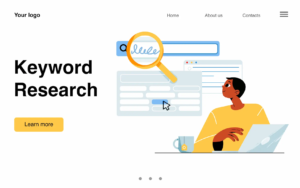
Keyword research is the backbone of SEO, and using the right tools makes it much easier to find terms your audience is searching for. There are both free and paid tools available, each with unique features to help beginners and pros alike.
Google Keyword Planner (Free)
Google Keyword Planner is a free tool by Google Ads that helps you discover keywords and see estimated search volumes. It’s designed for advertisers but works perfectly for SEO beginners. You can enter a keyword or phrase, and it will suggest related keywords, monthly search volumes, and competition level (low, medium, high). One major advantage is that the data comes directly from Google, so it’s highly accurate. Beginners can use it to find long-tail keywords, plan content, and even estimate traffic potential. Its interface is straightforward, making it an excellent starting point for SEO research.
Ubersuggest (Free + Paid Options)
Ubersuggest, created by Neil Patel, is a beginner-friendly keyword research tool that provides both free and paid options. It allows you to explore keyword ideas, analyze search volume, competition, and even see the top-ranking pages for any keyword. The tool also provides SEO metrics like domain score, backlinks, and estimated traffic for competitors. Beginners can benefit from its easy-to-understand interface, step-by-step suggestions, and content ideas. While the free version is limited, it’s sufficient for new bloggers to identify low-competition, high-potential keywords and plan their content strategy effectively.
Ahrefs (Paid)
Ahrefs is also one of the most powerful SEO tools for keyword research, competitor analysis, and backlink tracking. Unlike free tools, Ahrefs provides detailed insights such as keyword difficulty scores, search volume trends, and click-through estimates. Beginners can also analyze competitor websites to see which keywords bring them the most traffic. It offers a “Content Explorer” feature to find trending content ideas in any niche. While Ahrefs is paid, its comprehensive data makes it a valuable investment for serious bloggers and marketers aiming to scale their SEO efforts. It’s especially useful for long-term SEO planning and monitoring results.
SEMrush (Paid)
SEMrush is another all-in-one SEO platform popular among professionals and beginners alike. It allows users to perform keyword research, track rankings, analyze competitors, and conduct site audits. SEMrush provides detailed keyword difficulty, volume trends, CPC, and competitive analysis. Beginners can use its intuitive dashboard to discover content gaps, identify new keywords, and plan a content strategy based on real data. Its competitive analysis feature is especially valuable, allowing you to see what works for other websites in your niche. While it’s a paid tool, SEMrush offers free trials and limited free versions for beginners to explore.
Look for long-tail keywords
Long-tail keywords are 3–6 word phrases that are more specific. For example:
-
High competition: “SEO”
-
Easier to rank: “SEO tips for beginners 2026”
Check search intent
Ask yourself: Is the user looking for information, a product, or trying to buy something? Target keywords that match your blog’s goal.
Analyze competition
Check the top-ranking pages for your keyword. Identify gaps and opportunities to create better, more detailed content.
Pro Tip: Start with keywords that have moderate search volume and low competition. This allows new blogs to rank faster.
On-Page SEO Tips for Beginners to Boost Rankings

On-page SEO helps search engines understand your pages and makes them easier for visitors to navigate. Focus on these key areas:
-
Meta Title: Include your main keyword and keep it concise. For example: “SEO for Beginners: Improve Google Rankings Easily.”
-
Meta Description: Summarize your content in a few sentences and naturally include your keyword. For example: “Simple SEO tips and strategies for beginners to help your website rank higher, drive traffic, and grow online successfully.”
-
Headings (H1, H2, H3): Use H1 for the main title, H2 for sections, and H3 for subpoints. Place keywords naturally to clarify your topic.
-
Image Optimization: Add descriptive alt text with relevant keywords, and compress images to help pages load quickly.
-
Internal Links: Link related content within your site to help readers explore and boost SEO. For instance, connect a beginner SEO article to a guide on keyword research.
-
URL Structure: Keep URLs brief, descriptive, and readable. Example: yourwebsite.com/seo-beginners-guide.
This structure uses:
-
H1: Top SEO Tips for Beginners to Improve Website Rankings
-
H2: SEO Tips for Beginners: Start with Keyword Research / On-Page SEO Tips for Beginners to Boost Rankings
-
H3: How to Do Keyword Research-Use Free and Paid Tools for Keyword Research / Look for long-tail keywords / Check search intent / Analyze competition
-
H4: Google Keyword Planner (Free), Ubersuggest (Free + Paid Options), Ahrefs (Paid), SEMrush (Paid)
High-Quality Content Tips to Boost On-Page SEO

Improve Website Speed and Mobile Optimization for SEO
Essential SEO Tips for Beginners to Build Authority

Improve Internal Links and Site Layout
Making connections between your pages helps visitors explore your site and helps search engines understand which pages are important.
Add links from older content to newer posts naturally, so readers can continue learning.
Use link text that clearly describes the destination page instead of vague words.
Organize your site logically: start with the homepage, then categories, subcategories, and individual posts.
Ensure every page can be reached through links—don’t leave any pages isolated.
Build Reliable Backlinks to Boost Your On-Page SEO
Links from other reputable websites tell search engines that your site is valuable and trustworthy.
How to earn backlinks:
-
Contribute articles to related blogs in your field.
-
List your website in niche directories where your audience visits.
-
Work with other creators to share content or mention each other’s sites.
-
Make content that others naturally want to reference, like tutorials, visual guides, or informative videos.
Pro Tip: A few backlinks from authoritative websites are more effective than many from less trustworthy sources.
Monitor Your SEO Performance to Improve Rankings
Monitoring your SEO helps you see which strategies work and where improvements are needed.
-
Use analytics tools to observe page rankings, visitor behavior, and traffic sources.
-
Check how users interact with your content and which pages are most popular.
-
Look at competitor activity to identify opportunities for growth.
Pro Tip: Set measurable SEO goals and review your results each month to refine your strategy.
How to Ensure Your Website is Mobile-Friendly for SEO
Since most people browse on smartphones and tablets, your site must work smoothly on all devices.
-
Use a design that adapts smoothly to all screen sizes.
-
Avoid covering content with pop-ups, banners, or overlays that frustrate mobile users.
-
Optimize images and media so they load quickly on smaller screens.
-
Test your site on mobile devices to ensure fast performance and easy navigation.
How to Use Long-Tail Keywords for SEO Beginners

Long-tail keywords are less competitive and highly targeted, perfect for beginners.
Example:
-
Short-tail: “SEO” → very competitive
-
Long-tail: “SEO tips for small business beginners 2026” → easier to rank and high intent
Pro Tip: Use long-tail keywords in headings, subheadings, and naturally in the content.
Update Your SEO Knowledge and Keep Learning
SEO is constantly changing. What works today may not work tomorrow.
Ways to Stay Updated:
-
Follow blogs like Moz Blog, Ahrefs Blog, and Search Engine Journal.
-
Join digital marketing communities on Reddit, LinkedIn, or Facebook.
-
Take online courses (HubSpot, SEMrush Academy, Google SEO courses).
-
Regularly update old blog posts with new information.
Final SEO Tips for Beginners to Boost Your Website
Starting with SEO tips for beginners doesn’t have to be overwhelming. By following these beginner-friendly SEO tips, you can:
-
Increase website traffic
-
Improve search engine rankings
-
Build online authority gradually
Remember: SEO is a long-term strategy. Implement one tip at a time, track your results, and consistently improve your website. Start today with keyword research and on-page SEO, and your website will slowly climb Google search results.
Author: Surabhi M
Learner of Digiskillzz, Digital Marketing Institute in Kochi.







Leave A Comment