

In today’s fast-paced, highly competitive business world, companies must constantly evolve to stay ahead. Traditional marketing strategies can no longer keep up with the demands of modern consumers, who expect personalized, relevant, and timely experiences. AI marketing automation has emerged as a revolutionary solution to this challenge. By automating routine tasks, harnessing the power of data, and personalizing communication on a large scale, AI is reshaping the future of marketing. But what exactly makes AI marketing automation such a game-changer? Let’s dive in.
Table of Contents
Hyper-Personalization at Scale
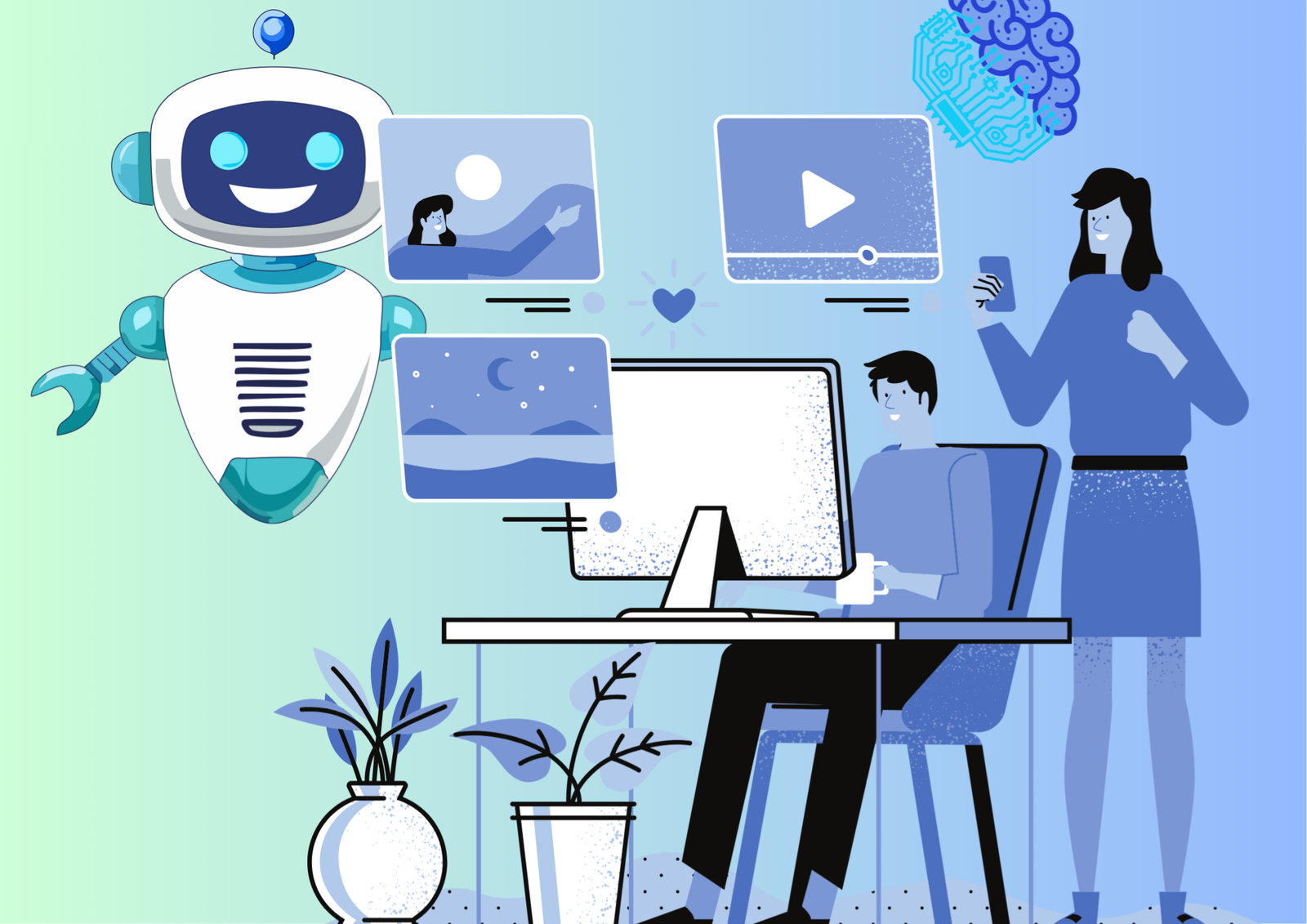
The era of generic, one-size-fits-all marketing is over. Modern consumers expect personalized experiences that align with their interests, behaviors, and individual needs. AI marketing automation makes this level of personalization possible by helping businesses analyze vast amounts of data and deliver tailored content at scale.
With AI, companies can segment audiences with incredible accuracy by examining factors like browsing behavior, purchase history, and even engagement on social platforms. This allows brands to craft highly relevant messages for different customer groups. For instance, an online store can recommend products based on previous purchases or show content that matches a visitor’s recent activity. Such precise targeting helps customers feel recognized and appreciated, which leads to stronger engagement and higher conversion rates.
In addition, AI doesn’t just personalize once — it keeps learning. By tracking how customers interact with emails, ads, and websites, AI systems continuously refine their understanding of user preferences. Over time, this improves their ability to anticipate customer needs and deliver even more relevant suggestions. For example, if someone often explores sustainable or eco-friendly items, AI can highlight similar products in future interactions, creating a smarter and more meaningful customer journey.
Automating Repetitive Marketing Tasks
Marketing professionals often dedicate a large portion of their time to routine activities such as sending emails, planning social media posts, and responding to common customer questions. Although these tasks are important, they can consume energy and resources that could otherwise be invested in strategy, innovation, and creative work. AI-driven marketing automation helps solve this challenge by handling many of these repetitive responsibilities, freeing teams to focus on more impactful initiatives.
For example, AI can streamline email marketing by automatically delivering personalized messages at the most effective time for each recipient. By studying user behavior and engagement patterns, AI systems can decide when an email is most likely to be opened, what type of content will capture attention, and even which subject lines may perform best. The result is more relevant communication and improved engagement metrics.
Beyond email, AI-powered chatbots are transforming customer support. These intelligent assistants can answer questions around the clock, offering immediate responses and handling common requests without human involvement. For instance, if a customer wants to track an order, a chatbot can quickly retrieve the information and provide an instant update. This not only improves response times but also enhances the overall customer experience while reducing the workload on support teams.
Real-Time Campaign Optimization
One of the biggest strengths of AI marketing automation is its power to improve campaigns as they run. In the past, marketers would launch a campaign, wait for reports, and only then make changes — often days or weeks later. AI changes that process by enabling continuous tracking and instant adjustments, keeping campaigns optimized at all times.
For instance, AI can evaluate digital ad performance in real time and automatically adjust audience targeting, bidding amounts, or creative elements to boost effectiveness. If an ad is underperforming, the system can quickly reallocate budget, refine the audience segment, or rotate in a better-performing version. This ongoing fine-tuning helps maximize return on investment by focusing resources where they deliver the strongest results and cutting down on unnecessary spending.
AI also enhances email marketing by constantly testing and improving different campaign elements. It can experiment with subject lines, visuals, messaging, and calls to action to see what resonates most with different audience groups. Through intelligent A/B testing, AI automatically delivers variations to selected segments and learns from user responses. Over time, this leads to stronger engagement, better click-through rates, and higher overall conversions.
Predictive Analytics for Smarter Decisions
Predictive Analytics for Smarter Decisions
AI marketing automation stands out for its strength in predictive analytics. By studying historical data and behavioral patterns, AI can forecast future customer actions with remarkable precision. This allows businesses to move beyond reactive marketing and instead anticipate customer needs before they even arise, improving both strategic planning and everyday decisions.
For instance, AI can review previous buying behavior to identify which customers are most likely to purchase again soon. With these insights, businesses can deliver timely promotions, personalized deals, or gentle reminders that encourage conversions. At the same time, AI can detect warning signs that a customer may be losing interest — such as decreased engagement or long gaps between interactions. It can then recommend retention tactics like special offers, loyalty rewards, or customized content to win those customers back.
Predictive analytics also plays a key role in how marketing resources are used. By recognizing patterns and future opportunities, AI helps teams focus their budgets and efforts on high-potential audiences while reducing investment in low-performing channels. This forward-looking approach leads to smarter spending, stronger returns, and a more meaningful customer journey. Companies that embrace AI-driven predictions are better positioned to make informed decisions that support sustainable, long-term growth.
Scalable Marketing Solutions with AI Marketing Automation
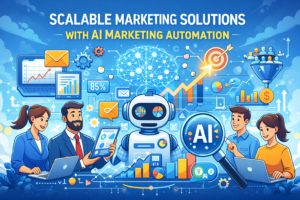
Scalable Marketing Solutions with AI Marketing Automation
As companies grow, managing a larger and more diverse customer base becomes increasingly complex. With more data, more interactions, and more marketing channels to oversee, delivering personalized experiences at scale can feel overwhelming. AI marketing automation provides a powerful way to expand marketing efforts without sacrificing quality or relevance.
With AI in place, businesses can process and organize vast amounts of customer data effortlessly. As information from purchases, website visits, demographics, and engagement history accumulates, AI systems automatically sort customers into meaningful segments. These segments are built around shared behaviors, interests, and preferences, allowing marketers to design campaigns that feel highly personal — without needing to manually analyze every data point. Over time, AI continues learning from new interactions, sharpening its ability to deliver even more accurate and impactful messaging.
AI marketing automation is also incredibly valuable when brands expand into new markets or reach different audience groups. Whether targeting customers in another country, appealing to a younger demographic, or focusing on a specialized niche, AI can adapt marketing messages, visuals, and offers to suit each audience. This flexibility helps businesses maintain relevance and connection with customers, regardless of location or background.
Another major benefit is the ability to manage multiple campaigns at once. Across email, social media, paid ads, and other digital channels, AI tools can monitor performance and make real-time adjustments. By refining targeting, timing, and content automatically, AI ensures each campaign performs as effectively as possible and contributes to a stronger overall return on investment.
By embracing AI marketing automation, businesses gain the ability to scale efficiently while still delivering meaningful, personalized experiences. This balance between growth and customer focus is key to building long-term engagement and sustainable success.
Improved Customer Insights and Engagement
AI is not only a tool for automation — it’s also a powerful driver of deeper customer understanding and stronger engagement. Modern AI marketing systems constantly collect and evaluate customer interactions across multiple channels, including email, social platforms, websites, and customer support conversations.
By analyzing this data, AI can uncover trends in the content, products, and messages that resonate most with different audience groups. Businesses can then fine-tune their marketing strategies to better match customer interests and expectations. AI can also highlight recurring issues, such as common questions or frequent complaints, giving companies the opportunity to improve their communication, services, and even product development.
At the same time, AI-powered tools like chatbots and virtual assistants help create smoother, more responsive customer experiences. These tools can provide instant answers, suggest relevant products, and assist users throughout their buying journey — all without delays. Round-the-clock, personalized assistance not only boosts customer satisfaction but also builds trust and long-term loyalty, resulting in a stronger and more engaging brand relationship.
Enhanced ROI and Cost Efficiency
The primary objective of any marketing strategy is to generate a strong return on investment, and AI marketing automation is a powerful tool for achieving that. By refining campaign performance, increasing targeting accuracy, and lowering operational costs, AI helps businesses get more value from every marketing effort. Automation also reduces the time spent on repetitive work, allowing teams to invest more energy in strategy, innovation, and creative development.
For instance, AI can evaluate advertising performance across platforms and determine which channels deliver the best results for the lowest cost. Instead of spreading budgets thin across broad, general campaigns, businesses can focus on highly targeted efforts aimed at the audiences most likely to respond. This ensures marketing spend is used efficiently and supports better overall outcomes.
Beyond ad optimization, AI’s predictive capabilities allow companies to identify prospects with the highest likelihood of converting. Combined with real-time campaign adjustments, this enables marketers to concentrate resources on the most promising opportunities. The result is improved conversion rates, smarter budget allocation, and a marketing approach that consistently drives stronger returns while keeping costs under control.
https://business.adobe.com/blog/future-of-marketing-in-the-era-of-ai-part-1
Conclusion: The Future of Marketing is Smarter and Automated
As marketing continues to transform, AI marketing automation is becoming a key driver of future business success. With the ability to deliver large-scale personalization, streamline everyday tasks, and provide real-time optimization along with predictive insights, AI helps companies build smarter and more efficient marketing strategies that produce measurable outcomes.
What makes AI truly powerful is not just automation, but its ability to learn, adapt, and grow alongside a business. It can refine campaigns, forecast trends, and support expansion without sacrificing relevance or customer connection. Organizations that invest in AI marketing automation today position themselves ahead of competitors and build a strong foundation for long-term growth.
As AI technology advances, its influence on marketing will only deepen — shaping a future that is quicker, more intelligent, and centered around customer needs. For businesses aiming to stay competitive in the digital era, adopting AI-driven marketing solutions is no longer optional; it has become essential. The future of marketing is already unfolding, powered by data, driven by insight, and accelerated by AI.
Author : Nikhila M
Learner of DigiSkillz, Digital Marketing Institute in Kochi.


Leave A Comment