


Affiliate marketing has become one of the most popular ways to make money online, especially for beginners who want to start a digital business without creating their own products. With minimal investment, flexible working hours, and unlimited earning potential, affiliate marketing offers an accessible path into online entrepreneurship.
If you are new to online earning, blogging, or digital marketing, affiliate marketing is often the best starting point. Many successful bloggers, content creators, and digital marketers began their journey by promoting products and earning commissions through affiliate programs.
Table of Contents
What is Affiliate Marketing?
Affiliate marketing is a performance-based marketing model where you promote another company’s product or service and earn a commission whenever someone makes a purchase, signs up, or completes a specific action through your unique referral link.
Instead of creating your own products, handling inventory, processing payments, or managing customer support, your main role is to connect potential customers with the right solutions. You act as a digital middleman who helps businesses reach new audiences while earning income for your promotional efforts.
At its core, affiliate marketing is built on a simple principle: you earn money by helping others make informed buying decisions.
Simple Example
- A company sells a product online.
- You join their affiliate program.
- You receive a special tracking link.
- You promote the product through blogs, social media, or videos.
- Someone clicks your link and buys.
- You earn a commission.
How Affiliate Marketing Works (Step-by-Step)
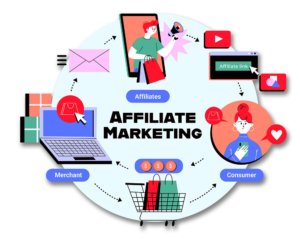
When you join an affiliate program, the company provides you with a special tracking link. This link contains a unique identifier connected to your account. When someone clicks on your link, a tracking system records the activity using browser cookies.
If the customer completes a purchase within a specified time (called the cookie duration), the system recognizes that the sale came from your promotion — and you receive a commission.
Affiliate marketing involves three main parties:
1. Merchant (Product Owner)
The company or individual selling the product or service.
2. Affiliate (You)
The promoter who markets the product.
3. Customer
The person who purchases through your affiliate link.
The Process Flow
- You sign up for an affiliate program.
- You get a unique tracking link.
- You promote the product through content.
- Customers click your link.
- The affiliate system tracks the sale.
- You earn a commission.
Tracking is done using cookies, which record that the customer came from your referral.
Why Affiliate Marketing is Perfect for Beginners

Affiliate marketing has become one of the easiest and most accessible ways to start earning online, especially for beginners entering the digital marketing world. Unlike traditional businesses that require large investments, inventory management, or advanced technical knowledge, affiliate marketing allows anyone with dedication and consistency to build an income stream online.
Let’s explore in detail why affiliate marketing is an ideal starting point for beginners.
Low Investment
You don’t need inventory or product development.
No Technical Expertise Required
You can start with basic blogging or social media skills.
Work From Anywhere
All you need is a laptop and internet connection.
Passive Income Potential
Content you create today can earn money for years.
Unlimited Income
Your earnings depend on traffic and strategy — not working hours.
Step 1: Choose a Profitable Niche
A niche is a specialized topic or category within a broader industry that helps you attract a targeted audience and build authority.
Choosing the right niche is the most important decision in affiliate marketing.
Popular Affiliate Marketing Niches
- Digital marketing
- Technology and gadgets
- Beauty and skincare
- Health and fitness
- Finance and investing
- Online education
- Parenting and baby products
- Travel
- Software and tools
How to Choose Your Niche
Ask yourself:
- What topics do I enjoy?
- What problems can I help people solve?
- Are people already buying products in this niche?
- Is there long-term demand?
Tip: Choose a niche where passion meets profitability.
Step 2: Select the Right Affiliate Programs
After choosing your niche, the next step is joining affiliate programs.
Types of Affiliate Programs
1. Marketplace Programs
Platforms hosting multiple brands.
Examples:
- Amazon Associates
- ShareASale
- ClickBank
- CJ Affiliate
2. Direct Brand Programs
Companies offering their own affiliate partnerships.
Examples:
- Hosting companies
- SaaS tools
- Online course platforms
What to Look For
- Commission rate (5%–70%)
- Cookie duration
- Product demand
- Brand reputation
- Payment reliability
Beginners should start with trusted platforms that offer beginner support.
Step 3: Choose Your Platform
You need a platform where you promote affiliate products.
Option 1: Blogging (Best Long-Term Strategy)
Creating a blog allows you to generate organic traffic through SEO.
Benefits:
- Passive income potential
- Google traffic
- Authority building
- Long-term sustainability
You can create a blog using WordPress and publish product reviews, tutorials, and comparison articles.
Option 2: YouTube Channel
Video content builds trust quickly.
Content ideas:
- Product reviews
- Tutorials
- Comparisons
- How-to guides
You can place affiliate links in video descriptions.
Option 3: Social Media Marketing
Platforms like Instagram, LinkedIn, and TikTok are powerful for affiliate marketing.
Best formats:
- Reels
- Short tips
- Educational posts
- Product demonstrations
Option 4: Email Marketing
Building an email list allows you to promote products repeatedly.
Email marketing has one of the highest conversion rates in affiliate marketing.
Step 4: Create Valuable Content
Affiliate marketing success depends on content quality.
People don’t buy because of links — they buy because of trust.
High-Converting Content Types
Product Reviews
Detailed honest reviews perform extremely well.
Comparison Articles
Example: “Product A vs Product B — Which is Better?”
Tutorials
Show users how to solve problems using a product.
List Articles
Example: “Top 10 Tools for Beginners.”
Problem-Solution Content
Identify a pain point and recommend a solution.
Step 5: Learn Basic SEO (Search Engine Optimization)
SEO helps your content appear on Google search results.
Without SEO, affiliate marketing becomes much harder.
Important SEO Basics
- Keyword research
- Optimized titles
- Meta descriptions
- Internal linking
- Fast website speed
- Mobile optimization
Keyword Example
Instead of targeting:
“Laptop”
Target:
“Best laptop for graphic designers under $1000”
Long-tail keywords are easier for beginners.
Step 6: Drive Traffic to Your Content
Traffic is the lifeblood of affiliate marketing.
No visitors = no sales.
Free Traffic Methods
- Google SEO
- YouTube
- Instagram Reels
- LinkedIn posts
Paid Traffic Methods (Advanced)
- Google Ads
- Facebook Ads
- Native advertising
Beginners should focus on organic traffic first.
Step 7: Build Trust With Your Audience
Trust is the real secret behind affiliate income.
Never promote products just for commissions.
Ways to Build Trust
- Share honest opinions
- Mention pros and cons
- Provide real experiences
- Avoid exaggeration
- Recommend only useful tools
When people trust you, conversions increase naturally.
Step 8: Track Performance and Optimize
Successful affiliates constantly analyze performance.
Metrics to Monitor
- Click-through rate (CTR)
- Conversion rate
- Traffic sources
- Top-performing content
Use analytics tools to improve results over time.
Common Mistakes Beginners Make
Affiliate marketing is beginner-friendly, but many newcomers struggle because they follow incorrect strategies or expect instant results. Understanding common mistakes early can save time, effort, and frustration while helping you build a sustainable affiliate business.
Let’s explore the most common mistakes beginners make — and how to avoid them.
Promoting Too Many Products
Many beginners believe that promoting more products will automatically increase earnings. In reality, promoting too many unrelated products can confuse your audience and reduce trust.
When your content constantly recommends different products without clear focus, readers may feel that your goal is only to sell rather than help.
Ignoring SEO
SEO is one of the biggest long-term traffic sources in affiliate marketing, yet many beginners ignore it and rely only on social media. Without search traffic, your content lifespan becomes short and growth slows significantly.
Search engines like Google bring users who are actively searching for solutions or product recommendations — meaning higher buying intent.
Common SEO mistakes include:
- Not doing keyword research
- Poor heading structure
- Missing meta titles and descriptions
- Publishing thin or low-value content
Expecting Quick Money
One of the biggest misconceptions about affiliate marketing is that it produces instant income. Many beginners quit after a few weeks because they don’t see immediate results.
Affiliate marketing is a long-term strategy, not a get-rich-quick method.
Copying Competitors
Beginners often copy blog structures, video ideas, or product reviews from competitors, thinking it will guarantee success. However, duplicate or low-originality content rarely performs well in search engines or with audiences.
People follow creators who provide unique perspectives, real experiences, and authentic recommendations.
Not Understanding Audience Needs
Affiliate marketing is not about selling products — it’s about solving problems. Beginners often promote products without understanding what their audience actually wants or struggles with.
When content focuses only on promotion, users lose interest quickly.
Best Tools for Affiliate Marketing Beginners
Starting affiliate marketing becomes much easier when you use the right tools. These tools help you create content, drive traffic, track performance, and increase conversions — even if you are a complete beginner.
Below are the most essential categories and tools every beginner affiliate marketer should know.
Website Tools
- WordPress
- Elementor
- Rank Math SEO
Keyword Research Tools
- Google Keyword Planner
- Ubersuggest
- Ahrefs (advanced)
Content Tools
- Canva for graphics
- Grammarly for writing
Email Marketing Tools
- Mailchimp
- ConvertKit
Using the right tools saves time and increases productivity.
How Much Can Beginners Earn?

One of the most common questions beginners ask before starting affiliate marketing is: Affiliate marketing income is not fixed; it largely depends on your niche selection, content quality, marketing strategy, and long-term consistency. The honest answer is — affiliate marketing income varies widely depending on effort, strategy, niche, and consistency.
Unlike traditional jobs with fixed salaries, affiliate marketing income grows over time and is directly connected to the value you create and the audience you build.
Let’s break it down realistically.
Typical Growth Timeline
- Month 1–3: Learning and content creation
- Month 3–6: First commissions
- Month 6–12: Consistent income
- Year 1+: Scalable passive earnings
Some beginners earn a few dollars monthly at first, while experienced affiliates earn thousands per month.
Consistency is the biggest factor.
Affiliate Marketing Strategies That Work in 2026

Affiliate marketing continues to evolve as search engines, social media platforms, and consumer behavior change rapidly. Strategies that worked a few years ago — like spammy links or low-quality reviews — are no longer effective. In 2026, success depends on trust, value-driven content, and smart use of technology.
1. Personal Branding
People buy from people, not websites.
2. Educational Content
Teaching builds authority and trust.
3. Short-Form Video Marketing
Reels and Shorts drive massive reach.
4. Niche Authority Websites
Focused websites rank faster on Google.
5. AI-Assisted Content Creation
Use AI tools responsibly to improve productivity.
Legal and Ethical Considerations
Always disclose affiliate relationships.
Example disclosure:
“This post contains affiliate links, and I may receive a commission if you purchase through these links, at no extra expense to you.”
Transparency builds credibility and keeps you compliant with regulations.
Long-Term Growth Tips
- Publish content consistently
- Update old articles regularly
- Build an email list early
- Focus on solving problems
- Diversify traffic sources
- Learn analytics and conversion optimization
Affiliate marketing is not a shortcut — it is a long-term digital asset.
Conclusion
Affiliate marketing remains one of the most accessible and beginner-friendly ways to start earning online without heavy investment or advanced technical knowledge. As digital commerce continues to grow, businesses increasingly rely on affiliates to recommend their products, creating endless opportunities for new marketers to enter the industry.
Success in affiliate marketing does not happen overnight. It is built through the right niche selection, consistent content creation, and a genuine focus on helping audiences solve real problems. When you prioritize trust, transparency, and value over aggressive selling, you naturally build stronger relationships with your audience — and those relationships lead to higher conversions and long-term income.
The most successful affiliates treat their work like a real business. They learn SEO, understand their audience, analyze performance data, and continuously improve their strategies. Small improvements made consistently — better content, clearer recommendations, and smarter promotion methods — compound over time and produce sustainable results.
It is also important to remember that affiliate marketing rewards patience. Your early efforts may seem slow, but every blog post, video, or guide you publish becomes a digital asset that can generate traffic and commissions for years. Over time, these assets work together to create multiple income streams, reducing dependence on active working hours.
Start small and focus on progress rather than perfection. Experiment with different content formats, learn from mistakes, and stay updated with digital marketing trends. With dedication, continuous learning, and a long-term mindset, affiliate marketing can evolve from a simple side hustle into a scalable and profitable online business.
In the end, affiliate marketing is not just about earning commissions — it’s about building trust, delivering value, and creating a sustainable digital presence that grows along with your expertise.
Author : Shilpa VK
Learner of Digiskillzz, Digital Marketing Institute in Kochi.


Leave A Comment